Why Are Kia Souls Easy to Steal?
Many U.S.-market Kia Souls with keyed ignition and no factory immobilizer, especially many 2011–2021 models, are commonly reported as theft-prone; push-button-start Souls are generally not in that group. A bad match can mean a broken window, a stolen car, and higher insurance or repair costs. This guide tells you which model years and trims are vulnerable, how to check your Soul, and what to do next.
Why Kia Soul theft risk varies
The Kia Soul got pulled into the broader Kia theft problem because some model years used a keyed ignition without a factory immobilizer. That setup let thieves try a quick steering-column attack instead of dealing with electronic start authorization.
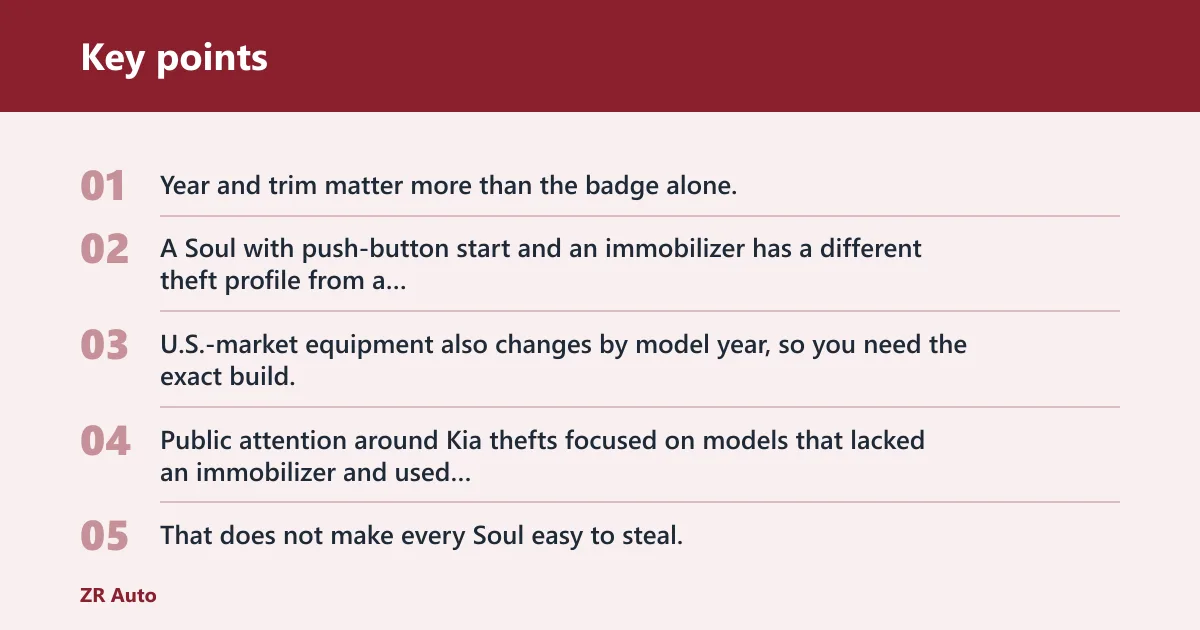
Year and trim matter more than the badge alone. A Soul with push-button start and an immobilizer has a different theft profile from a lower trim with a metal key. U.S.-market equipment also changes by model year, so you need the exact build, not a generic nameplate answer.
How the broader Kia theft trend reached the Soul
Public attention around Kia thefts focused on models that lacked an immobilizer and used a simple keyed ignition layout. The Soul was included because some U.S. versions shared that equipment pattern. That does not make every Soul easy to steal, but it does make some years and trims more exposed.
What changes the risk from vulnerable to protected
The main divider is whether the car has an immobilizer and how the engine is started. If the Soul has a factory immobilizer and push-button start, the theft method that affected the vulnerable keyed models does not apply the same way. If it has a keyed ignition and no immobilizer, the car is in the higher-risk group.
How thieves target vulnerable Souls
On vulnerable Souls, thieves look for fast access to the steering column after a broken window or pried lock cylinder area. The goal is speed. Once the column cover is damaged, thieves may try to force the ignition mechanism, but even failed attempts can leave the car unusable.
What the missing-immobilizer problem allowed
An immobilizer is an anti-theft system that checks for a valid electronic key signal before it lets the engine run. Without it, a thief can sometimes turn the ignition mechanically without that electronic check stopping the start. That is why missing immobilizers matter so much on older keyed models.
What steering-column damage looks like after an attempt
Failed theft attempts often leave more than a broken window. Common damage includes cracked column shrouds, a damaged ignition switch, torn wiring near the column, and a bent key cylinder area. Even if the car stays parked where it was, the repair bill and downtime can be substantial.
Say your Soul is a 2018 base trim with a keyed ignition and no factory immobilizer. A thief may break the driver window, rip apart the column cover, and leave the car with a jammed ignition that still needs towing even though it was never driven away.
Which Kia Soul years are at risk?
The highest concern is generally the older U.S.-market Souls that combined keyed ignition with no factory immobilizer, especially many 2011–2021 models. Newer Souls are usually less exposed, but you still need to confirm the exact trim and equipment. A model-year label alone is not enough.
Pre-facelift Souls and the older theft profile
Older Souls are the ones most often discussed in the theft trend because they were commonly sold in simpler trims with keyed ignition. Those trims are the ones you should treat as vulnerable until verified otherwise. Do not assume that every Soul from those years has the same security hardware.
Newer Souls and whether the risk remains
Recent Souls are generally a different case, especially higher trims with push-button start and an immobilizer. That said, buyers should still verify the exact equipment rather than rely on a model-year shortcut. A newer Soul can still face break-in attempts, but it is usually not in the same theft pattern as the older keyed cars.
Why U.S.-market trim differences matter
U.S. trim content can change the ignition type and anti-theft hardware from one version to another. A base trim may use a keyed start, while a higher trim on the same model year may use push-button start. The theft question is really a trim-and-equipment question.
Immobilizer and ignition basics
An immobilizer blocks engine start unless the correct transponder or electronic authorization is present. That does not stop every break-in, but it raises the bar for theft. Keyed ignition and push-button start are not the same thing, and they do not carry the same theft exposure.
Keyed ignition versus push-button start
Keyed ignition means the driver inserts a physical key and turns the cylinder. On vulnerable Souls, that setup has been the theft target. Push-button start uses electronic authorization, usually through a fob and a module check, so it follows a different theft path and usually requires separate verification by year and trim.
How to check factory equipment before you buy
Start with the VIN, then confirm the trim on the window sticker, dealer build sheet, or owner documents. Look for wording such as immobilizer, smart key, or push-button start. If the documents are unclear, ask the seller for the original Monroney label or a factory equipment printout before you decide.
- Check the VIN against the trim level.
- Look for a physical key slot or a start button.
- Confirm whether an immobilizer is listed in the equipment sheet.
- Ask for the window sticker or build record.
- Verify the answer before signing or insuring the car.
Kia Soul theft-risk checklist table
| Model year | Ignition type | Factory immobilizer presence | Likely vulnerability | Theft deterrents to verify | Buying or owner action items |
|---|---|---|---|---|---|
| 2011-2021, base or lower trim | Keyed ignition | Often absent on vulnerable builds | Higher risk; main theft pattern | Steering-wheel lock, alarm, immobilizer retrofit if available | Verify trim and factory equipment before buying; add visible deterrents now |
| 2011-2021, higher trim | Push-button start | Usually present, but confirm by VIN | Lower risk than keyed versions | Alarm status, factory immobilizer confirmation | Check build sheet and insurance treatment; do not assume every trim matches |
| 2022-2025, most trims | Push-button start or updated key system | Typically present; verify exact car | Outside the main theft pattern for older keyed Souls | Alarm, software updates, local theft trend checks | Confirm by VIN and documents; ask insurer how the car is rated |
| Any year with unknown history | Unknown | Unknown | Cannot be classified yet | All listed deterrents until verified | Do not buy or park it as low-risk until equipment is confirmed |
What owners should do now
If your Soul is in the vulnerable group, start with a visible steering-wheel lock. Add an alarm if the car does not already have one, and ask a dealer whether any software update or retrofit applies to your specific VIN. A visible layer of protection can push a thief to move on.
Park in well-lit areas and keep valuables out of sight. That does not fix the hardware issue, but it lowers the chance that your Soul becomes the easy target in a row of parked cars.
Use a steering-wheel lock and visible deterrents
A wheel lock does not repair the underlying weakness. It buys time and adds noise, which matters when the theft method depends on quick access. For exposed Souls, that simple barrier is one of the most practical first steps.
Verify any software update, alarm, or retrofit
Some vehicles receive manufacturer updates, dealer-installed alarms, or retrofit fixes that change the theft profile. Confirm what applies to your exact VIN. If the seller cannot show that documentation, treat the security setup as unverified.
Picture a 2020 Soul with a factory alarm but no documented immobilizer. The alarm may help, but it does not change the car’s underlying exposure the way a verified immobilizer-equipped build would.
What this means for insurance and buying
Theft exposure can affect premiums, coverage questions, and how an insurer views the car’s risk. Some carriers may ask about anti-theft equipment, and claims often go smoother when the owner has repair records, photos, and the VIN-based equipment proof. Keep those records together.
When buying used, ask whether the Soul is in the vulnerable group, whether the immobilizer is factory equipment, and whether the insurer rates it differently from other compact hatchbacks. Local theft trends matter too, because a car that is less targeted in one area may still be a frequent break-in target in another.
Why documentation matters for claims and resale
If the car is broken into, documentation helps with both the claim and the repair story. Window sticker, build sheet, dealer invoice, and service records can show what security equipment the car had at the time. That can matter for coverage disputes, resale value, and buyer confidence later.
Frequently asked questions
Why are kia souls easy to steal?
Some Kia Souls are not easy to steal at all, but certain older U.S.-market models became theft targets because they used a keyed ignition without a factory immobilizer. That combination made a fast steering-column attack possible. Push-button-start Souls follow a different theft profile and should be checked separately.
What year kia souls are easy to steal
The main concern is many 2011–2021 U.S.-market Souls with a keyed ignition and no factory immobilizer. That does not mean every one of those vehicles is equally exposed, because trim and equipment vary. Newer Souls are generally less affected, but you should still verify the exact build.
Are 2025 kia souls easy to steal?
2025 Souls are generally not in the same theft group as the older keyed models. Most recent Souls use newer equipment and are usually not part of the classic missing-immobilizer problem. Still, confirm the exact trim and security equipment by VIN before you assume any specific car is fully protected.
Are 2023 kia souls easy to steal?
Most 2023 Souls are not in the same high-risk category as the older keyed-ignition models. The exact answer depends on trim and start system, so check whether the car has push-button start and a factory immobilizer. A VIN check is the safest way to verify the security setup.
Are 2020 kia souls easy to steal?
Some 2020 Souls are theft-prone, especially lower trims with keyed ignition and no factory immobilizer. Other 2020 trims may have different equipment and a lower theft profile. You should verify the trim sheet, ignition type, and anti-theft hardware before buying or leaving the car unsecured.
Are 2021 kia souls easy to steal?
Some 2021 Souls fall into the same vulnerable pattern as earlier keyed-ignition models, while others do not. The deciding factor is not the model year alone. Check whether the car has push-button start, a factory immobilizer, and the exact trim listed on the window sticker or build sheet.