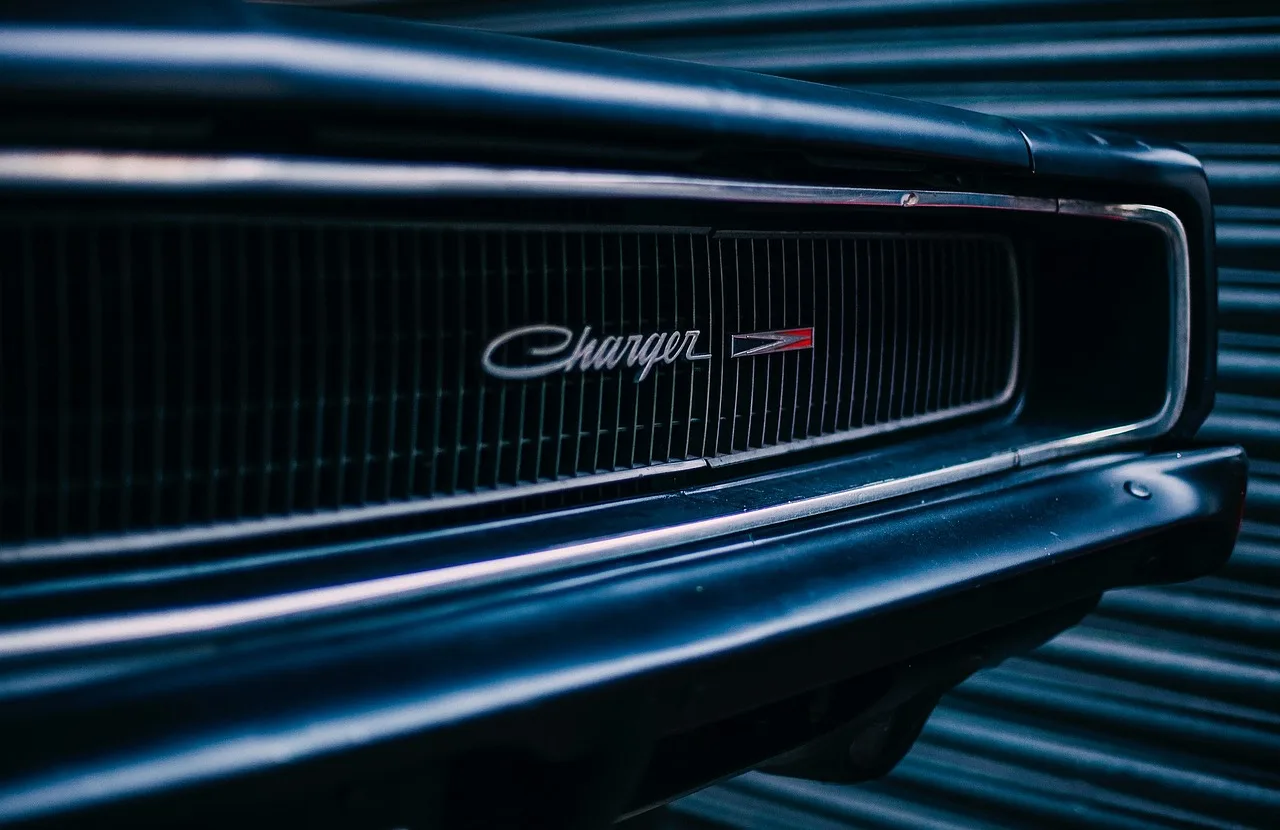
Dodge Charger V6 vs V8: Which Is Better Used?
A clean Dodge Charger V6 is the better used buy for commuting, winter use, and lower ownership costs; choose a V8 only if the price premium is modest and the car’s history is clean. Buy the wrong one and you can spend more on fuel, tires, insurance, and repairs than the extra performance is worth. This guide compares cost, weather traction, driving stress, and resale so you can pick the right Charger.
Charger comparison scorecard
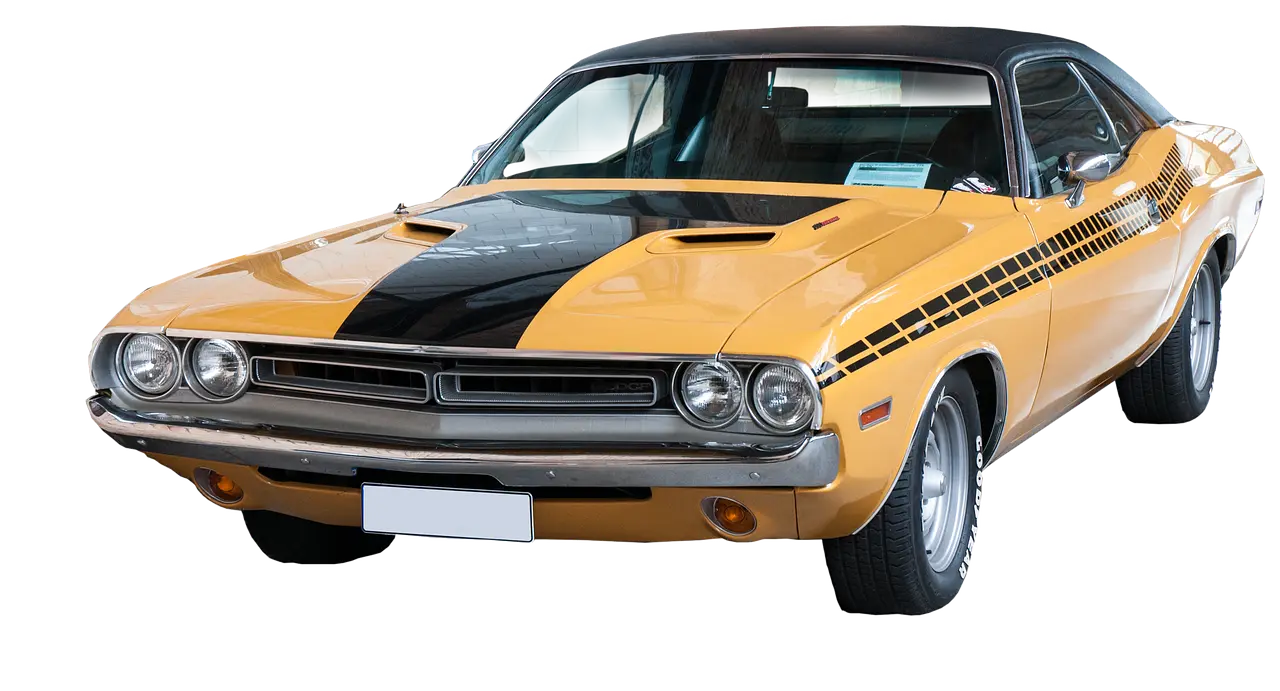
| Decision factor | Dodge Charger V6 | V8 | Winner |
|---|---|---|---|
| Purchase price | Usually lower, especially in SXT and GT trims | Usually higher, with R/T, Scat Pack, and Hellcat-era cars climbing fast | Dodge Charger V6 |
| Expected mpg range | About 19-30 mpg combined, depending on year and AWD | About 12-25 mpg combined, depending on whether it is a 5.7L, 6.4L, or 6.2L car | Dodge Charger V6 |
| Annual fuel cost estimate | About $1,500-$2,200 at 12,000 miles per year and $3.50 per gallon | About $2,200-$3,500 at 12,000 miles per year and $3.50 per gallon | Dodge Charger V6 |
| Insurance risk | Lower to moderate | Higher, especially on higher-output trims and theft-prone examples | Dodge Charger V6 |
| Tire and brake cost tier | Moderate | High | Dodge Charger V6 |
| AWD availability | Available on some years and trims | Rare on the used market, and not the usual V8 setup | Dodge Charger V6 |
| Best buyer profile | Daily commuter, winter driver, budget-focused shopper | Enthusiast, long-term keeper, buyer who wants the stronger resale case | Depends on use case |
Purchase price
The V6 usually wins on entry cost because it fills more of the used Charger market, especially in SXT and GT trims. The V8 side covers a wider spread, from the 5.7L Hemi to the 6.4L Scat Pack and the 6.2L Hellcat-era cars, so price jumps can be large even before condition enters the picture.
Fuel economy and annual fuel cost
The 3.6L Pentastar V6 usually returns the better mpg, and that advantage matters over a year of commuting. If you drive 12,000 miles a year, the fuel bill difference can easily reach several hundred dollars, and that gap grows if gasoline prices rise.
Insurance, tires, and brakes
V8 Chargers often cost more to insure because of performance trim, theft risk, and the kind of driving they tend to attract. Tires and brakes also cost more on the faster cars because the wider rubber and larger hardware wear faster and cost more to replace.
Awd availability
A few V6 Chargers were offered with AWD, which helps on snow, slush, and cold pavement. That matters if you want a winter-friendly sedan, but AWD adds weight, mechanical complexity, and extra service points compared with rear-wheel drive.
Best-fit use case
The V6 is the simpler choice for commuting, long highway miles, and buyers who want the Charger shape without performance-car running costs. The V8 is the stronger choice if you want harder acceleration, more torque, and a car that feels special enough to keep for years.
What the used market is really comparing
The real choice is usually not “Charger versus Charger.” It is 3.6L Pentastar V6 versus 5.7L Hemi V8, with 6.4L Scat Pack and 6.2L Hellcat-era cars as separate, much costlier cases. Dodge says the Charger belongs in its performance lineup, and current Dodge pages still promote the 4-door body style, which means the car keeps a broad buyer base even as the powertrains change.
The newer 2026 Charger adds a 3.0L Hurricane I6 with about 420 hp and AWD, but that does not make it a direct substitute for older used V6 or V8 cars. It mainly changes expectations: used shoppers now compare older gas Chargers not only against each other, but also against a newer performance sedan that uses a different engine layout and traction setup. Dodge Canada also describes the new Charger as a performance vehicle, and its video presentation leans hard into burnout imagery, which tells you where the market still sits.
How much power do you really need?
The V6 has enough power for daily driving, and the V8 gives you more shove when you are merging, passing, or leaving a light. The difference is not subtle, but the right answer depends on whether you value low operating cost or stronger straight-line speed.
Charger V6 horsepower and torque
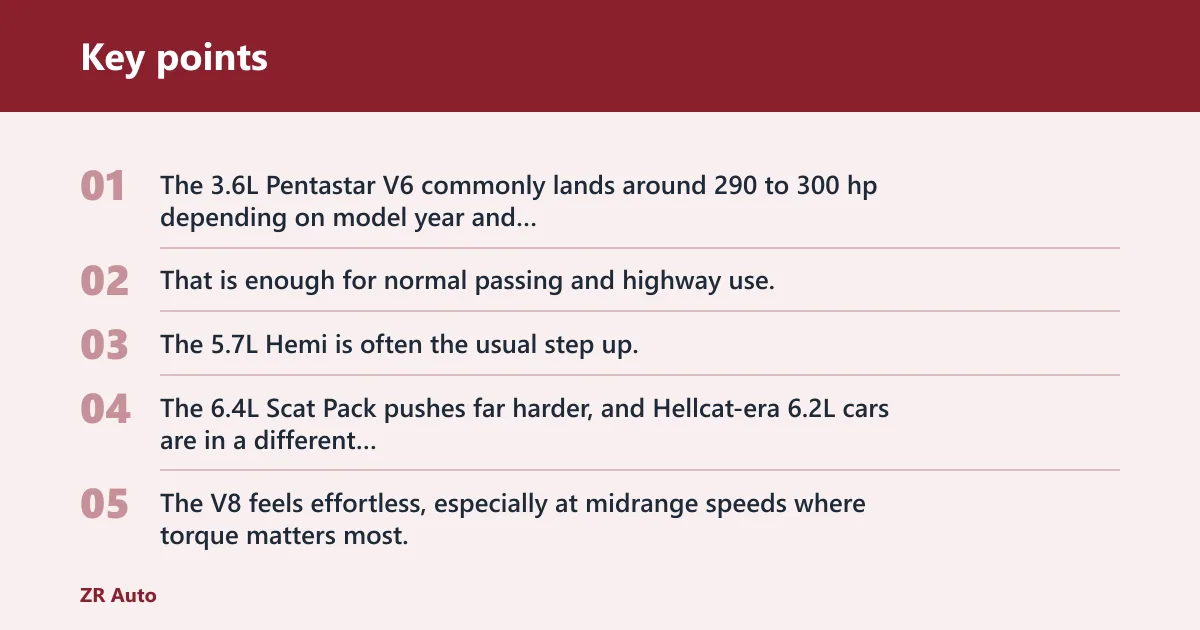
The 3.6L Pentastar V6 commonly lands around 290 to 300 hp depending on model year and trim, with torque in the roughly 260 to 270 lb-ft range. That is enough for normal passing and highway use, but it will not feel urgent the way a V8 does when the car is loaded or the road climbs.
Charger V8 horsepower and torque
The 5.7L Hemi is often the usual step up, with roughly 370 hp and 395 lb-ft in many used Charger trims. The 6.4L Scat Pack pushes far harder, and Hellcat-era 6.2L cars are in a different league altogether, but they also bring a bigger ownership bill and a stronger need to inspect for abuse.
How acceleration feels in daily driving
The V6 feels smooth and adequate. The V8 feels effortless, especially at midrange speeds where torque matters most. If your driving is mostly stop-and-go traffic, the V6’s calmer nature may matter more than the V8’s extra punch.
Is a Charger V6 available with AWD?
Yes, some Charger V6 models were offered with AWD, but not every year and not every trim. That matters because AWD can make a big difference in winter traction, yet it also adds weight and more parts to service over time.
Which V6 trims and years can have AWD?
AWD is most associated with V6 Chargers in SXT-type and GT-type trims across selected model years in the 2006-2023 generation. You still need to verify the exact car, because drivetrain availability changed with year, trim, and option package.
Why AWD helps in snow and cold weather
AWD spreads power to more than one axle, which can help the car pull away on slick roads and feel steadier in low-grip conditions. It does not replace winter tires, though, and it does not turn a Charger into a bad-weather SUV.
What AWD adds in weight and service needs
AWD parts add mass, and mass always shows up somewhere. Expect a small hit to fuel economy, plus more hardware that can wear or leak as the car ages.
What does a V8 Charger cost to own used?

Yes, a used Charger V8 is usually much more expensive to own once you count fuel, tires, brakes, insurance, and depreciation. The sticker price is only part of the story, and performance trims often carry extra repair exposure because they are more likely to have been driven hard.
Fuel, tire, brake, and insurance differences
The V8 drinks more fuel, and the larger performance tires and brakes are not cheap consumables. Insurance often follows the same pattern because insurers price higher-output cars as higher risk, especially when the model has a strong theft or modification reputation.
Why performance trims can bring more repair exposure
R/T, Scat Pack, and Hellcat-era cars are more likely to have seen hard launches, tune work, drag-strip use, or questionable ownership. That does not mean every V8 is abused, but it does mean the inspection has to be stricter than it would be on a plain commuter sedan.
When the V8 premium still pencils out
If you plan to keep the car for years, enjoy the sound and torque, and find a clean example at a fair spread over a V6, the V8 can make sense. The premium gets harder to justify when the car is high-mileage, modified, or close in price to a cleaner V6 with better records.
Which Charger trim should you buy?
Trim matters because it tells you more than the badge on the trunk. SXT and GT are usually the sensible V6 picks, R/T is the balanced V8, and Scat Pack or Hellcat-era cars are for buyers who accept the cost of real performance.
SXT and GT: commuter-first picks
Choose SXT or GT if you want the Charger body, lower running costs, and a calmer insurance profile. GT is the better pick only if the extra equipment or drivetrain setup on a specific car justifies the price over a plain SXT.
R/T: the balanced V8 choice
The R/T is usually the sweet spot for buyers who want V8 torque without jumping to the more expensive Scat Pack level. It is the trim that most clearly answers the “fun car I can still live with” brief.
Scat Pack and Hellcat-era cars: when the extra cost is justified
Pick a Scat Pack if you want much stronger straight-line performance and can budget for everything that comes with it. Hellcat-era cars are a separate buying case entirely, because the purchase price, insurance, and abuse risk all move up again.
Used Charger problems to check first
Start with records, then move to the car itself. On both V6 and V8 Chargers, a clean service history matters more than a shiny wash and a polished exhaust tip.
- Check oil-change records and coolant service history.
- Inspect for warning lights, overheating, or recent repairs tied to the cooling system.
- Listen for suspension clunks, uneven tire wear, and brake vibration.
- Look for evidence of tuning, drag-strip launches, loud exhaust work, or modified intake parts.
- On Hemi cars, pay attention to tick noises, lifter concerns, and any sign of neglected oil changes.
- Verify model-year equipment carefully, especially AWD and drivetrain options on used V6 cars.
Suppose a seller offers a 2018 Charger R/T with wide rear tires, fresh rear rubber, and no service records. That combination can mean anything from normal wear to repeated hard launches, so the burden shifts to inspection and pricing. A clean, documented car is easier to trust than a cheaper one with missing history.
A common first-timer mistake is judging the car by mileage alone. A 90,000-mile V6 with records can be a safer buy than a lower-mileage V8 that spent years idling, modified, or driven hard.
Choose Dodge Charger V6 if… / Choose V8 if…
Choose Dodge Charger V6 if your priority is lower total cost, winter traction from available AWD on the right cars, and a calmer daily commute. It is the better used buy if you want the Charger shape without the added fuel, tire, brake, insurance, and depreciation hit.
Choose V8 if you want stronger torque, a more serious performance feel, and the better enthusiast resale story. It is the right pick only when the car is clean, the premium is still rational, and you are comfortable paying more to own it.
Dodge Charger resale value trends
V8 Chargers usually keep stronger enthusiast demand than V6 cars, especially in desirable trims and clean colors. That resale edge is real, but it is not automatic; mileage, condition, and trim level matter more than the badge alone.
Why V8s often hold stronger demand
Enthusiasts chase the sound, torque, and performance image. That keeps demand alive for good examples, particularly 5.7L, 6.4L, and certain special-edition cars.
How condition and mileage change the result
A tired V8 with patchy maintenance can sell worse than a well-kept V6. Buyers in this segment pay for proof, not hope.
Where the 2026 Charger fits
The 2026 Charger changes the conversation because it moves the model into a newer performance format with a 3.0L Hurricane I6 and AWD. That gives used shoppers more context, but it does not erase the value case for a well-kept older V6 or V8 if the price and history are right.
Frequently asked questions
Is a dodge Charger a V8?
No. A Dodge Charger can be a V6, a V8, or, in newer form, something else entirely. Many used Chargers are 3.6L Pentastar V6 cars, so you should check the exact trim and engine code before you assume the car is a V8.
Which is better, a Dodge Charger V6 or V8 used?
The V6 is better for most used-car shoppers because it costs less to buy and run, and some examples offer AWD. The V8 is better if you want stronger acceleration, more torque, and a higher chance of holding enthusiast value, provided the car is clean and fairly priced.
How much horsepower does a Dodge Charger V6 have?
Many used Charger V6 models with the 3.6L Pentastar make about 292 hp to 300 hp, depending on trim and model year. That is enough for normal commuting and highway passing, but it is well below the output of the V8 trims.
What gas mileage does a Dodge Charger V6 get?
A used Charger V6 commonly lands around 19-30 mpg combined depending on year, drivetrain, and trim. AWD versions usually give up some efficiency, while RWD versions tend to do a little better in mpg.
Is a used Charger V8 much more expensive to own?
Usually yes. Fuel, insurance, tires, brakes, and depreciation all tend to run higher on V8 Chargers, and performance trims often attract harder use. The difference can be large enough that the V6 makes more sense for a daily driver.
What problems should I check on a used Charger V6 or V8?
Check maintenance records, cooling-system health, suspension wear, and signs of abuse. On V8 cars, listen carefully for Hemi-specific tick or lifter concerns, and look for evidence of tuning, drag-strip use, or neglected oil changes.
Should I buy a newer V6 Charger or an older V8 Charger?
Buy the newer V6 if you want lower risk, lower running costs, and a newer body with cleaner records. Buy the older V8 only if the price gap is sensible and the car’s condition is strong enough to justify the extra ownership cost.
Is a dodge charger a v8?
No. The Charger name covers several engines and trims, and many used examples are V6 cars. Treat the badge as a starting point, then verify the exact engine, drivetrain, and trim before you buy.
Which is better dodge or ford charger?
That comparison does not really fit because Charger is a Dodge model, not a Ford one. If you meant a different Ford sedan or performance car, compare the exact models, trim levels, and powertrains rather than the brand names alone.