What Are the Best Kia Sorento Years to Buy?
The Kia Sorento years often seen as best to buy are 2019–2020 for value and 2022–2024 for the newer design; avoid 2011–2015 unless service records are complete. Skip the wrong year and you can buy an SUV that hides timing-chain, transmission, or infotainment problems that are expensive to sort out. This guide ranks Sorento years by generation, explains which engines and trims to target, and calls out the years to avoid.
Which Sorento model years to buy or skip?
The Sorento is a midsize SUV with three-row seating on many trims, gas, turbo, hybrid, and plug-in hybrid powertrains, plus all-wheel drive on many models. The safest used-year picks cluster near the end of a generation, because Kia had time to fix early drivetrain and software faults while used prices stayed below new-car levels.
| Model year | Generation | Engine and AWD notes | Common red-flag issues | Repair-risk tier | Buy / skip |
|---|---|---|---|---|---|
| 2011 | 2nd gen | 2.4L I4 or 3.5L V6; AWD available | Timing-chain wear, oil use, transmission complaints, electrical faults | High | Skip |
| 2012 | 2nd gen | 2.4L I4 or 3.5L V6; AWD available | Oil consumption, rough shifting, sensor and accessory issues | High | Skip |
| 2013 | 2nd gen | 2.4L I4 or 3.5L V6; AWD available | Engine wear, coolant or leak checks, infotainment glitches | High | Skip |
| 2014 | 2nd gen facelift | 2.4L I4 or 3.3L V6; AWD available | Carryover engine issues, suspension wear, electronics | Medium-high | Maybe |
| 2015 | 2nd gen | 2.4L I4 or 3.3L V6; AWD available | Oil burning, transmission shudder, aged infotainment | High | Skip |
| 2016 | 3rd gen | 2.4L I4, 2.0T, or 3.3L V6; AWD available | Early-gen electrical bugs, turbo complexity, brake wear | Medium | Maybe |
| 2017 | 3rd gen | 2.4L I4, 2.0T, or 3.3L V6; AWD available | Infotainment faults, turbo plumbing leaks, transmission complaints | Medium | Maybe |
| 2018 | 3rd gen | 2.4L I4, 2.0T, or 3.3L V6; AWD available | Less risky than 2016–2017, but still check recalls and service gaps | Medium | Buy |
| 2019 | 3rd gen update | 2.4L I4, 2.0T, or 3.3L V6; AWD available | Minor infotainment issues, wear items, turbo maintenance sensitivity | Low-medium | Buy |
| 2020 | 3rd gen final year | 2.4L I4, 2.0T, or 3.3L V6; AWD available | Best balance of maturity and price; still inspect for software updates | Low-medium | Buy |
| 2021 | 4th gen | 2.5L I4, 2.5T, hybrid on some trims; AWD available on many trims | First-year redesign risk, software issues, turbo and transmission checks | Medium | Maybe |
| 2022 | 4th gen | 2.5L I4, 2.5T, hybrid/PHEV on some trims; AWD available on many trims | Early setup issues still worth screening, but stronger buy than 2021 | Low-medium | Buy |
| 2023 | 4th gen | 2.5L I4, 2.5T, hybrid/PHEV on some trims; AWD available on many trims | Check software updates, tire wear, and hybrid-system service records | Low | Buy |
| 2024 | 4th gen | 2.5L I4, 2.5T, hybrid/PHEV on some trims; AWD available on many trims | Newer-market pricing; verify recall work and battery-health paperwork on hybrid models | Low | Buy |
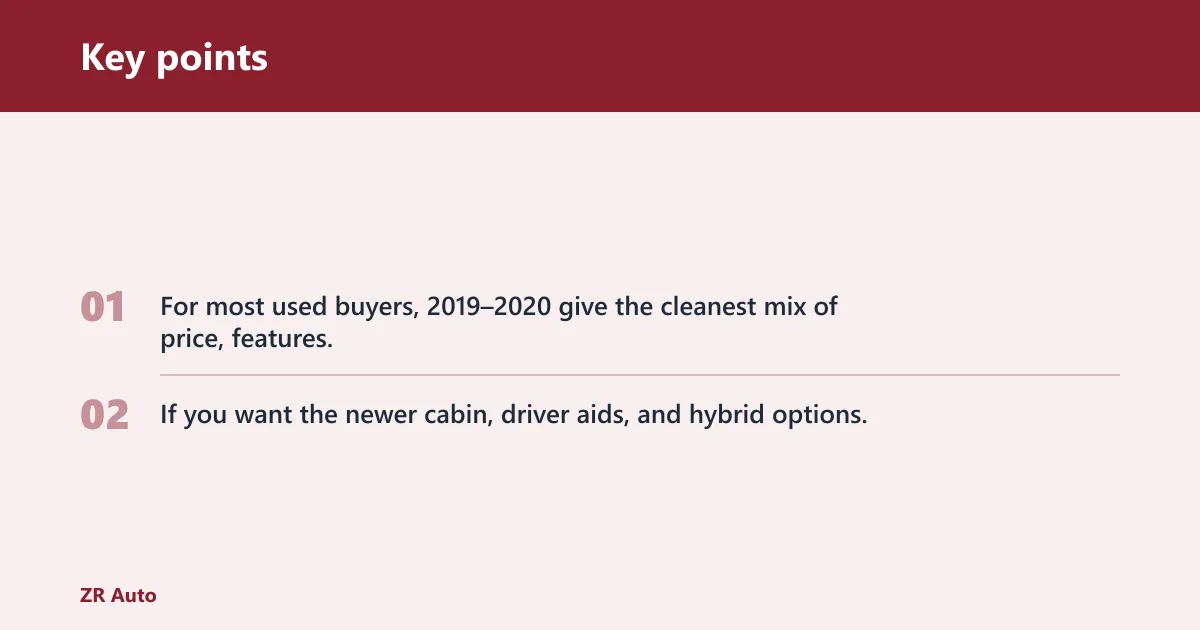
For most used buyers, 2019–2020 give the cleanest mix of price, features, and lower mechanical risk. If you want the newer cabin, driver aids, and hybrid options, 2022–2024 are the safer fourth-generation picks. The 2011–2015 group needs the most caution.
Which Sorento years are the safest buys?
The Sorento years commonly considered safest are 2019, 2020, 2022, 2023, and 2024. Those years sit near the end of a generation or after the redesign had time to settle, which lowers the odds of early build bugs, software glitches, and repeat repair visits compared with first-year or rough carryover models.
Best years by generation
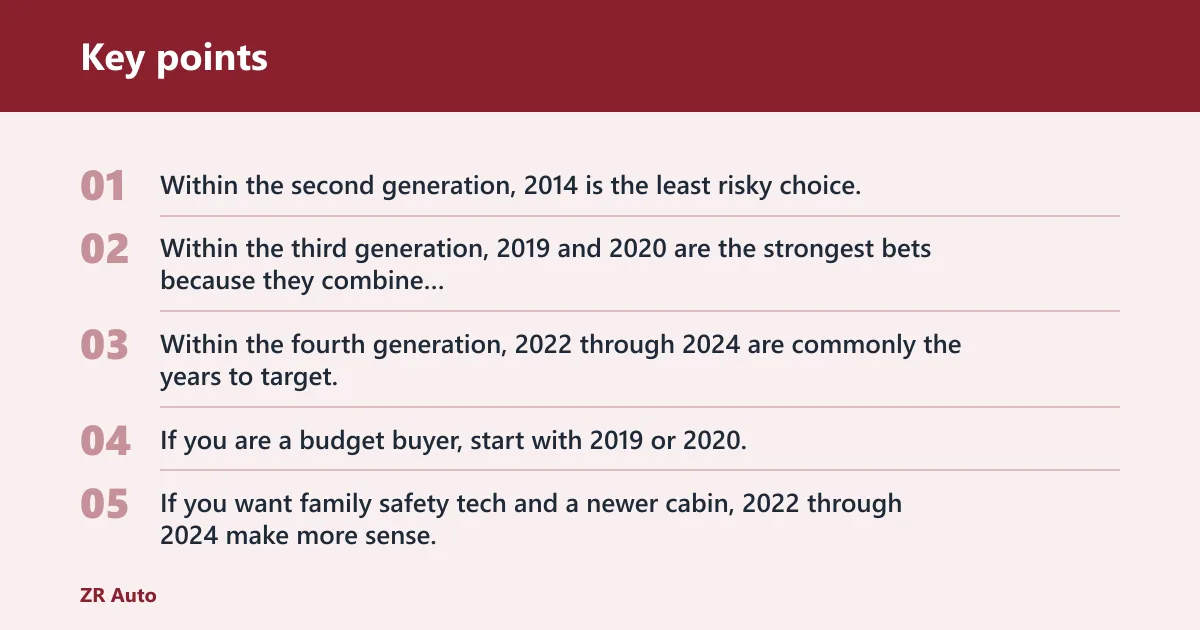
Within the second generation, 2014 is the least risky choice, but it is still not a top-tier buy. Within the third generation, 2019 and 2020 are the strongest bets because they combine mature mechanical packages with broad parts support. Within the fourth generation, 2022 through 2024 are commonly the years to target.
Best years by buyer profile
If you are a budget buyer, start with 2019 or 2020, ideally with a clean title and complete service history. If you want family safety tech and a newer cabin, 2022 through 2024 make more sense. If you care most about long-term simplicity, choose the non-turbo gas engine over the higher-output turbo or hybrid setup.
Why these years earn the top spots
Late-cycle years usually get revised software, fewer unresolved recalls, and maintenance intervals that are already well known. They also tend to avoid the steepest depreciation hit. That matters because a lower sticker price on a risky year can disappear fast after one transmission repair, one turbo issue, or repeated electrical diagnostics.
Picture a buyer comparing a cheap 2015 Sorento with 110,000 miles against a pricier 2020 with 82,000 miles. The older SUV may save money up front, but the newer one is far less likely to need timing-chain work, repeated warning-light diagnosis, or major infotainment repair before the next ownership cycle.
What years of the Sorento should you avoid?
The Sorento years to avoid most often are 2011 through 2015, especially if maintenance records are thin or the vehicle shows signs of oil loss. Those years carry the highest concentration of engine-wear, transmission, and electrical complaints, so a cheap purchase price can hide a larger repair bill.
Problem years by generation
Second-generation Sorentos are the toughest used buys. The 2011–2013 models are often the least attractive, while 2014–2015 are generally worth considering only when service records are complete and the price reflects the risk. The first two third-generation years, 2016 and 2017, are usable but deserve closer inspection than 2018–2020.
Common failure patterns
Recurring problems include timing-chain wear, oil consumption, rough or hesitant shifting, turbo-related leaks or boost-control faults, electrical glitches, and infotainment issues. Some engines are more sensitive to skipped oil changes, and some transmissions become less predictable when fluid service has been ignored.
When a bad year can still make sense
A troubled year can still work if the price is low enough, the maintenance file is complete, and an inspection shows no active codes or leak evidence. That said, the discount needs to be real. A small savings does not cover a SUV that may need a chain, a sensor pack, or a transmission diagnosis soon after purchase.
How do engine and drivetrain choices change risk?
Powertrain choice matters as much as model year. In the Sorento, the base gas engine usually offers the simplest ownership path, the turbo engines add torque but also more heat and more parts to check, and hybrid versions trade fuel savings for battery and electronics complexity. AWD is common, but not automatic on every trim.
Gas vs turbo vs hybrid
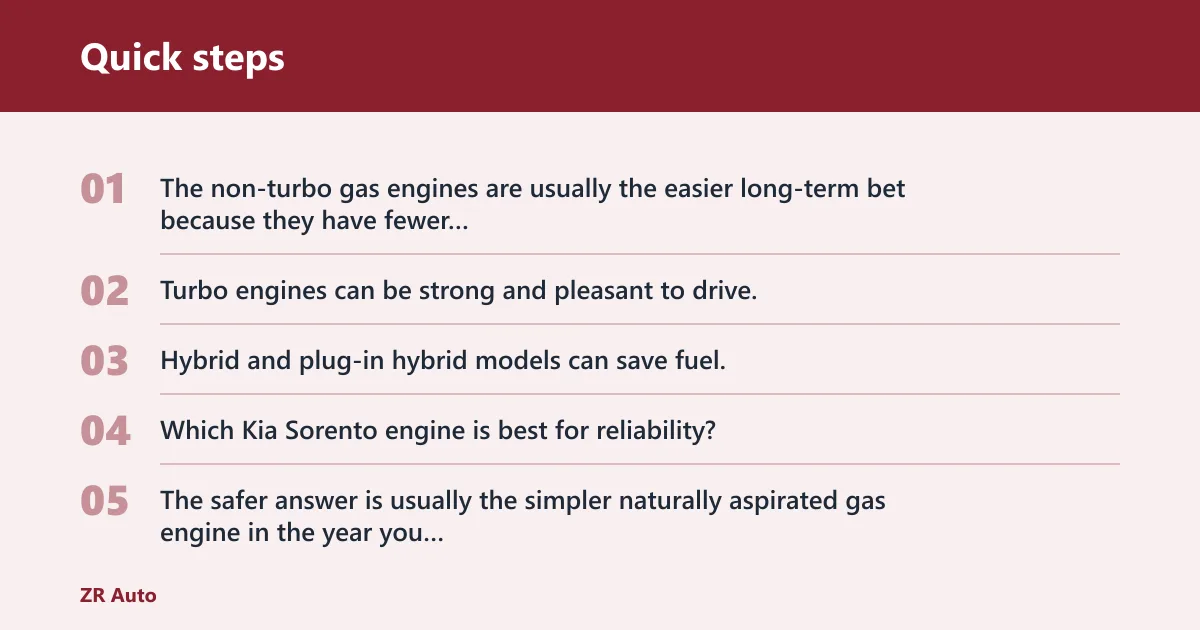
The non-turbo gas engines are usually the easier long-term bet because they have fewer high-load parts. Turbo engines can be strong and pleasant to drive, but they need disciplined oil service and close attention to boost leaks, cooling, and transmission behavior. Hybrid and plug-in hybrid models can save fuel, yet you should verify battery-related service history and software updates.
Which Kia Sorento engine is best for reliability? The safer answer is usually the simpler naturally aspirated gas engine in the year you are shopping, not the highest-output option. For 2019–2020, that often means the 2.4L or the 3.3L V6 depending on the exact trim and maintenance record. For 2022–2024, the standard 2.5L is the easier bet than the 2.5T.
AWD availability and value
AWD adds traction in snow and on wet pavement, but it also adds parts that need inspection. Check transfer-case service history where applicable, and inspect tires for even wear. AWD is worth paying for if you need it, but it should not override a cleaner front-drive example with better records.
Which powertrains are easier to own?
If you want lower stress, choose a non-turbo gas Sorento with documented oil changes and no warning lights. If you want newer safety tech and better fuel economy, a 2022–2024 hybrid can make sense, but only if the battery, charging system, and software records are clean. Turbo models fit drivers who value response more than simplicity.
Which trims give the best value?
Mid-level trims often give the best value because they add useful safety tech without piling on every luxury feature that can raise repair cost. For family use, look for trims with blind-spot monitoring, adaptive cruise control, rear cross-traffic alert, and a power liftgate if budget allows.
Feature content by trim
Base trims usually keep purchase price down, but they may lack the driver aids that make daily family use easier. Higher trims add screens, cameras, heated seats, and more active safety systems, yet those extras can increase repair complexity. The sweet spot is often a mid-trim with the engine you want and AWD only if you need it.
Safety tech differences
Newer Sorentos have far better standard safety content than older ones, especially from 2021 onward. That can matter more than leather or wheels. If you are cross-shopping years, a newer mid-trim with a cleaner record can be smarter than an older top trim with more miles and a patchy file.
Trim choices that fit family use
For family duty, prioritize easy second-row access, cargo room behind the third row if equipped, and simple climate controls. A common first-timer mistake is buying the flashiest trim and then finding that a worn panoramic roof or a complex infotainment fault costs more than the comfort was worth.
What should you inspect before buying?
Before you buy any used Sorento, verify service records, recall history, and proof of regular oil changes. Then inspect for leaks, warning lights, and road-test symptoms. A clean-looking SUV with missing maintenance records is still a risk, especially on the turbo and earlier second-generation engines.
Service records and recall checks
Look for oil-change intervals that make sense, coolant or transmission service if listed, and proof that recall work was completed. If the seller cannot show basic records, assume the vehicle may have seen delayed maintenance. That matters most on years known for timing-chain or oil-consumption complaints.
Road-test symptoms to watch
- Start the engine cold and listen for rattles, ticking, or rough idle.
- Drive at city and highway speeds and check for hard shifts, hesitation, or flare.
- Use light throttle and then moderate throttle to spot turbo lag, surging, or warning lights.
- Test brakes for pulsing or noise.
- Confirm that the transmission does not hunt between gears on hills.
Leak checks, underbody checks, and OBD scan
Scan for oil leaks around the valve cover, timing cover, and oil pan. Check the underbody for impact damage, wet spots, and rust. Use an OBD scan to look for stored or pending codes, even if the dash is clear. Say your scan shows no lights, but the transmission has a pending code and the engine bay smells hot after a short drive; that should move the car into the caution pile, not the buy pile.
What will ownership cost you?
Ownership cost is not just the purchase price. Repair risk, fuel use, insurance, and depreciation all change the real cost of a Sorento. A cheaper old model can cost more over two years than a newer one if it needs repeated work or burns more fuel.
Repair-risk tiers
High-risk years can erase the savings of a bargain purchase through one major job. Medium-risk years are acceptable only when the price and condition are right. Low-risk years usually cost more up front, but they are easier to budget because they tend to need fewer surprise repairs if maintained properly.
Fuel, insurance, and depreciation
Non-turbo gas models generally use less expensive service, while turbo and hybrid versions can shift cost toward complexity and parts. Insurance often follows vehicle value and equipment level, so newer higher-trim Sorentos may cost more to cover. Depreciation is your friend on used examples, but only if the vehicle starts from a stable reliability base.
How mileage changes the buy decision
Lower-mileage examples with clean ownership history are usually worth the premium. As mileage rises, the importance of records grows. Suppose you find a 2020 Sorento with 68,000 miles and regular oil changes, then compare it with a 2014 example at 92,000 miles and no clear maintenance file; the newer SUV is usually the smarter ownership bet.
Frequently asked questions
What’s the best year kia sorento to buy
Those years sit in mature parts of their runs, so they avoid many first-year issues while still giving you modern safety gear and better feature content than older Sorentos.
What are the best years to buy a used kia sorento?
Those years combine lower risk with broader trim and drivetrain choice. If you want the simplest ownership path, focus on non-turbo gas models with full service records and no unresolved recalls or warning lights.
What is the best kia sorento to buy?
The best Sorento to buy is a clean 2020 or 2023 with documented maintenance, a pre-purchase inspection, and the engine you actually need. For many shoppers, that means a mid-trim AWD model with the simplest available powertrain, not the most powerful one on the lot.
What Kia Sorento years should you avoid?
Avoid 2011–2015 unless the maintenance file is unusually strong and the price is heavily discounted. Those years carry the most concern for engine wear, oil use, transmission complaints, and electrical faults. First-year redesigns also deserve extra scrutiny because early production runs often need software fixes.
Which Kia Sorento engine is best for reliability?
The best reliability bet is usually the simpler naturally aspirated gas engine for the year you are shopping. In practical terms, that means the non-turbo 2.4L or 3.3L in older Sorentos, or the non-turbo 2.5L in newer ones. Avoid assuming every turbo or hybrid will cost the same to own.
What is the best year for a used kia sorento?
If you want one used-year answer, start with 2020. It offers late-generation maturity, broad equipment choices, and a lower-risk profile than the problem-heavy early second-generation years. If you want newer tech, 2023 is the stronger choice, especially when paired with clean records and a proper inspection.