Why Does My Kia Sportage Have Gearbox Problems?
A Kia Sportage gearbox problem is often fluid, a faulty sensor, clutch wear on manual models, or control-module software. Treat slipping, harsh shifts, a flashing transmission light, or limp mode as urgent. Ignoring them can turn a repair into transmission damage, loss of drive, or a much higher bill. This guide shows how to tell false alarms from real gearbox failure and which symptoms point to fluid, clutch, electronics, torque-converter, hybrid, or internal wear.
Why your Sportage may shift badly
Sportage shift complaints do not all come from the gearbox itself. Manual models can have clutch slip or dual-mass flywheel wear, automatic models can have fluid, valve body, mechatronics, solenoid, or torque-converter faults, and hybrid versions can feel jerky during normal regenerative blending.
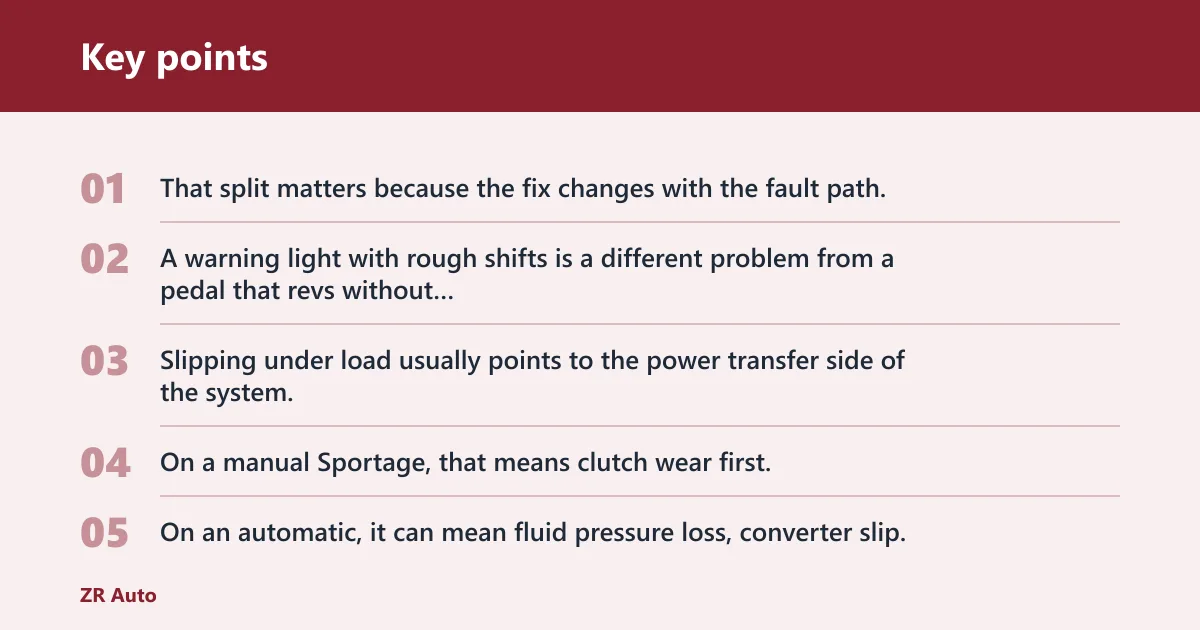
That split matters because the fix changes with the fault path. A warning light with rough shifts is a different problem from a pedal that revs without matching road speed, and both are different again from a gear selector that shows one position on the dashboard while the car behaves like another.
Sportage gearbox fault triage table
| Symptom | Likely cause | Urgency | First check | Next repair step |
|---|---|---|---|---|
| Manual clutch slip under load | Worn clutch disc, pressure plate, or dual-mass flywheel issue | Inspect soon; stop if it loses drive | Watch for rising engine speed without matching acceleration | Clutch assembly diagnosis, then clutch and flywheel replacement if worn |
| Automatic shudder at steady speed | Torque converter lock-up issue, fluid condition, or control fault | Book inspection soon; urgent if it worsens fast | Check fluid level and smell, then scan for TCM codes | Road-test confirmation, software checks, then torque-converter or transmission repair |
| Delayed engagement into Drive or Reverse | Low fluid, internal wear, valve body fault, or mechatronics issue | Urgent if delay becomes no drive | Note whether engagement takes seconds after selection | Leak repair, fluid correction, then electronic and hydraulic diagnosis |
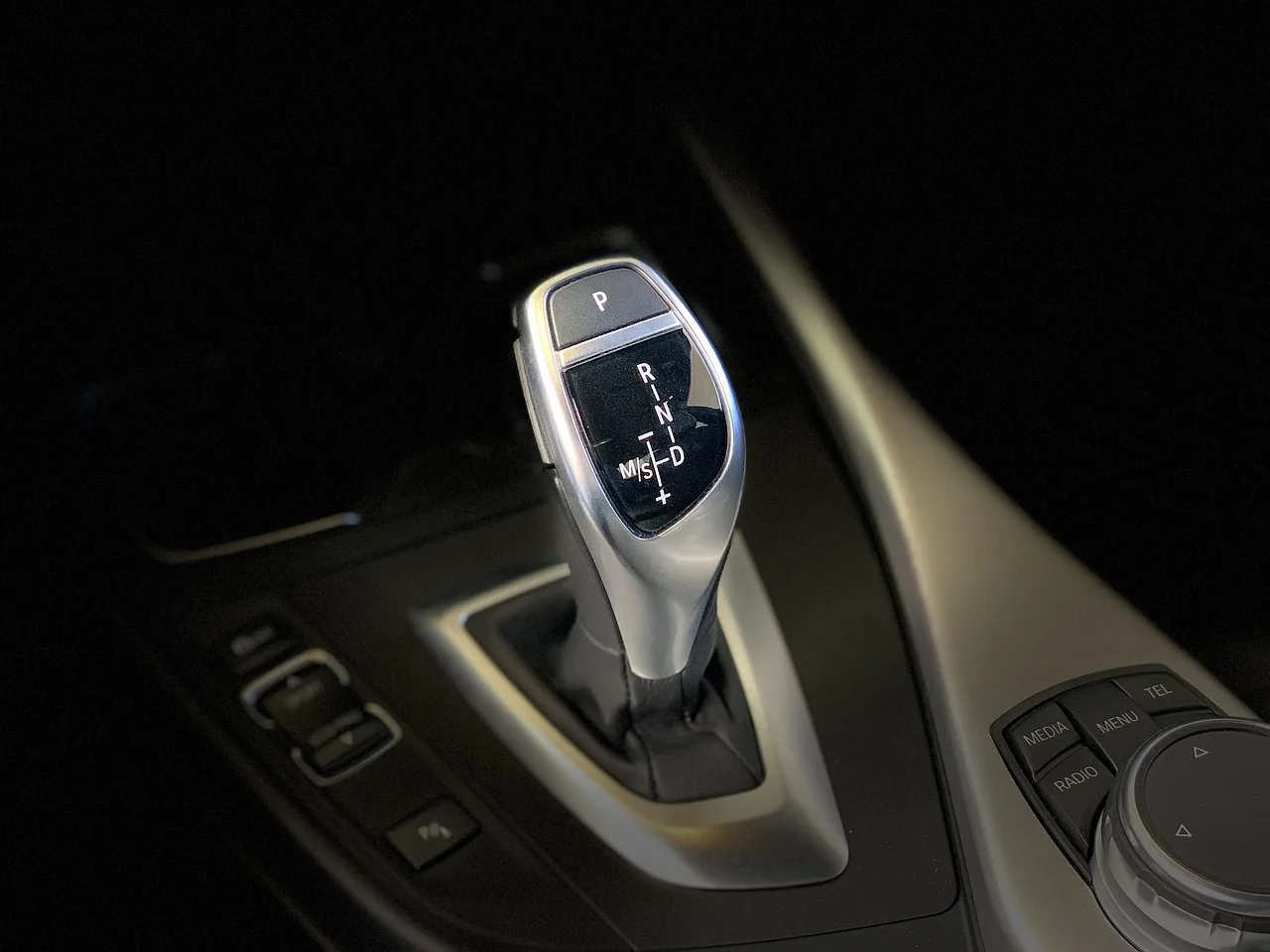
| Gear selector faults | Selector position error, shift-by-wire fault, interlock issue, or wiring problem | Urgent if the car will not select or start | Compare the dash gear display with the lever or dial position | Scan selector and transmission modules, then test the selector assembly |
| Leak-related low fluid | Seal, cooler line, sump, or pan leak | Stop driving if fluid is visibly low or dripping | Inspect below the transmission, then check the case for wet spots or fresh drips | Repair the leak, refill to the correct specification, then recheck operation |
| Warning light with harsh or missed shifts | Stored transmission fault, solenoid fault, sensor fault, or limp mode | Urgent | Read OBD and TCM codes before clearing anything | Use live data and road-test confirmation before replacing parts |
What common Sportage gearbox faults mean
Slipping under load usually points to the power transfer side of the system. On a manual Sportage, that means clutch wear first. On an automatic, it can mean fluid pressure loss, converter slip, or internal clutch-pack wear inside the transmission.
Shudder at steady speed often fits torque-converter lock-up trouble on automatic models. Harsh or missed shifts point more toward control faults, fluid problems, or valve body wear than a broken gearset. No drive or delayed drive is more serious because it can indicate low fluid, severe internal wear, or a selector fault that is not telling the transmission what to do.
Dashboard gear mismatch deserves special attention. Kia describes a Dial type Shift-by-Wire system on the Sportage, so a selector error can be electronic rather than mechanical. Kia also says the Sportage interior uses dual 12.3-inch curved displays, which makes the gear indication easy to compare with the selected mode.
Can low fluid cause Sportage shift problems?
Low transmission fluid can commonly cause delayed engagement, shudder, flare, and harsh shifts because the hydraulic system may not build pressure correctly. The right response is not just “top it up”; you also need to find out why the level dropped and whether the fluid has overheated or been contaminated.
Check both level and condition. Healthy fluid is usually clean and does not smell burnt. Dark fluid with a burnt smell points to overheating or clutch wear inside the transmission, which is a very different problem from a small external leak.
- Inspect below the transmission and around the case for wet areas or drips.
- Check whether the symptom started after towing, long motorway use, or a recent service.
- Read any transmission or powertrain codes with an OBD scan.
- Compare the fluid condition with the service history.
- Confirm the fault with a road test before ordering major parts.
Service history matters because fluid age affects shift quality and wear. If the fluid has never been changed, or if the service record is unclear, rough shifts are harder to dismiss as a minor glitch. Kia UK lists the Sportage as available in Hybrid and PHEV, so the drivetrain layout matters too when you are tracing symptoms.
Say your Sportage starts taking two or three seconds to engage Drive after a cold start, then behaves normally once warm. That pattern can point to low fluid or a valve body issue rather than a failed gearbox, so the first step is inspection, not replacement.
Manual clutch faults on Sportage models
On manual Sportage models, the gearbox is often blamed when the clutch is the real fault. Clutch slip shows up as rising engine speed without matching acceleration, especially in higher gears or on hills. A worn clutch can also smell hot after repeated take-offs.
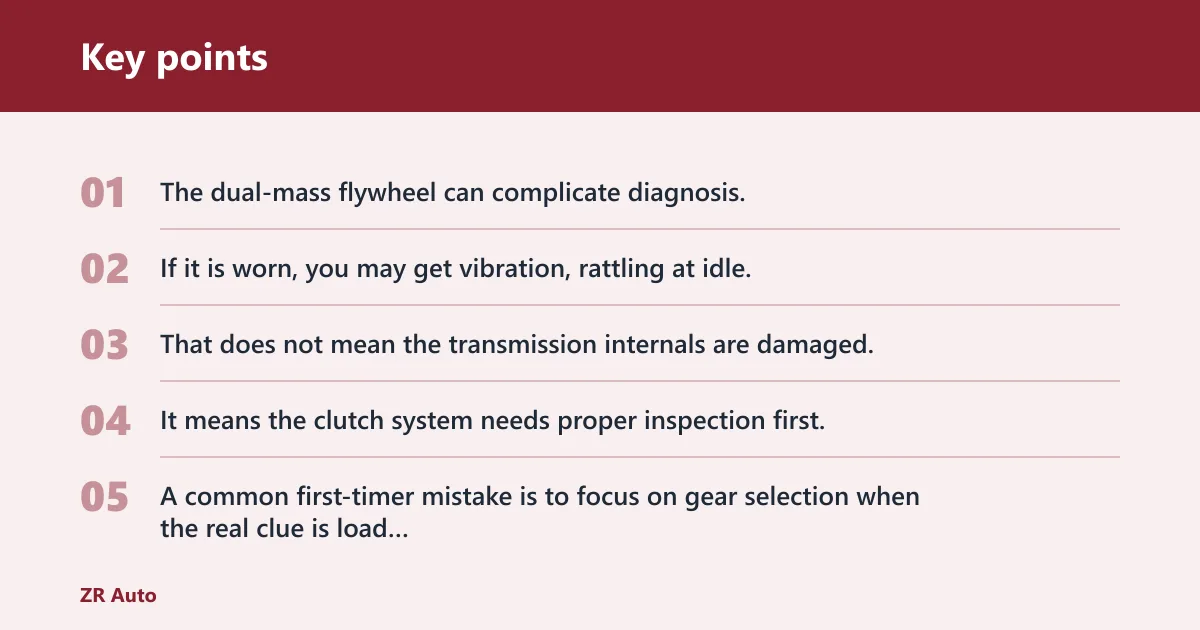
The dual-mass flywheel can complicate diagnosis. If it is worn, you may get vibration, rattling at idle, or rough take-up that feels like a gearbox fault. That does not mean the transmission internals are damaged. It means the clutch system needs proper inspection first.
A common first-timer mistake is to focus on gear selection when the real clue is load response. If the car selects gears cleanly but the engine revs flare under acceleration, the clutch is usually a better suspect than the gearbox itself.
If a manual Sportage grates into reverse or resists first gear only when stationary, that can also point to clutch drag rather than internal gearbox failure. The clutch is not fully releasing, so the input shaft keeps turning when it should not.
Automatic and hybrid control faults
Automatic Sportage models usually need a different diagnosis path, such as checking the valve body, mechatronics, solenoids, or sensor data. Harsh shifts, missed shifts, or a transmission warning light can come from the valve body, mechatronics, solenoids, or sensor data that no longer matches what the transmission expects. That is why OBD scanning and live data matter.
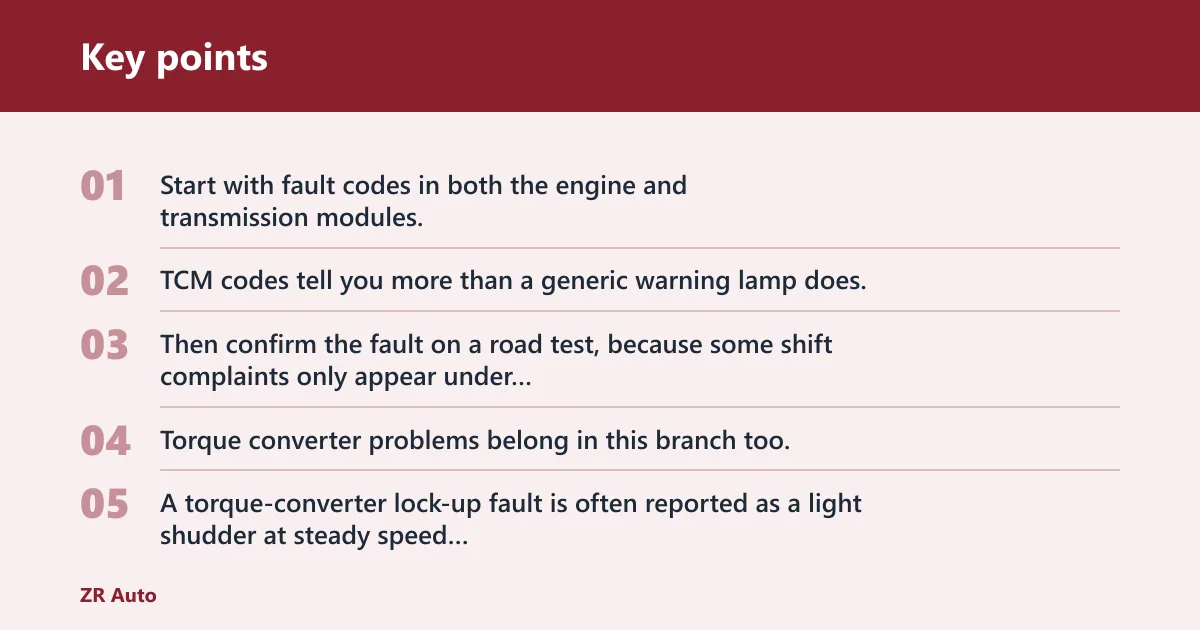
Start with fault codes in both the engine and transmission modules. TCM codes tell you more than a generic warning lamp does. Then confirm the fault on a road test, because some shift complaints only appear under load, during kickdown, or at a specific speed range.
Torque converter problems belong in this branch too. A torque-converter lock-up fault is often reported as a light shudder at steady speed rather than a full gearbox failure. That distinction matters because the transmission internals may still be sound.
The hybrid Sportage adds another layer. The Sportage is also available in petrol hybrid configuration, and Kia says the Sportage can have a Remote Smart Parking Assist system integrated to the smart key that can start the car remotely and control forward and backward movement. Low-speed blending, engine restart, and regeneration can all feel unusual if you are used to a conventional automatic, so not every jerk is a gearbox fault.
Kia UK mentions a 12.3-inch Supervision display in the Sportage cabin, which can help you verify whether the selected mode and warning messages match the symptom. The Sportage can also be fitted with 17-inch, 18-inch, or 19-inch alloy wheels depending on trim; that does not change gearbox diagnosis, but it is a reminder that Sportage equipment varies by version, so model awareness matters.
Is a Kia Sportage gearbox problem expensive to fix?
It can be, but the cost depends on the fault path. Fluid service and leak repair are usually much cheaper than a rebuild or replacement. A clutch job on a manual Sportage is typically less involved than replacing a damaged automatic transmission, but dual-mass flywheel wear can raise the bill.
Diagnosis is the money-saving step. Replacing a gearbox for a selector fault, a solenoid issue, or a low-fluid leak is wasted spending. That is why code reading, fluid inspection, and road-test confirmation should happen before any major decision.
Should I keep driving if my Kia Sportage gearbox is slipping?
No, not if the slipping is repeatable or getting worse. Slipping means the drivetrain is not transferring power correctly, and continued driving can overheat the clutch or transmission and turn a repair into a rebuild. If the car loses drive, do not keep pushing it.
If the symptom is mild and only appears once, you can drive carefully to a workshop, but avoid hard acceleration, towing, and long motorway runs. A flashing warning light, limp mode, or burning smell changes that advice. Stop driving and arrange inspection.
What causes rough gear changes in a Kia Sportage?
Rough gear changes can come from low or degraded fluid, a valve body or solenoid issue, software or sensor faults, clutch wear on manual models, or torque-converter lock-up trouble on automatics. Hybrid drivability can also feel abrupt during engine transitions, which is not the same as internal gearbox failure.
The pattern matters. Rough shifts at every gear change suggest a broader hydraulic or control issue. A single harsh shift into one gear points more toward a specific solenoid, pressure-control problem, or selector input fault. That is why live data and a road test are part of proper diagnosis.
When does a Kia Sportage need a gearbox rebuild or replacement?
A rebuild or replacement makes sense when diagnosis points to internal wear, repeated metal debris in the fluid, persistent slipping, or failure that returns after fluid, software, or control-module work. If the gearbox has lost drive, has severe internal noise, or shows burned fluid and damaged clutches, a rebuild may be justified.
Replacement is usually the better call when the unit is badly contaminated, the case or hard parts are damaged, or the cost of stripping and rebuilding exceeds the value of the vehicle. Electronics faults alone usually do not require that step, so make sure the fault is proven first.
How to decide the next step
- Scan for OBD and TCM codes before clearing anything.
- Check fluid level, condition, and leak points.
- Separate manual clutch symptoms from automatic control symptoms.
- Confirm selector, interlock, and dashboard gear indication.
- Use road-test evidence to decide between repair, rebuild, or replacement.
Frequently asked questions
Why does my Kia Sportage have gearbox problems?
Most Sportage gearbox complaints come from a limited set of faults: fluid loss, clutch wear on manual models, selector or shift-by-wire errors, control-module or solenoid issues, torque-converter shudder on automatics, or internal wear. The exact cause depends on the transmission type, the warning signs, and the service history.
What are the common gearbox problems on a Kia Sportage?
Common complaints include slipping, shudder, delayed engagement, harsh shifts, warning lights, and dashboard gear mismatch. Manual cars often point toward the clutch first, while automatics need fluid, valve body, mechatronics, and torque-converter checks. Hybrid Sportage models also need a careful drivability comparison so normal blending is not mistaken for failure.
Can low transmission fluid cause Kia Sportage shifting problems?
Yes. Low fluid can cause delayed engagement, flare, shudder, and harsh shifts because hydraulic pressure drops. If the fluid is also dark or burnt, the problem may be more serious than a simple top-up. You also need to find the leak or the reason the fluid level fell.