Is the Lincoln Navigator Reliable as a Used SUV?
Yes, Lincoln Navigator can be a reliable used SUV if you buy one with complete maintenance records, clean diagnostics, and no signs of air-suspension, transmission, or electrical trouble. Skip neglected examples, especially high-mileage ones. Miss those checks and repair bills can outrun the purchase price. This guide breaks down a used-buyer risk matrix, mileage thresholds, and the inspection evidence that matters before you commit.
Lincoln Navigator used reliability basics
The Lincoln Navigator is Lincoln’s large luxury SUV. It seats up to 8 passengers, uses a twin turbocharged 3.5L V6, and is available with 4×4. In 2027 form, it delivers 440 horsepower and 510 lb-ft of torque, with towing up to 8,700 lbs when properly equipped. The Navigator L is the extended-length version, and Lincoln says both models offer three-row seating.
That package explains the appeal and the risk. You are buying a full-size luxury SUV with large-body hardware, electronic driver aids, and comfort systems that cost more to repair than the average mainstream SUV. Used reliability sits in the middle, with good examples and expensive failures in the same model line.
Why warranty status matters more than brochure specs
A Navigator that is still inside Lincoln coverage is a different ownership bet from one that is out of warranty. The same air suspension, infotainment, and powertrain components become far less forgiving once you are paying the bill. The safest used purchase is one with records, proof of recall completion, and a warranty cushion.
That is also why mileage alone is not the whole story. A well-maintained 70,000-mile example can be safer than a neglected 45,000-mile one if the lower-mile vehicle has warning lights, uneven tire wear, or skipped service. Condition and records matter more than age alone.
What the reliability data says
Consumer Reports uses predicted reliability scores based on subscriber survey reporting. That makes it useful for spotting trend lines, but it is not a teardown or a warranty claim report. J.D. Power’s Vehicle Dependability Study tracks problems per 100 vehicles, or PP100, and lower is better. NHTSA adds recall data and consumer complaints, which helps you check safety-related patterns.
How to read those sources
Use Consumer Reports to judge expected trouble spots across ownership, J.D. Power to compare dependability in a three-year-old-vehicle window, and NHTSA to see whether a model year has recall activity or repeated complaint themes. None of those sources replaces a vehicle-specific inspection. They tell you where to look.
For a used Navigator, the practical reading is simple: do not buy on reputation alone. If the records are thin, the fault history is messy, or the dashboard has unresolved alerts, the model’s luxury status does not protect you from expensive repairs.
Reliability scorecard for used buyers
| Model year range | Mileage band | Warranty status | Maintenance history quality | Red-flag symptoms | Estimated risk level | Buy/no-buy recommendation |
|---|---|---|---|---|---|---|
| 2017-2019 | Under 60,000 miles | Likely partial or expired, depending on date | Complete records, on-time service, recall proof | No warning lights, level ride height, no harsh shifts, no screen resets | Moderate | Buy only with inspection and a strong price |
| 2017-2019 | Over 80,000 miles | Usually out of warranty | Excellent records required | Air-suspension sag, transmission hesitation, electrical glitches, uneven tires | High | Usually no-buy unless priced for repairs |
| 2020-2022 | Under 50,000 miles | May still have remaining coverage | Strong records preferred | Infotainment rebooting, warning lamps, rough idle, 4×4 messages | Moderate | Buy if diagnostics are clean |
| 2020-2022 | 50,000-75,000 miles | Often near or beyond warranty limit | Full maintenance file needed | Delayed shifts, compressor noise, suspension settling, misfiring, battery issues | Moderate to high | Buy only with a large discount and inspection |
| 2023-2026 | Under 40,000 miles | More likely to retain coverage | Recent dealer service and recall completion | Any stored codes, infotainment freezes, uneven stance, brake or steering complaints | Lower to moderate | Best used-buyer zone if price fits |
| Any year | High-mileage, incomplete records | Out of warranty or near expiry | Poor or missing history | Multiple minor faults, cosmetic wear, fluid leaks, tire mismatch | High | No-buy unless repair budget is already built in |
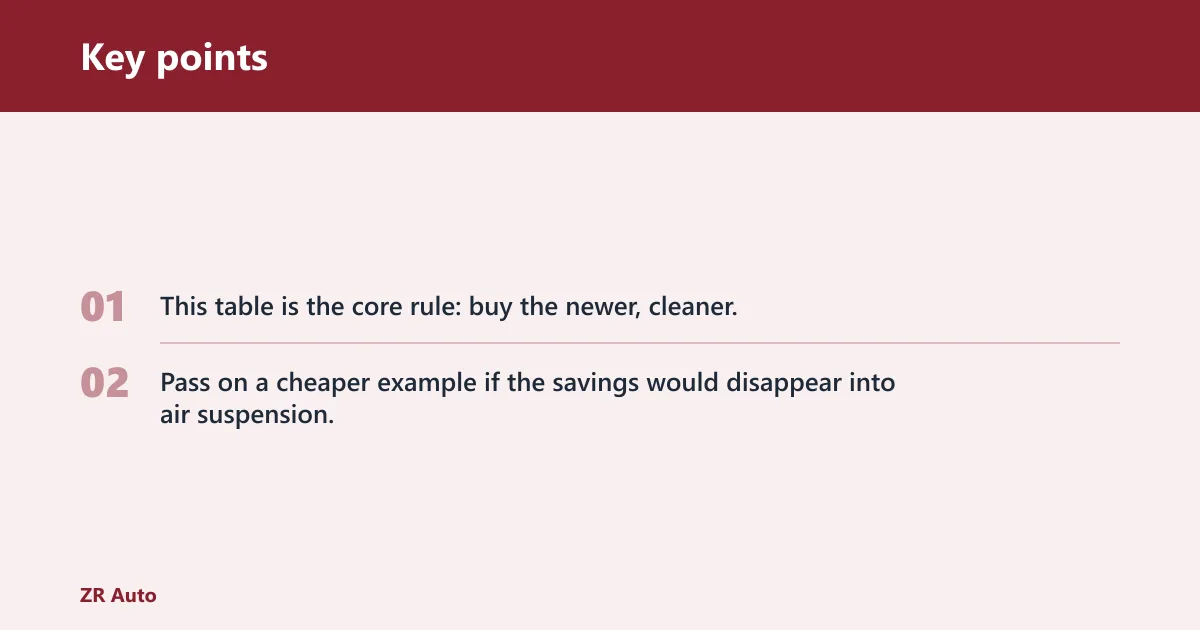
This table is the core rule: buy the newer, cleaner, better-documented truck only if the symptoms are quiet. Pass on a cheaper example if the savings would disappear into air suspension, electronics, or transmission work.
What problems should you check?
The most common used-Navigator trouble areas are air suspension, infotainment or SYNC glitches, electrical issues, and powertrain concerns. Those categories matter because they often show up as symptoms you can see or feel on a short drive: warning lights, ride-height changes, rough shifting, infotainment resets, or uneven tire wear.
Air suspension and ride height issues
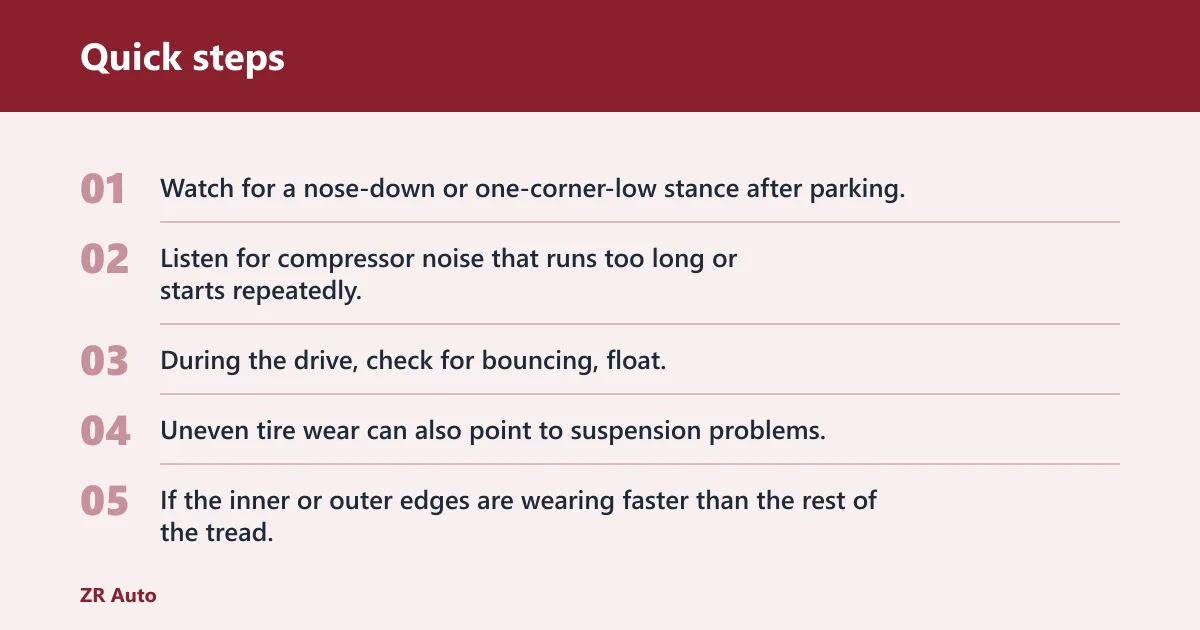
Watch for a nose-down or one-corner-low stance after parking, especially if the vehicle sits lower after several hours. Listen for compressor noise that runs too long or starts repeatedly. During the drive, check for bouncing, float, or a harsh impact that suggests the system is not controlling the body well.
Uneven tire wear can also point to suspension problems. If the inner or outer edges are wearing faster than the rest of the tread, the alignment may be off or the suspension may not be holding height evenly. That is a repair clue, not a cosmetic detail.
Infotainment, SYNC, and electrical glitches
Infotainment complaints often show up as frozen screens, repeated reboots, Bluetooth dropouts, or climate settings that do not respond properly. Electrical issues can also appear as warning lights that come and go, seat or window faults, or features that work one day and fail the next. These are common on complex luxury SUVs.
Say your 2021 Navigator starts normally, but the center screen blanks twice during a 15-minute drive and the driver information display shows a fault message after restart. That pattern is not a harmless annoyance. It is a sign to scan for stored codes and review module history before you buy.
Engine, transmission, and 4×4 warning signs
The twin-turbocharged V6 should pull cleanly, with no stumble or hesitation. Rough idle, misfire behavior, delayed gear engagement, or hard shifts deserve attention. If the 4×4 system shows a message, binds in turns, or leaves a warning on the dash, treat that as a real cost risk, not a minor warning.
Picture a high-mileage Navigator L that feels fine at neighborhood speeds but shudders on moderate acceleration and pauses before shifting into the next gear. That combination can point to transmission or engine management trouble, and the cost of diagnosis alone can be enough to change the deal.
Which model years are safest to buy?
Newer model years are usually the safer bet, but they are not automatically good. The better used purchase is the one with a cleaner service file, fewer open recalls, and fewer symptom clues. Older examples can still make sense if the records are strong and the price reflects age and wear.
Standard Navigator versus Navigator L
Lincoln Navigator and Navigator L both offer three-row seating, but the Navigator L is the larger, cargo-focused body. Lincoln lists the Navigator L length at 221.9 inches. The extra length can help if you need cargo room with all three rows in use, but it also means more body, more weight, and more to inspect in parking damage, tire wear, and suspension condition.
Reliability priorities do not change just because the body is longer. The same service records, tire condition, suspension checks, and electronics checks matter on both. The L version simply makes size, parking damage, and rear cargo wear more important in your walkaround.
How records and recalls change the answer
A clean title is not enough. You want documented oil changes, transmission service if applicable, repair invoices, and evidence that NHTSA recalls were completed. A Navigator with incomplete paperwork is harder to judge, and that uncertainty should lower your offer or end the deal.
What should you inspect before buying?
Use the test drive and inspection to look for symptoms, not impressions. A quiet cabin does not matter if the vehicle throws codes, settles unevenly, or shifts poorly. A pre-purchase inspection is the right next step whenever the history is incomplete or the truck is near the end of warranty.
- Start the vehicle cold and check for warning lights, delayed starts, rough idle, and abnormal exhaust smell.
- Drive at low speed and highway speed to feel for rough shifting, hesitation, steering pull, or vibration.
- Park on level ground and check for ride-height changes, sagging corners, and uneven tire wear.
- Cycle the infotainment, phone pairing, climate controls, cameras, and driver displays.
- Ask for service records, recall completion, and any diagnostic scan results.
- Schedule a pre-purchase inspection that includes suspension, transmission, electrical, and underbody checks.
One more practical rule helps. If the seller cannot explain a dashboard warning, a suspension noise, or a recent battery replacement, assume the problem still exists until a scan tool proves otherwise.
Lincoln Navigator ownership costs
Repairs can be expensive after warranty because the Navigator is a luxury SUV with complex systems. Air suspension parts, electronic modules, and turbocharged powertrain work can cost far more than repairs on simpler SUVs. That is why the same vehicle can be a sensible purchase under warranty and a risky one after coverage ends.
BlueCruise, Pickup & Delivery, and CPO coverage
The same source says BlueCruise is available across all four 2026 SUV models, and Navigator includes 4 years of it per Lincoln FAQ. That feature does not improve mechanical reliability, but it adds driver-assist value on a newer purchase. It should still work only as a bonus, not a reason to ignore condition.
Lincoln Pickup & Delivery is available for 2017 model-year and newer vehicles under warranty. Owners of 2016 and prior model-year vehicles may arrange pickup and delivery service at a cost. That matters for convenience, but it does not change the repair risk of an older truck.
Lincoln Certified Pre-Owned is the safer purchase path when available. Dealer sources describe a rigorous inspection, a comprehensive limited warranty, and a 200-point inspection. For a used Navigator, that extra coverage can matter more than a small price cut on an unverified truck.
How warranty coverage changes the buy decision
If the vehicle is still under coverage and the inspection is clean, a Navigator can be a reasonable buy. If it is out of warranty, has missing records, and shows even small signs of suspension or electrical trouble, the safer answer is no. A lower purchase price does not fix hidden repair exposure.
Frequently asked questions
Is the Lincoln Navigator reliable as a used SUV?
It can be, but only in the right condition. The Navigator is best treated as a mixed-reliability used luxury SUV with acceptable odds when maintenance records are solid, diagnostics are clean, and suspension and electrical systems show no symptoms. Once warranty coverage is gone and service history is thin, the risk rises fast.
What model years of Lincoln Navigator are the most reliable used?
The safest choice is usually the newest example you can afford with strong records, clean recall status, and low symptom count. Newer years tend to be the better bet than older ones, but condition matters more than age. A well-kept older truck can beat a neglected newer one.
What are the most common problems with a used Lincoln Navigator?
The common trouble areas are air suspension, infotainment or SYNC glitches, electrical issues, and powertrain concerns. On a used purchase, check for warning lights, ride-height changes, infotainment resets, rough shifting, delayed engagement, and uneven tire wear. Those symptoms often point to real repair exposure.
Are Lincoln Navigator repairs expensive after warranty?
Usually yes. The Navigator is a luxury SUV with complex systems, so suspension, electronics, and turbocharged engine repairs can cost more than average. Once warranty coverage ends, even a few small problems can add up quickly. That is why records and a pre-purchase inspection matter so much.
How long does a Lincoln Navigator usually last?
There is no fixed mileage number that fits every truck. A Navigator can last a long time if it is serviced on schedule, kept free of overheating or suspension faults, and repaired early when symptoms appear. Missing records, neglected fluids, and unresolved warnings shorten that window fast.
Should I buy a high-mileage Lincoln Navigator?
Only if the price discount is large enough to cover likely repairs and the maintenance history is excellent. High-mileage examples need clean electronics, even tire wear, proper ride height, and a smooth transmission. If any of those are off, the risk is high enough to pass.
How does the Navigator compare to other luxury SUVs for reliability?
It sits in the middle of the pack, not at the top. Consumer Reports, J.D. Power, and NHTSA data all point to the same buyer lesson: compare the exact vehicle’s records, recall status, and symptom profile, not just the badge. Some rivals may be easier to live with, but condition still decides the deal.