How to reset VW Tiguan tyre pressure warning light
Reset a VW Tiguan tyre-pressure warning by using the stored-pressure menu on 2013–2016 cars or the MyVW/vehicle settings menu on 2017–2020 models after you set every tyre to the placard pressure. Ignore a warning and you risk poor handling, uneven wear, and missed punctures. This guide shows the reset steps by generation and how to tell a normal reset from a TPMS fault that needs sensor diagnosis.
Quick Answer
The Tiguan uses two TPMS layouts. Earlier cars often use indirect TPMS, which watches wheel-speed differences and stores a new baseline after a reset. Some trims use sensor-based TPMS with pressure transmitters in the wheels, so a reset only clears the reference and does not fix a bad tyre or failed sensor.
A warning can appear after you correct pressure or after a temperature drop. The system sees a change, not a repair. The Tiguan uses Volkswagen’s MQB platform, and the model line has had major equipment variation across years and trims, including 4Motion and driver-assist options such as automatic emergency braking with pedestrian detection and lane keeping assist.
When the light goes away after a reset and a short drive, the issue was usually a stored-baseline problem. When it returns, treat it as a pressure mismatch, puncture, valve leak, or TPMS fault until proven otherwise.
📊 Volkswagen sold over 2.6 million examples of the previous Tiguan. Source: VW doesn’t mess with the formula for new Tiguan.
What you need before you reset the system
- A digital tyre gauge accurate to 1 psi or 0.1 bar.
- An air compressor or access to one.
- The driver-door placard pressures for the exact load condition.
- The vehicle ignition on, or the engine running if your trim requires it.
- The Volkswagen owner’s manual or vehicle handbook for your exact model year.
- If fitted, the spare tyre pressure too.
Check pressures only when the tyres have sat long enough that road heat has faded, ideally before the car moves. Use the placard on the driver’s door jamb, not a generic internet chart, because front and rear values can differ.
For example, if your front tyres are a little below the placard pressure, top them up to the cold setting listed on the vehicle placard. Inflate to 35 psi first, then reset. If you reset at 31 psi, the Tiguan may learn the wrong baseline and keep warning later.
How do you reset tyre pressure on a VW Tiguan?
First bring every monitored tyre to the placard pressure, then store that pressure as the new reference in the car’s menu or with the reset button. On some Tiguan trims, the warning light may stay on until you drive a short distance after the baseline is stored, so do not judge the reset from the parked display alone.
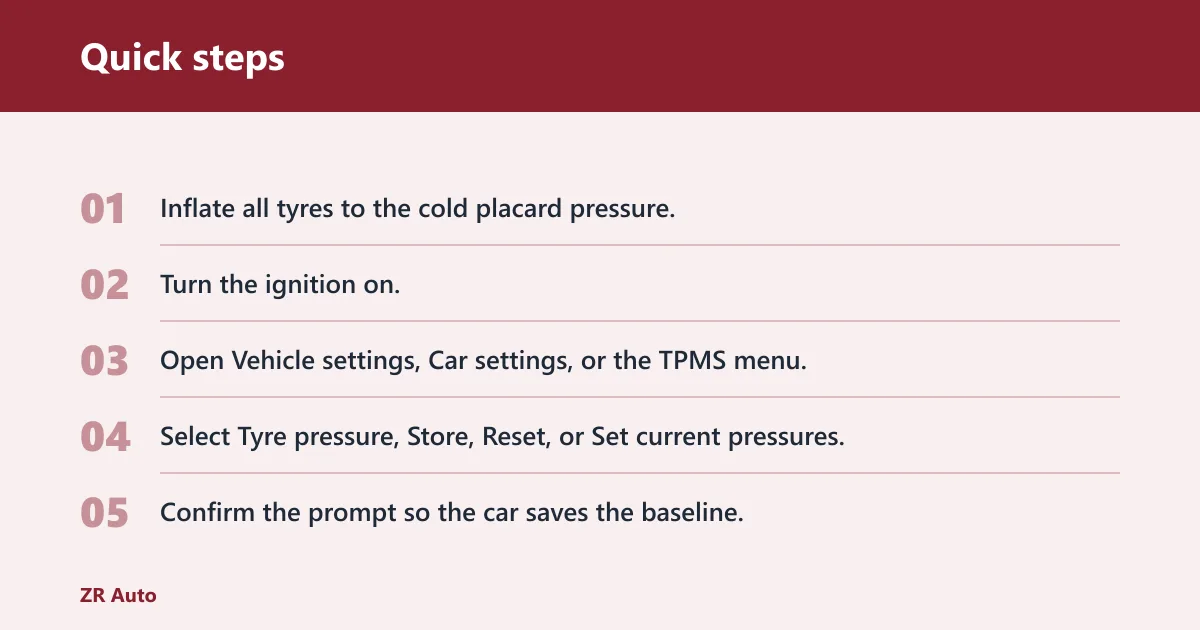
- Inflate all tyres to the cold placard pressure.
- Turn the ignition on.
- Open Vehicle settings, Car settings, or the TPMS menu.
- Select Tyre pressure, Store, Reset, or Set current pressures.
- Confirm the prompt so the car saves the baseline.
- Drive at normal road speed for several miles so the system can relearn or clear the warning.
If the menu asks you to confirm current pressures, do that only after every tyre is correct. A common first-timer mistake is resetting before the last tyre is finished.
If that didn’t work, try this next
- Recheck all four tyres with the gauge.
- Inspect the tread and sidewalls for a nail, cut, or bulge.
- Repeat the menu path and make sure you saved, not just opened, the screen.
- Drive again after the reset if the light has not yet cleared.
If the tyre-pressure light stays on after what seems to be a correct reset and a short drive, recheck the system. That usually means the car still sees a real pressure problem, or the system did not store the new baseline.
Which reset method does your Tiguan use?
The reset location changes with generation and trim. Older Tiguan models commonly use a button or a stored-pressure function in the infotainment system. Later cars moved the function deeper into Vehicle settings. If the screen wording is different, the owner’s manual should match the exact year and trim more closely than a generic guide.
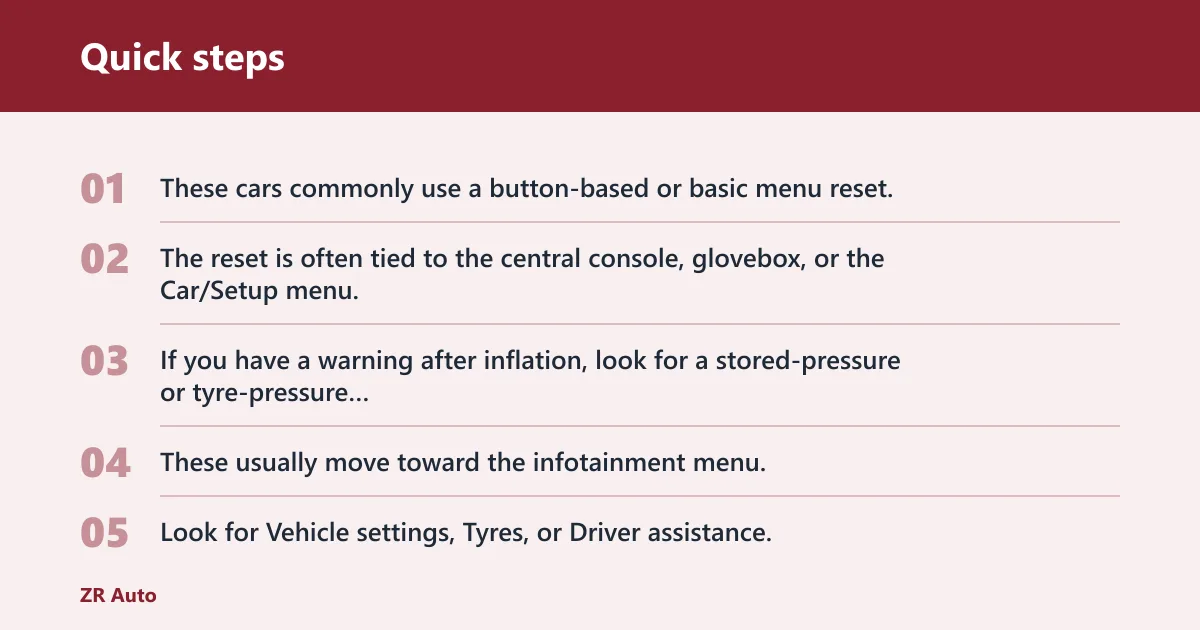
2013 to 2015 models
These cars commonly use a button-based or basic menu reset. The reset is often tied to the central console, glovebox, or the Car/Setup menu, depending on trim. If you have a warning after inflation, look for a stored-pressure or tyre-pressure function rather than a dedicated dashboard switch on every version.
2016 to 2018 models
These usually move toward the infotainment menu. Look for Vehicle settings, Tyres, or Driver assistance, then a tyre-pressure store or reset option. Some trims require the ignition on and a confirmation screen before the current pressures are saved.
2019 to 2020 models
Many late-model Tiguan versions use the infotainment screen rather than a physical button. The path is commonly Vehicle > Settings > Tyres or Car > Tyre pressure, then Store or Reset. If the option is missing, the car may have a different software layout or a fault that prevents normal storage.
Button location versus infotainment menu path
Button-based systems usually rely on a long press or a short reset press after inflation. Menu-based systems usually ask you to confirm the current pressures on screen. Both methods do the same job: they set the inflated tyres as the baseline for the monitoring system.
| Tiguan year range | Reset method | Menu path or button location | Common failure symptom | Next diagnostic step |
|---|---|---|---|---|
| 2013–2015 | Button or stored-pressure menu | Console or Car/Setup stored tyre-pressure function | Warning stays on after pressing the button | Check placard pressure, then repeat the store step |
| 2016–2018 | Infotainment menu | Vehicle settings > Tyres > Store current pressures | No confirmation screen appears | Turn ignition on fully and re-enter the menu |
| 2019–2020 | Infotainment menu | Car/Vehicle settings > Tyre pressure > Reset or Store | Reset option missing from screen | Check the handbook; inspect for a TPMS fault or different trim layout |
What if the tyre pressure light won’t reset on a VW Tiguan?
When the light will not clear, assume the car still sees a real problem until you prove otherwise. The most common causes are one tyre still low, a slow puncture, an incomplete confirmation in the menu, or a system that needs a different reset path for that model year.
- Recheck every tyre against the placard pressure when cold.
- Inspect for a screw, nail, sidewall damage, or a valve leak.
- Return to Vehicle settings > Tyres and repeat the Store/Reset confirmation.
- Drive a short distance if the light is steady but not flashing.
- If the warning returns, book TPMS diagnosis for sensor or system faults.
A flashing or repeatedly returning warning is more serious than a brief light after inflation. That pattern can point to a puncture, a damaged wheel sensor, or a mismatch between the stored baseline and the actual pressure.
Common mistakes during a Tiguan tyre pressure reset
Resetting before inflation is the biggest error. The car will store the wrong baseline and the warning often comes back. Another mistake is using hot tyre readings from a recent drive. Heat raises pressure enough to mislead the system and the gauge.
Do not ignore the spare tyre if your Tiguan is equipped to monitor it. Check the handbook for that setup, because some vehicles include the spare in the pressure routine and others do not. Also remember that seasonal temperature drops can trigger the light even when the tyres looked fine the week before.
Warning lights may also appear after a proper reset if the car needs a longer drive cycle. If the warning remains after a normal drive and a second pressure check, the next step is fault diagnosis rather than another blind reset.
Frequently asked questions
where is the tyre pressure reset button on a VW Tiguan?
There is no single location across all years. Some 2013–2015 cars use a button or simple stored-pressure function, while later models put the reset in Vehicle settings or Car settings. Check the owner’s manual for the exact button, menu name, or confirmation screen on your trim.
do I need to reset tyre pressure after inflating tyres on a Tiguan?
Yes, if the car uses stored-pressure monitoring or a menu-based TPMS. Inflate every tyre to the cold placard pressure first, then store the new baseline. If you skip the reset, the warning can stay on because the car still remembers the old lower pressures.
how to reset tyre pressure on vw tiguan 2015
Look for a stored tyre-pressure function or a physical reset control, depending on trim. The common sequence is ignition on, open the tyre-pressure setting, confirm the current pressures, then drive. If the warning persists, recheck the cold pressures and inspect for a puncture before repeating the reset.
Volkswagen sold over 2.6 million examples of the previous Tiguan, and the redesigned model brought 145 liters more cargo space, with 615 liters of boot capacity with the seats up and 1,655 liters folded flat. VW said the range would include eight engine options, starting at 85 kW and topping out at 176 kW, with a Tiguan GTE concept shown at 160 kW. The SUV can also be equipped with 4Motion and can tow 2,500 kg.