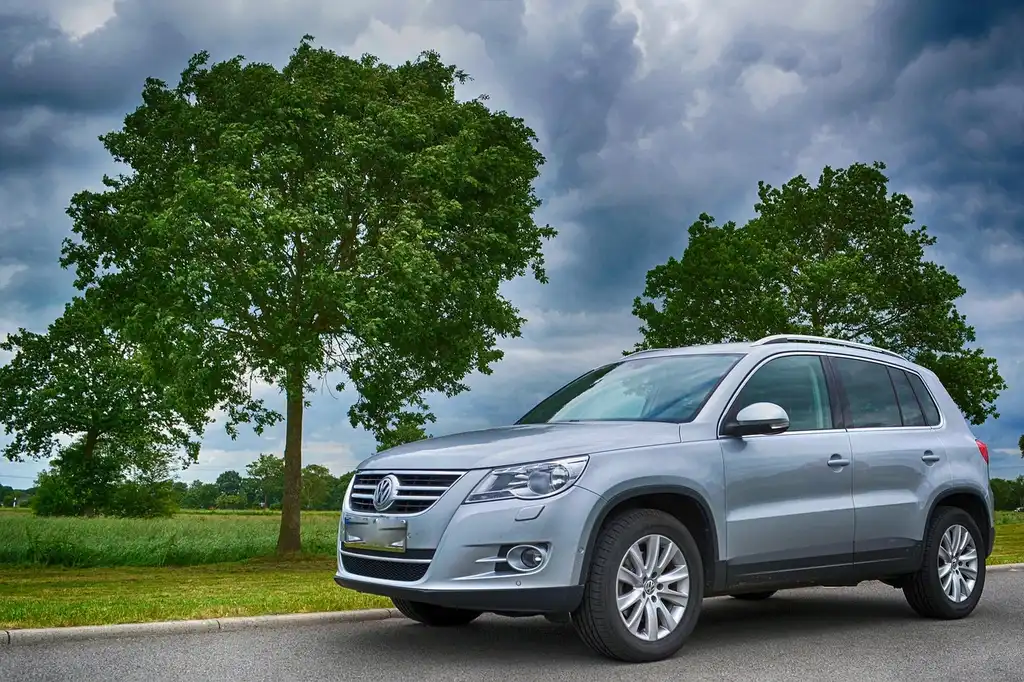
What Are the Best VW Tiguan Years to Buy?
The stronger VW Tiguan years to buy are generally 2022-2024 for many shoppers, with 2021 often considered a close alternative. Pick 2009-2011 only if price matters most, and 2018-2020 only if you accept more repair risk. Choosing the wrong Tiguan year can mean timing-chain, coolant, or transmission-related repairs that quickly erase any savings. This guide ranks Tiguan model years by buyer profile, budget, and likely maintenance risk.
Best Tiguan years by buyer
If you want the lowest-risk used Tiguan choice, start with 2022-2024, then 2021. If budget comes first, 2009-2011 can make sense, but only with proof of maintenance and a clean scan. Shoppers who need all-wheel drive and plan to keep the SUV for years should focus on later Mk2 models with the 8-speed automatic and 4Motion.
Best years for budget buyers
2009-2011 are the lower-cost entry years, but they are not low-risk years. These early Mk1 models can be affordable because age and miles have already filtered the market, yet that same age raises exposure to timing-chain wear, cooling-system leaks, and tired suspension parts. Buy only if the paperwork is unusually strong.
Best years for AWD shoppers
2022-2024 are the cleanest fit for buyers who want 4Motion. They pair the newer Tiguan chassis with the 8-speed automatic, better fuel economy than the old turbo-fours, and the widest availability of AWD in the U.S. market. For cold climates, the resale and winter-use appeal is higher than on older models.
Best years for lower-risk ownership
These years benefit from the later Mk2 update, the EA888 2.0L turbo four-cylinder in its more refined form, and the 8-speed automatic. They still need the same oil, coolant, and transmission service VW specifies, but the risk profile is easier to live with.
Tiguan year matrix
| Model years | Reliability risk | Maintenance burden | Drivetrain desirability | Recommended buyer profile |
|---|---|---|---|---|
| 2009-2011 | High | High | Fair; AWD available, but age matters more | Budget buyer with records and inspection discipline |
| 2012-2014 | Medium-high | High | Fair | Only if price is strong and history is complete |
| 2015-2017 | Medium | Medium-high | Fair to good | Value shopper who can tolerate some repair exposure |
| 2018-2020 | Medium-high | Medium | Good; 4Motion common on many trims | Buyer who wants newer styling but will inspect carefully |
| 2021 | Medium-low | Medium | Good | Most shoppers who want a balanced pick |
| 2022-2024 | Low | Medium | Very good; strongest overall mix | Buyer who wants the best all-around used Tiguan |
That matrix is the short version. The reason 2022-2024 score best is not just age. It is the mix of the Mk2 refresh, the EA888 2.0L’s later calibration, and the 8-speed automatic’s smoother highway behavior and easier ownership profile compared with earlier Tiguan setups.
What changed between Mk1 and Mk2?
Mk1 Tiguan models, roughly 2009-2017, are the smaller, older-generation SUVs in this family. Mk2 models, roughly 2018-2024 in U.S. trim, ride on a larger platform, have more cargo and rear-seat room, and use newer drivetrains. For most buyers, the generation break matters more than a small model-year spread within one generation.
Mk1 Tiguan basics
Mk1 years were typically fitted with an earlier turbocharged 2.0L four-cylinder and older automatic or DSG setups depending on year and market. They can still be appealing because the chassis feels compact and prices are lower, but age-related repairs start to dominate ownership. Look closely at cooling parts, ignition components, and service history.
Mk2 Tiguan redesign
Mk2 brought the Tiguan into a more practical size class, and later examples pair the EA888 2.0L turbo with an 8-speed automatic. That matters because drivability improves and service expectations are more familiar to mainstream buyers. The cabin and cargo space also make Mk2 a better family SUV than the older trucklet-like Mk1.
Model-year breakpoints that matter to buyers
2018 is commonly treated as the key redesign year for many U.S. shoppers. 2021 is a useful crossover point because many listings from that point onward reflect the later, more sorted Mk2 version. If you are shopping by risk rather than style, the practical breakpoints are 2011, 2017, 2018, and 2021.
Which Tiguan engine and transmission should you want?
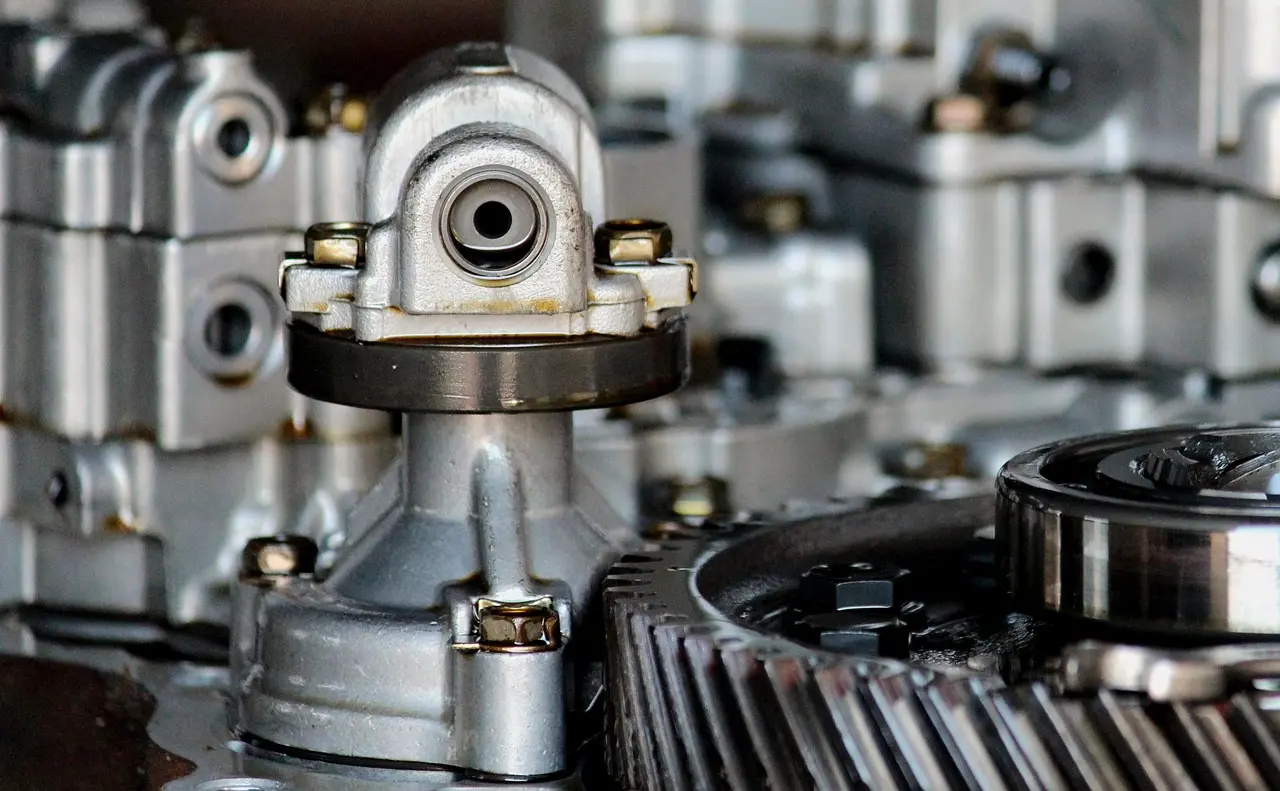
A commonly recommended used Tiguan powertrain choice is the later EA888 2.0L turbocharged four-cylinder paired with the 8-speed automatic. Earlier EA888 versions are not bad by default, but they are more sensitive to maintenance timing, and older gearbox choices can add cost or complexity. For most buyers, later Mk2 hardware is the easier ownership path.
EA888 2.0L engine differences by year
The EA888 is VW’s common turbocharged 2.0L four-cylinder family, and it matters here because Tiguan ownership costs often hinge on how well this engine was maintained. In Tiguan use, oil quality, oil change intervals, and cooling-system health matter more than peak power. Poor maintenance can show up as oil consumption, leaks, or chain-related noise.
Older Tiguan versions tied to earlier EA888 generations deserve more scrutiny than later Mk2 models. That does not mean every early engine is bad. It means a clean service file matters more, especially for oil changes that were done on time and for any evidence of cooling-system work.
8-speed automatic context in later models
It suits daily driving, keeps highway rpm low, and avoids some of the ownership hesitation that buyers have around earlier VW dual-clutch setups. It still needs fluid service at the intervals Volkswagen specifies for the transmission family, so ignored maintenance is still a risk.
Why transmission service history matters
Transmission service records are useful because a clean-shifting Tiguan can still hide deferred maintenance. If the fluid has never been changed on a high-mileage unit, budget for service soon after purchase. If a listing cannot show any record of drivetrain maintenance, assume the asking price should be lower.
Say your commute is 42 miles each way with highway traffic and winter slush. A 2023 Tiguan 4Motion with the 8-speed automatic is a more sensible fit than a cheaper 2013 model, because the newer drivetrain lowers repair exposure and the AWD system helps with foul-weather starts and resale later.
What Tiguan years should you avoid?
The years to avoid are the ones with high mileage, missing records, or repeated cooling and chain issues: especially rough 2009-2011 examples and neglected 2012-2017 models. Some 2018-2020 listings also deserve caution because they are new enough to command a premium, yet old enough to show the first expensive wear items if maintenance was skipped.
Years with higher repair exposure
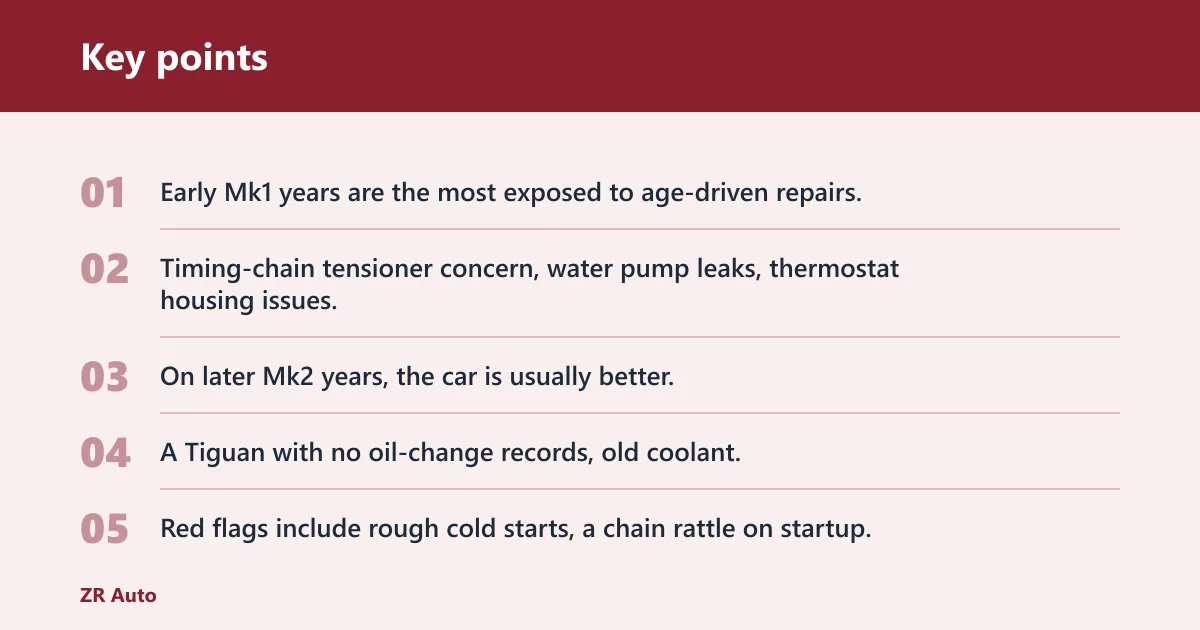
Early Mk1 years are the most exposed to age-driven repairs. Timing-chain tensioner concern, water pump leaks, thermostat housing issues, and worn suspension parts are the main reasons to be selective. On later Mk2 years, the car is usually better, but a poor service history can still create the same expensive problems.
Mileage and maintenance red flags
A Tiguan with no oil-change records, old coolant, or delayed fluid service is not a bargain. Red flags include rough cold starts, a chain rattle on startup, visible coolant residue near the pump or hoses, and warning lights for engine or cooling faults. If the car shakes at idle or hesitates under load, walk away unless diagnosis is clean.
When a cheap listing is not a deal
A low price does not offset chain, coolant, and transmission work on a neglected Tiguan. One repair can quickly exceed the discount. Suppose a 2011 listing is $2,000 below similar SUVs, but it has no proof of recent cooling-system work and starts with a brief rattle. That is usually a warning, not a savings opportunity.
Used Tiguan inspection checklist
Use this checklist before you buy. The goal is not to spot every cosmetic flaw. The goal is to catch the repairs that turn a cheap Tiguan into an expensive one within the first year of ownership.
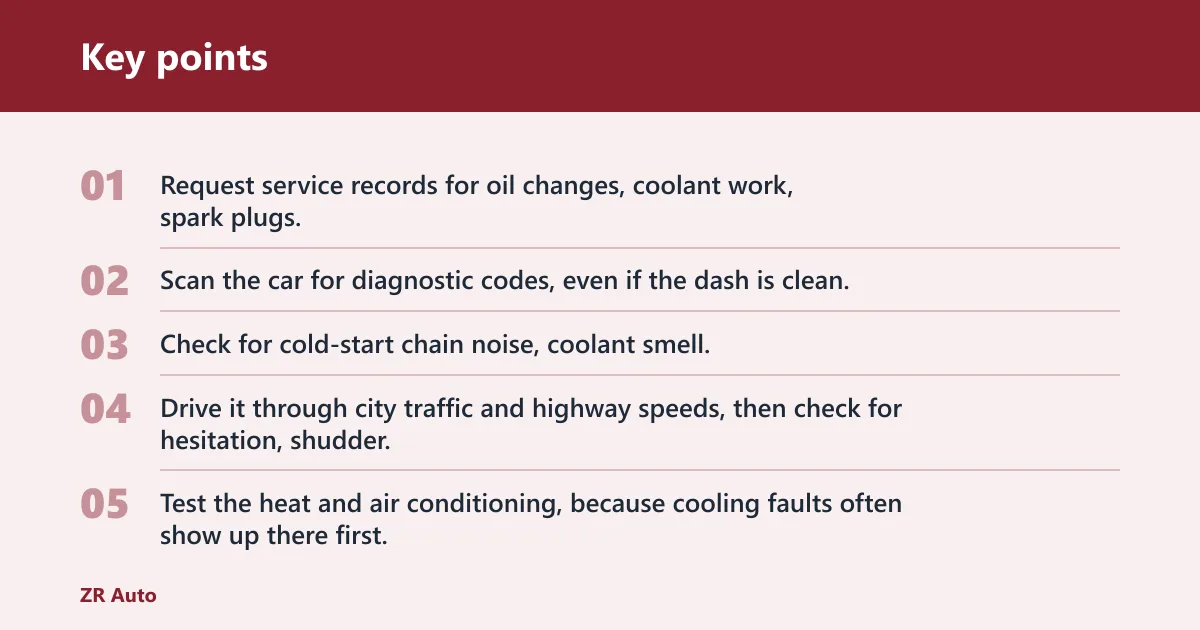
- Request service records for oil changes, coolant work, spark plugs, and transmission service.
- Scan the car for diagnostic codes, even if the dash is clean.
- Check for cold-start chain noise, coolant smell, and any wetness around the water pump area.
- Drive it through city traffic and highway speeds, then check for hesitation, shudder, or flare on shifts.
- Test the heat and air conditioning, because cooling faults often show up there first.
- Pay for a pre-purchase inspection if the car is older than 7 years, high-mileage, or missing records.
Service records to request
Ask for evidence of regular oil changes, coolant service, brake fluid service, and any transmission work. A stack of invoices is better than a vague claim that everything was “done.” For a Tiguan, a consistent maintenance pattern is often more valuable than a low odometer reading alone.
Codes and warning lights to scan
Look for engine, cooling, transmission, and AWD-related codes. Even intermittent faults matter. A VW that has recently been cleared can still store pending codes, and those codes may point to thermostat, sensor, or transmission control issues that are expensive enough to change the buy decision.
Test-drive checks for drivetrain and cooling
Cold start the car first, then listen. A brief rattle, harsh idle, or warning light that disappears after a few minutes is still relevant. During the drive, the transmission should shift cleanly, the engine should pull without hesitation, and the temperature gauge should stay steady. Any hot-spot smell after the drive deserves attention.
When to pay for a pre-purchase inspection
A common rule of thumb is to pay for a PPI on any Tiguan with about 80,000 miles or more, on any car with no detailed records, and on any listing priced below the market average. The inspection should cover scan-tool data, coolant-system checks, underbody leaks, and a road test. That fee is small compared with a chain, pump, or gearbox repair.
Ownership costs and value for money
A Tiguan is rarely the cheapest compact SUV to own, and that should be part of the buying decision. Maintenance intervals are more sensitive than on some rivals, repair exposure rises with age, and fuel economy is usually average rather than outstanding. The reward is a better driving feel and, on AWD models, stronger winter usefulness.
Insurance can be reasonable or average depending on trim, mileage, and your region, but fuel use will not be hybrid-like. Later 4Motion models may cost a bit more to maintain than front-drive versions, yet they can hold broader appeal in snowy states. That helps resale, especially for clean, well-documented examples.
Does the VW Tiguan hold its value? Better years do better. Late Mk2 models with 4Motion, clean records, and moderate miles usually hold value better than early Mk1 SUVs because buyers trust them more and winter shoppers want AWD. Neglected examples depreciate fast because the market prices in upcoming repairs.
Frequently asked questions
What is the best VW Tiguan to buy?
That combination gives you the most balanced mix of reliability risk, drivability, and resale appeal. A well-documented 2021 is the next-best choice.
What year Tiguan is the best?
For most shoppers, 2022-2024 are the best Tiguan years. They are newer, more sorted, and easier to live with than earlier generations. If price is the priority, a carefully maintained 2015-2017 can work, but it needs a more cautious inspection than a later model.
What VW Tiguan years should I avoid?
Some 2018-2020 cars also deserve caution if they are priced like a low-risk SUV but show signs of deferred maintenance. Condition matters as much as model year.
Is a used VW Tiguan reliable?
A used VW Tiguan can be reliable if you choose the right year and buy a well-maintained example. Reliability drops fast when oil changes were stretched, coolant leaks were ignored, or transmission service was skipped. The later Mk2 models are the safest place to start.
Does the VW Tiguan hold its value?
Yes, but unevenly. Later 4Motion models with clean records and modest mileage tend to hold value better than early front-drive examples because they are easier to sell in snowy markets and less likely to need immediate repairs. Poor service history hurts resale more than most buyers expect.
Which is the best VW Tiguan model?
Those trims keep the useful hardware without forcing you into the highest-cost version. If you do not need AWD, a clean front-drive example can still be a smart buy.