What Are the Most Common Ford Escape Problems?
The most common Ford Escape problems are transmission rough shifting or shuddering, coolant leaks on certain EcoBoost engines, and electrical or AWD faults. The biggest buy-no-buy flag is overheating or repeated transmission repair. Ignored, those issues can turn a cheap SUV into a four-figure repair bill fast. This guide breaks the common failures down by generation and shows you which symptoms are nuisance-level and which ones should send you to the next listing.
Ford Escape problem matrix
Use this table as the first filter. The same symptom can mean a routine fix on one generation and a major repair on another, so generation and powertrain matter as much as the warning light itself.
| Generation / setup | Most common symptom | Likely cause | Severity | Repair-range band | Buy/no-buy? |
|---|---|---|---|---|---|
| 2001-2007 first generation | Wheel well rust, brake drag, rough ride, steering looseness | Wear in suspension parts, corrosion, brake hardware aging | Medium | Low to medium | Usually maintenance item unless rust is structural |
| 2008-2012 second generation, especially 4WD | Slipping, jerking, delayed or missed shifts, transfer case noise | Transmission wear or internal transfer case issues | High | Medium to high | Red flag if symptoms are repeatable or documented |
| 2013-2019 third generation | Misfires, stalling, overheating, coolant smell, check engine light | EcoBoost overheating, cylinder head failure, fuel or oil vapor leaks | High | High | Red flag if overheating or coolant loss is present |
| 2020-present fourth generation | Infotainment faults, sensor complaints, drivability glitches | Electrical faults, control-module or harness issues | Low to medium | Low to medium | Usually maintenance or diagnosis item unless safety systems are affected |
| Any generation | Engine misfires during ignition, hesitation, stalling while driving | Ignition, fuel delivery, vacuum leak, or sensor fault | Medium to high | Low to high | Depends on whether the fault is isolated or recurring |
| Any generation with brake wear | Rear brake squeak or squeal, extra pedal pressure | Worn pads, glazed rotors, caliper or brake booster concern | Low to medium | Low to medium | Usually maintenance item unless braking feel is abnormal |
What problems does Ford Escape have?
The biggest Ford Escape complaint groups are transmission, engine, and electrical faults. They do not carry the same risk. A squeaky rear brake usually points to wear, while a slipping transmission, an overheating EcoBoost, or a recurring stall deserves a hard look before you buy.
Transmission symptoms to watch
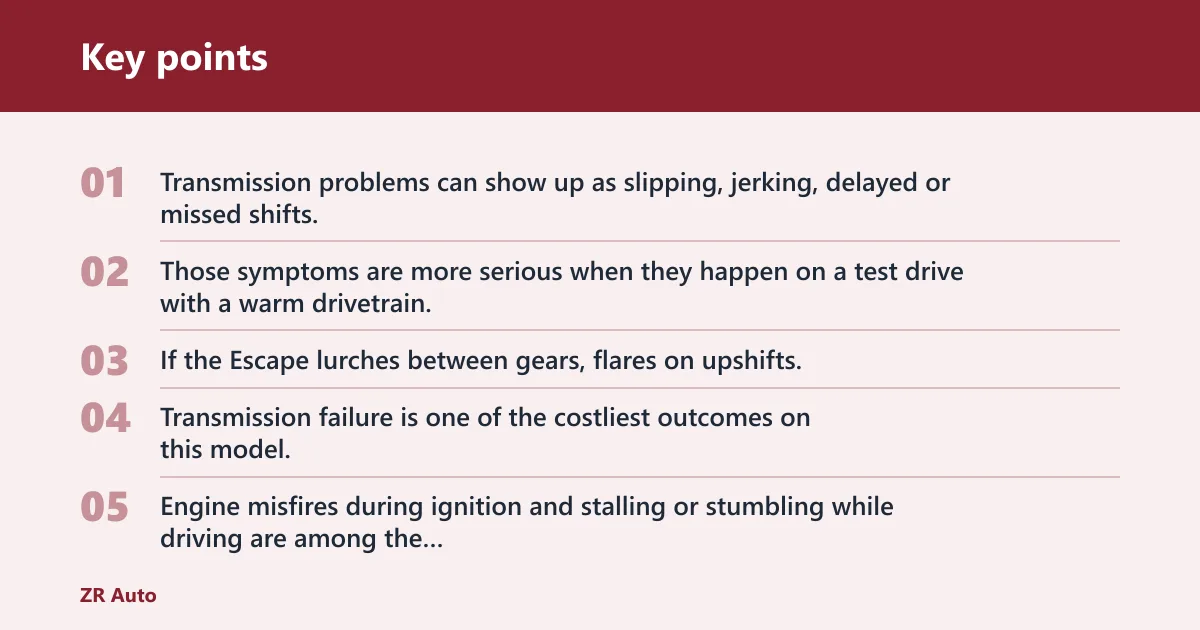
Transmission problems can show up as slipping, jerking, delayed or missed shifts, overheating, or a check engine light. Those symptoms are more serious when they happen on a test drive with a warm drivetrain, because that is when worn or failing components tend to show themselves.
If the Escape lurches between gears, flares on upshifts, or hesitates before moving off a stop, treat it as a possible drivetrain fault rather than normal behavior. Transmission failure is one of the costliest outcomes on this model, so a repeatable symptom is a strong pre-purchase warning.
Engine complaints that point to major repairs
Engine misfires during ignition and stalling or stumbling while driving are among the most important symptoms to separate from minor tune-up issues. On third-generation Escapes, EcoBoost overheating and cylinder head failure deserve special attention because they can turn into expensive repairs fast.
Oil and fuel vapor leaks also matter. A fuel smell in the engine bay, wet injector area, or coolant loss without an obvious puddle can point to a deeper problem than a simple gasket. That is especially true if the vehicle also runs rough or sets misfire codes.
Electrical faults that can look minor
Some electrical issues start with small clues: a blower motor that only works at high speeds, infotainment glitches, or random sensor complaints. Those problems may be less expensive than engine or transmission failures, but they still need diagnosis because a simple symptom can hide a wiring, resistor, or module fault.
When a climate fan works only on the highest setting, the issue often feels annoying rather than dangerous. Still, it can be a helpful sign that the vehicle has other aging electrical parts, so check for repeated warning lights, dead functions, and previous repair paperwork.
Which Ford Escape years have the most complaints?
The highest-complaint years fall into a few clusters: 2010 for powertrain complaints, 2013-2014 for engine and electrical issues, 2017 for complaint activity noted by NHTSA, and 2020 for electrical issues. That does not mean every example is bad, but it does mean you should inspect those years with more skepticism.
2010 powertrain complaints
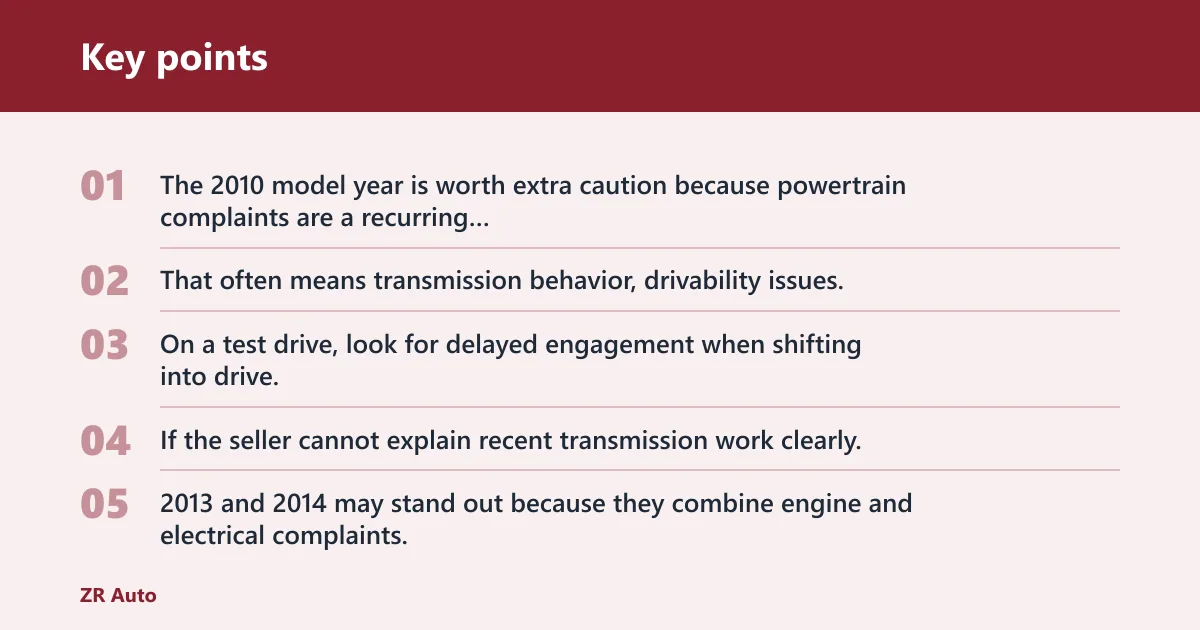
The 2010 model year is worth extra caution because powertrain complaints are a recurring theme. That often means transmission behavior, drivability issues, or a repair history that suggests the vehicle may already be on borrowed time.
On a test drive, look for delayed engagement when shifting into drive, a shudder during acceleration, or a warning light that comes and goes. If the seller cannot explain recent transmission work clearly, walk in expecting more than routine maintenance.
2013-2014 engine and electrical issues
2013 and 2014 may stand out because they combine engine and electrical complaints. That matters more than a single nuisance fault, since a buyer can end up chasing several systems at once. Third-generation Escapes from this period are the ones most likely to raise your repair risk.
Suppose a 2014 Escape idles smoothly in the driveway but stumbles after a short drive, then shows a coolant odor and a warning light. That pattern is more than a plug-and-coil problem; it can point toward overheating or a deeper engine fault that should keep you from paying strong money for the vehicle.
2017 complaint patterns
2017 is worth mentioning because complaint volume remained notable enough to appear in NHTSA-reported patterns. The key point is not that every 2017 Escape fails, but that you should not treat it as a free pass simply because it is newer than the early third-generation trucks.
Check for repeat electrical symptoms, shifting oddities, and any repair history tied to coolant, sensors, or drivability. A clean scan is helpful, but a clean scan alone does not cancel a documented symptom.
2020 electrical issues
2020 is the first model year in the fourth generation, and electrical issues are the main concern to prioritize. Newer does not always mean trouble-free, especially when sensor faults or infotainment problems keep returning after resets.
On newer Escapes, confirm that the driver aids, display screens, climate controls, and warning lamps all behave normally on a longer drive. If the same fault appears twice in one inspection, treat it as a pattern, not a fluke.
First-generation Escape issues
2001-2007 first-generation Escapes are more about aging wear than the high-dollar EcoBoost problems seen later. The main concerns are suspension fatigue, rust, brake wear, and the kind of general age-related looseness that shows up as road noise and a tired ride.
Suspension wear and rust
Wheel well rust is a major first-generation watch item, especially if corrosion has moved beyond surface scale. Rust in the arch area, underbody seams, or around mounting points can turn a cheap SUV into a poor buy quickly if the metal is soft or flaking heavily.
Excessive shock wear also belongs here. If the Escape bounces more than once after a dip, sits unevenly, or clunks over small bumps, inspect struts, bushings, and mounts before assuming the ride quality is just old age.
Transmission behavior to watch
First-generation transmission problems are usually less about one single famous failure and more about age, service history, and rough operation. A clean-shifting example can still be a fair buy, but any slipping, harsh engagement, or delayed gear change should lower your confidence fast.
Do not ignore a check engine light tied to drivability. On an older Escape, a small fault can sit on top of transmission wear, and that combination is where repair bills climb.
Brake and steering symptoms
Rear brake squeak or squeal is common enough to treat as a wear clue, not an automatic deal-breaker. Excessive brake pedal pressure is more serious, because it can point to vacuum assist issues, caliper drag, or another system fault that affects stopping feel.
Steering looseness, wandering, or noise over rough pavement should prompt a close look at the front end. On a 20-plus-year-old vehicle, small suspension parts can add up quickly.
Second-generation Escape issues
2008-2012 second-generation Escapes are where transmission and 4WD concerns rise to the front. If you are shopping this range, the drivetrain matters more than cosmetics, because internal transfer case issues and shift quality can determine whether the truck is worth keeping.
Transmission and transfer case concerns
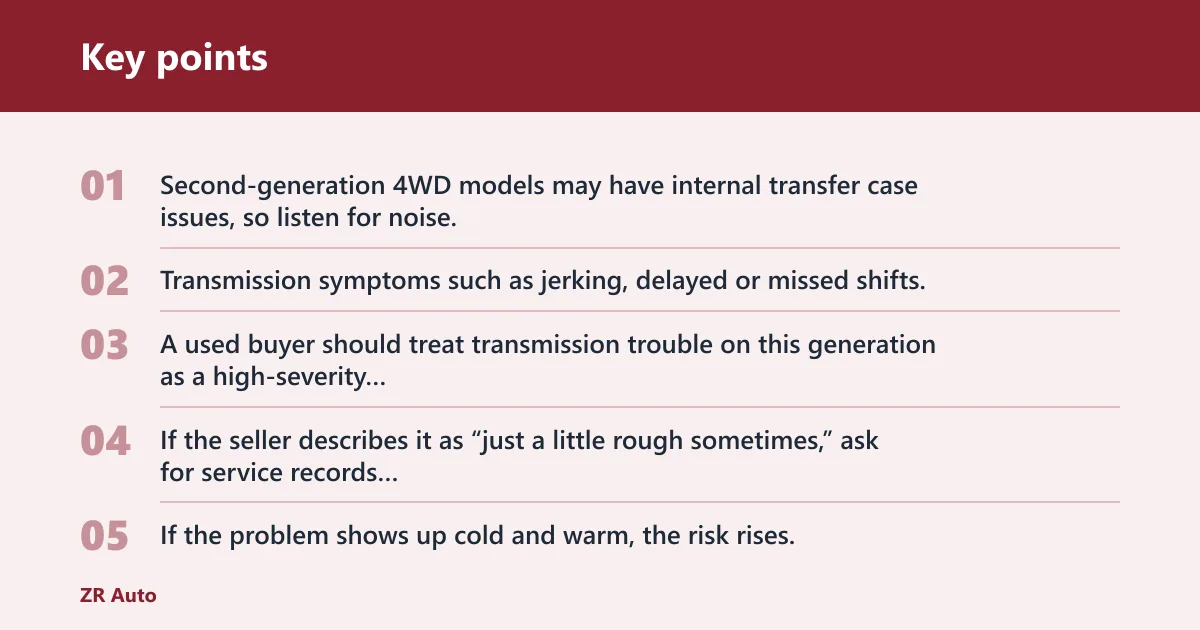
Second-generation 4WD models may have internal transfer case issues, so listen for noise, binding, or odd engagement in tight turns and low-speed maneuvers. Transmission symptoms such as jerking, delayed or missed shifts, and overheating deserve a hard pass if they happen more than once.
A used buyer should treat transmission trouble on this generation as a high-severity issue. If the seller describes it as “just a little rough sometimes,” ask for service records and a cold-start drive. If the problem shows up cold and warm, the risk rises.
Engine stalling and misfire complaints
Misfires during ignition, hesitation, and stalling or stumbling while driving are the key engine complaints to verify. Some cases are ignition or fuel delivery related, but a recurring stall can also be a sign that the vehicle needs more than routine plugs or filters.
Fuel injector problems can also appear as cracked or leaking injectors, fuel system symptoms, or visible leaks in the engine compartment. A fuel odor under the hood is never a detail to brush off.
What to check on higher-mileage examples
Look for cold-start behavior, idle quality, fluid leaks, and any history of transmission work. If the Escape shifts cleanly but smells hot after a drive, check the cooling and fluid condition before assuming it is fine.
For a second-generation SUV, a clean body does not cancel a tired drivetrain. The vehicle can look good, then fail the moment you ask for a hard acceleration run or a parking-lot turn.
Third-generation Escape issues
2013-2019 third-generation Escapes carry the most serious engine-related risk in this lineup, especially with EcoBoost powertrains. The main issues are overheating, cylinder head failure, fuel or oil vapor leaks, and electrical complaints that may seem small until they become repeat visits to the shop.
EcoBoost overheating and cylinder head failure
Third-generation Escapes may have EcoBoost overheating and cylinder head failure, and that can be a major red flag in this range. If you see coolant loss, overheating history, or repeated warning lights tied to temperature, move on unless the repair documentation is complete and recent.
When a turbocharged Escape runs hot, it is not a nuisance issue. It can become a major engine repair, and the cost can easily outrun the value of a bargain-priced used SUV.
Fuel injector leaks and engine compartment odors
Cracked or leaking fuel injectors can show up as hard starts, rough idle, fuel smell, or visible dampness around the injector area. Combine that with engine compartment odors and you have a symptom set that deserves diagnosis before purchase.
Oil and fuel vapor leaks also matter because they can mask a larger problem. A seller may describe the smell as “just old car odor,” but a consistent hydrocarbon smell under the hood should not be accepted that way.
Infotainment and sensor complaints
Infotainment malfunctions and sensor complaints are common enough on this generation to matter, but they sit below the overheating and engine-failure risks in severity. A frozen screen or dead camera is annoying; coolant loss or repeated misfire is the bigger issue.
Why 2013-2014 stand out is simple: they combine the generation’s engine and electrical weak points early in the run. Those model years deserve the most cautious inspection of the whole third generation.
Fourth-generation Escape issues
2020-present Escapes bring newer electronics, more driver aids, and different inspection priorities. Electrical complaints are the main theme, while transmission and drivability symptoms still need attention if the vehicle hesitates, shifts hard, or logs repeat faults.
Electrical complaints on newer models
2020 electrical issues often show up in infotainment, sensors, warning lamps, or features that stop working after a restart. A single glitch can be software-related, but repeat faults during one drive suggest a real diagnosis is needed.
Check every screen, button, camera, and warning message. On a newer Escape, electrical faults are not supposed to be part of the ownership routine, so repeated problems should lower your offer or end the deal.
Transmission and drivability symptoms
Delayed or missed shifts, hesitation, and harsh engagement still matter on the fourth generation. Even with a newer model, those are not normal behaviors to “wait out.” They may be software-related, but they may also point to a hardware fault that has not been solved.
Hybrid and non-hybrid versions both need a careful road test. Start from cold, drive at low speed, then merge onto a faster road so you can feel for shuddering, lag, or odd gear changes.
Hybrid and non-hybrid inspection notes
For hybrids, listen for smooth transitions between electric and gas power, and watch for warning lights after several minutes of mixed driving. For non-hybrids, focus on throttle response, shift quality, and accessory function.
A common first-timer mistake is to stop the inspection after a short idle check. That misses the symptoms that show up only after the powertrain warms up and the vehicle has to work under load.
Frequently asked questions
What are the most common problems with a Ford Escape?
The most common problems with a Ford Escape are transmission rough shifting, engine misfires or stalling, and electrical faults such as blower motor or infotainment issues. On some third-generation models, overheating and cylinder head failure matter more than normal wear. Severity depends heavily on year and powertrain.
What are the most common problems with a 2013 Ford Escape?
The 2013 Ford Escape is one of the years to inspect most carefully because engine and electrical issues are the main concern. Look for overheating, coolant loss, misfires, sensor faults, and warning lights. If the vehicle has repeat temperature-related symptoms, treat it as a major red flag.
What are the most common problems with a 2018 Ford Escape?
The 2018 Ford Escape is more likely to show drivetrain hesitation, electrical complaints, or smaller sensor and infotainment faults than the older first- and second-generation models. It is still worth checking for rough shifting, but overheating concerns are generally more important on earlier third-generation EcoBoost examples.
Do Ford Escapes have a lot of problems?
Ford Escapes have enough repeat problem patterns that a used buyer should inspect them carefully, but the answer depends on generation and engine. Older Escapes often show wear and rust, while some third-generation turbo models have more serious engine risk. A clean service record matters a lot.
What are common problems with Ford Escapes?
Common Ford Escape problems include slipping or delayed shifts, stalling, engine misfires, blower motor faults, rear brake squeal, and rust in older models. The key is to match the symptom to the generation. A minor issue on one Escape can be a costly warning sign on another.