Is the Dodge Charger Reliable as a Used Car?
A used Dodge Charger can be a smart buy if you choose a well-maintained 2015–2023 V6 or 5.7 Hemi model and avoid cars with transmission, cooling, or electrical faults. Miss that filter, and repair bills can climb fast, especially on hard-driven V8s and neglected cars. This guide breaks down lower-risk years, engine-specific weak points, and the inspection items that point to expensive ownership.
Dodge Charger reliability overview
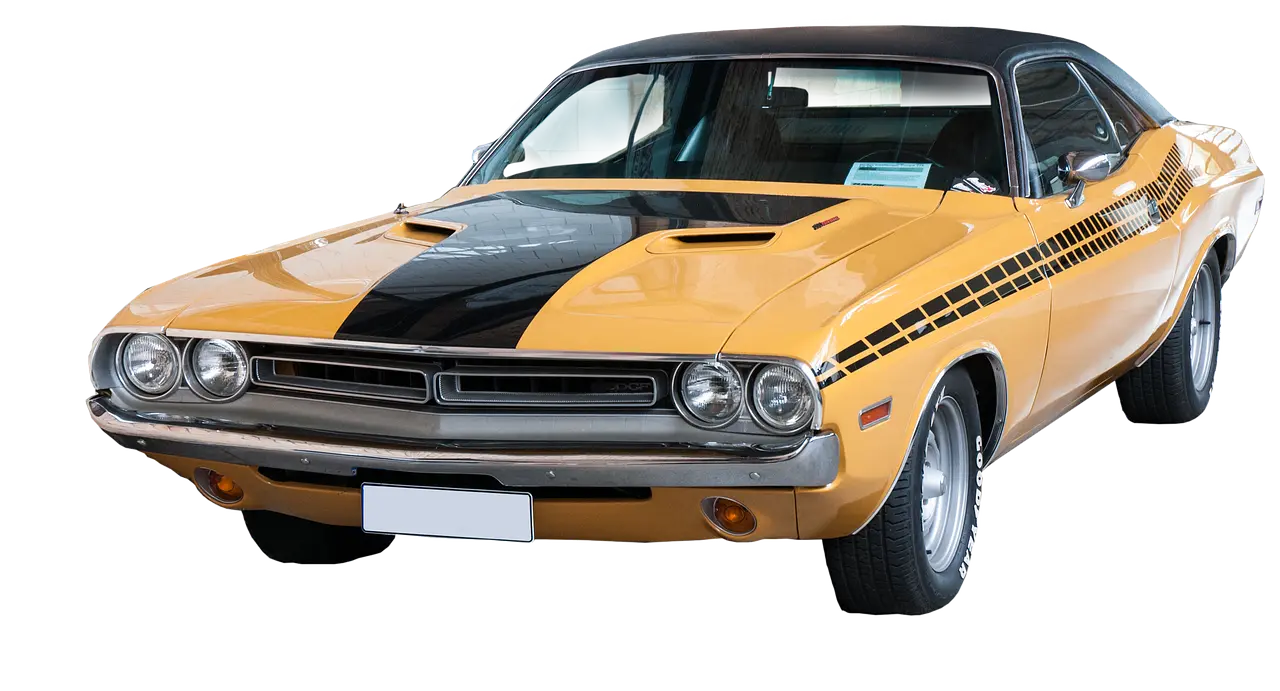
The Charger’s reliability picture is mixed because the car is built around performance first. Dodge lists the Charger as both a 2-door and 4-door performance vehicle, and that role affects wear, cost, and the problems buyers should expect. It is not a simple commuter car, so maintenance history matters more than a generic reliability score.
Year, trim, mileage, and upkeep all change the answer. Lower-mileage examples usually carry less risk, but a low odometer reading does not erase age-related issues like battery drain, tired suspension parts, or dry-rotted tires. A well-kept stock car is a different proposition from a modified one with a tune, exhaust work, wheel changes, or lowered suspension.
How the Charger’s performance focus affects long-term ownership
Performance hardware raises the cost of getting things wrong. Strong brakes, wider tires, and higher-output engines can all be fine when service is documented, but they punish neglect. That is why used Chargers often look affordable up front and then get expensive in the first ownership year if the service file is thin.
Dodge’s official site places the Charger in its performance lineup and includes it in current model research, with a dedicated Charger shopping section in the research navigation. That placement shows the tradeoff clearly: more speed and presence, less margin for deferred maintenance.
Why year, trim, and mileage matter so much
Model-year bands matter because Chargers changed across generations and refreshes, and those changes affect both electronics and driveline behavior. Trim matters because the engine and brake package can turn a manageable ownership profile into a costly one. Mileage matters because wear items on a performance sedan do not always age politely, especially on cars that have spent time in aggressive street use.
Is the Dodge Charger reliable as a used car?
A used Charger is most sensible when it has solid service records, no warning lights, no transmission complaints, and no signs of heavy modification. The safest buys are usually cleaner V6 or 5.7 Hemi cars with ordinary use, not the cheapest high-mileage examples on the lot.
If you want a one-line rule, use this one: the Charger can be a good used car when the paperwork is strong and the test drive is boring. If the car hesitates, shudders, drains the battery, or looks altered, step away.
The short answer for buyers
Buyers should treat a Charger like a performance sedan with a reliability filter, not like a generic midsize sedan. That means the car can be dependable enough for daily use, but only if you screen out neglected examples and budget for higher consumable costs than a basic V6 family car would carry.
When a Charger is a sensible used buy
A Charger makes sense when you want rear-drive character, a roomy cabin, and stronger straight-line performance, and you are prepared for higher tire and brake costs. It also makes sense when the seller can show regular oil changes, transmission service, and repair history that matches the mileage.
Which Charger model years are safest?
Buyers should be more careful with cars that sit at the edges of refresh periods, have incomplete records, or show signs of electrical or transmission complaints. The year matters, but condition still wins.
Best used-buying sweet spots
For many shoppers, the sweet spot is a later-model Charger with ordinary mileage, no performance modifications, and proof that the transmission has been serviced on schedule. Those cars tend to offer the best mix of modern features and lower repair risk compared with older, more heavily used examples.
Picture two Chargers with similar prices. One is a stock V6 with complete service records and normal tire wear. The other has a tune, loud exhaust, staggered aftermarket wheels, and patchy paperwork. The first is the easier ownership bet, even if the second looks more exciting on the lot.
Years that need extra caution
Any used Charger that shows weak battery behavior, rough shifting, or evidence of neglected cooling maintenance deserves caution, regardless of model year. Years near major refresh changes can still be worth buying, but only after a thorough inspection, because small differences in electronics and trim equipment can create expensive repair paths.
Refresh and generation changes that matter
Generation changes often bring different electronics, different trim content, and different wear patterns. That is why buyers should not treat every Charger from the same decade as interchangeable. The exact equipment list affects repair exposure, and higher-output models often carry more expensive brakes, tires, and cooling demands.
Engine and trim reliability differences
V6 and V8 Chargers do not carry the same ownership risk. The V6 is usually the lower-cost path, with lighter fuel and maintenance pressure, while V8 models tend to cost more to run and may see harder use because they can attract more aggressive driving. Trim choice matters because engine output changes wear, not just acceleration.
V6 versus V8 ownership risk
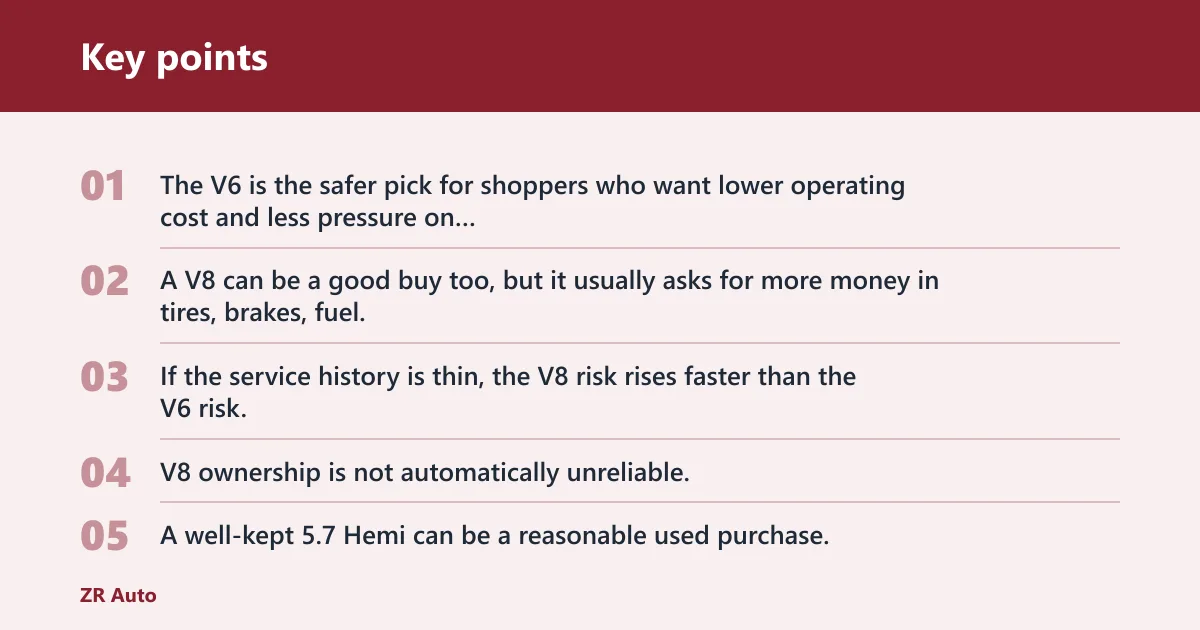
The V6 is the safer pick for shoppers who want lower operating cost and less pressure on wear items. A V8 can be a good buy too, but it usually asks for more money in tires, brakes, fuel, and occasional repairs. If the service history is thin, the V8 risk rises faster than the V6 risk.
V8 ownership is not automatically unreliable. It is simply less forgiving. A well-kept 5.7 Hemi can be a reasonable used purchase, while a neglected one can turn into an expensive lesson in cooling, transmission, and consumable replacement costs.
R/T and Scat Pack cost and maintenance tradeoffs
R/T models sit in the middle of the risk curve. They bring V8 ownership costs without the full intensity of the top trims, so they are popular among buyers who want power but do not want the cost profile of a harder-driven halo car. Scat Pack models can be more exposed to aggressive use, which raises the importance of inspection and records.
Are Dodge Chargers R/T reliable? They can be, if the car is stock, maintained, and free of abuse signs. The engine itself is only part of the story; the rest depends on how the previous owner treated the brakes, tires, fluids, and transmission.
How powertrain choice changes repair exposure
Choose the powertrain with your budget in mind, not just your appetite for power. A V6 usually keeps daily ownership simpler. A V8 asks for more reserve cash, and that reserve should cover wear items as well as surprise repairs.
Transmission and drivetrain checks
Transmission behavior is one of the most important used-Charger filters. Hard shifts, hesitation, delayed engagement, or hunting between gears can point to fluid neglect or deeper mechanical trouble. On a performance sedan, those symptoms matter more than a vague dealer promise that “it drives fine.”
Shift quality, hesitation, and hard-shift symptoms
During the road test, shifts should feel clean and predictable. A bad sign is a pause before engagement, a flare in engine speed between gears, or a sharp clunk on upshift or downshift. Those symptoms often become more expensive if the car has been tuned or driven hard.
Suppose a Charger rolls smoothly cold but starts to jerk once warm, especially at low speed. That pattern can point to transmission service sensitivity, not just a minor annoyance. It deserves a harder look before money changes hands.
Service records that lower risk
Transmission service history lowers risk more than most buyers realize. Ask for proof of fluid changes, not just “regular maintenance.” If the seller cannot show meaningful service documentation, assume the car has a higher chance of avoidable driveline wear.
What a bad road test usually means
A rough road test usually means you should walk. A Charger that shudders under light throttle, bumps into gear, or shows driveline vibration may need more than a quick reset. That is especially true on higher-mileage V8 examples where wear and abuse can overlap.
Electrical system and battery drain
Electrical issues matter on used Chargers because they can be intermittent and hard to diagnose. Battery drain, key fob complaints, and no-start behavior often point to parasitic draw or weak charging components. These faults can turn into repeated shop visits if the root cause is not fixed.
Parasitic draw clues
Look for a dead battery after the car sits, a battery warning light, or accessories that behave inconsistently. Those clues can indicate parasitic draw, which is one of the more frustrating Charger issues because the fault can hide behind modules, switches, or aftermarket additions.
A common first-timer mistake is to blame one dead battery on age alone. If the car has needed jump starts more than once, treat that as a diagnostic problem, not a random inconvenience.
Key fob and no-start complaints
Key fob and start-button complaints can stem from a weak battery, failing sensors, or electrical draw. The important part is repetition. One isolated no-start is less concerning than a pattern of warning lights, slow cranking, or an owner’s vague story about “sometimes it starts, sometimes it doesn’t.”
Why electrical faults can be hard to chase
Electrical problems can hide in the background and return after the sale. That is why a pre-purchase inspection matters. A scan for stored faults, plus a battery and charging-system check, can save you from buying a car that looks fine but behaves badly after a day or two of sitting.
Charger inspection table

This checklist turns common warning signs into a buy-or-skip decision. Treat the highest-severity items as deal breakers unless the seller can document a proper repair. Lower-severity items still matter because they affect ownership cost and how much money you need to set aside after purchase.
| Purchase check | Severity | What to look for | Buy/skip decision |
|---|---|---|---|
| Battery drain | High | Dead battery after sitting, repeated jump starts, slow crank | Skip unless a documented repair solved the draw |
| Transmission behavior | High | Hesitation, hard shifts, flare, delayed engagement | Skip if symptoms repeat on the road test |
| No-start history | High | Intermittent start-button faults, key fob complaints, warning lights | Skip if the cause is unclear |
| Service records | High | Missing oil-change, coolant, or transmission paperwork | Skip if records are thin on a higher-mileage car |
| Modification risk | High | Tune, exhaust changes, lowered suspension, aftermarket wheels | Skip unless the work is documented and reversible |
| Brake wear | Medium | Pulsation, pad noise, thin rotors, uneven wear | Buy only with repair budget left over |
| Tire wear | Medium | Inner-edge wear, mismatched tires, performance-tire age | Buy only if tires are current or priced in |
| Suspension noise | Medium | Clunks, wander, uneven ride height, steering looseness | Buy only after a chassis inspection |
| Cooling-system history | Medium | Overheat history, coolant residue, weak hoses, fan issues | Buy only with proof of repair or service |
| Ownership records and CPO status | Lower | Complete paperwork, dealer inspection, remaining warranty | Buy if the rest of the car passes |
What each warning sign means in practice
High-severity items affect whether the car is worth owning at all. Medium-severity items affect how much it will cost to keep on the road. Lower-severity items do not erase problems, but they can reduce risk when paired with a clean inspection and strong paperwork.
Maintenance and repair-cost expectations
Repair cost rises with power, tire size, and abuse. V8 models cost more to run than V6 models, and performance tires usually wear faster than basic all-season setups. Brakes, pads, and rotors can also become a recurring expense if the previous owner drove aggressively.
That cost difference is part of the ownership calculation. The car may be easy enough to buy, but the annual budget needs room for consumables and occasional repairs. If that reserve is not there, a Charger can quickly feel expensive.
Suspension and steering wear
Listen for clunks over bumps, feel for wandering at highway speed, and check for uneven tire wear. Those signs often point to worn suspension or steering components. A Charger with tired chassis parts may still drive, but it will usually keep asking for money until the wear items are replaced.
Brake and tire wear
Brakes and tires are not side issues on this car. They are ownership-cost drivers. Performance-oriented trims and larger wheel packages can make replacement more expensive, especially if the tires are low profile or the brakes are already near the wear limit.
Certified pre-owned coverage
Certified pre-owned coverage can reduce purchase risk because it adds a warranty backstop and usually comes with a dealer inspection standard. It is not a guarantee against future repairs, and it does not make a bad maintenance history disappear. Still, it is worth considering if the car otherwise checks out.
Frequently asked questions
How reliable are Dodge Chargers?
Reliability is mixed and highly dependent on year, trim, mileage, and maintenance history. A well-kept Charger can be a reasonable used car, but neglected examples can turn expensive quickly. The strongest buys are usually clean, stock cars with records and no transmission or electrical symptoms.
Is a Dodge Charger a good car?
It can be a good car if you want performance, rear-drive character, and a roomy cabin, and you can handle higher running costs. It is a weaker choice if you want the cheapest possible ownership or if you are shopping a car with missing service history and obvious wear.
Are Chargers reliable cars?
Some are, some are not. The Charger’s reliability depends more on the specific car in front of you than on the badge alone. V6 cars usually carry less ownership risk than V8 versions, and any Charger with weak records, mods, or transmission complaints should be treated cautiously.
Are 2016 Dodge Chargers reliable?
A 2016 Charger can be reliable if it has clean service history and no signs of battery drain, rough shifting, or cooling problems. The year itself is not enough; condition and maintenance are what matter. A thorough inspection is still necessary before you buy.
Are 2018 Dodge Chargers reliable?
A 2018 Charger can be a solid used option, especially if it is stock and well documented. The same caveats apply: check transmission behavior, electrical health, brake wear, and tire condition. If the car has been modified or neglected, the year matters less than the warning signs.
Are 2015 Dodge Chargers reliable?
A 2015 Charger can be a reasonable buy when it has a strong maintenance record and no hard-shift or electrical complaints. It deserves extra scrutiny because older age adds wear even when mileage looks acceptable. Service history and a pre-purchase inspection are non-negotiable.
Are Dodge Chargers R/T reliable?
R/T models can be reliable, but they usually cost more to own than V6 Chargers because the V8 setup invites more wear and higher maintenance costs. A clean, stock R/T with records can be a smart enthusiast buy. A neglected or modified one is much riskier.
What is the most reliable Dodge Charger year?
There is no single perfect year, but later well-maintained models in the 2015–2023 span are usually the safer used-buying zone. The best year for you is the one with complete records, normal wear, and no signs of transmission, electrical, or cooling trouble.
What do reviews say about Dodge Charger reliability?
Reviews usually split the Charger into two stories: strong performance and acceptable dependability when maintained, but higher ownership risk when abused or neglected. That matches the used-car reality. The car is not a low-cost appliance, and buyers should expect careful screening before purchase.
What is the Dodge Charger reliability rating by year?
There is no universal year-by-year score that settles the question on its own. Used shoppers should instead compare service records, accident history, powertrain choice, and inspection results. A clean higher-mileage car can be better than a lower-mileage one with repeated warning signs.