Kia Sportage Used Buyer’s Guide: Which One to Buy?
Buy a used Kia Sportage if you need a roomy family SUV, and prioritise a post-facelift car with a careful service history; the oldest high-mileage diesels deserve extra caution unless the paperwork is strong. Skip that rule and you can end up with costly DPF, EGR, tyre, and brake bills. This guide covers which Sportage trims and engines to buy, which to skip, and how it stacks up on ownership risk against the Qashqai, Kuga, RAV4, and CR-V.
Choosing between the Mk3 value play and Mk4 safety
The Sportage makes sense when you want space, a sensible driving position, and broad choice in the used market. The Mk3 covers 2010 to 2016, with a facelift in February 2014, while the Mk4 is the newer alternative and usually the cleaner bet if your budget stretches. Used prices for the Mk3 start from about £3,500, but condition matters more than badge year here.
It is a practical rival to the Nissan Qashqai, Ford Kuga, Hyundai ix35, Toyota RAV4, Honda CR-V, Mazda CX-5, Skoda Yeti, and Volkswagen Tiguan. The Sportage stands out for space and trim generosity, but diesels need the right driving pattern. Short trips are a problem if you choose the wrong engine.
How to think about value, age, and spec drift
Older Sportages often look cheap because the headline price ignores tyres, brakes, and diesel-emissions upkeep. Higher trims add useful equipment, but they also tend to wear larger wheels and more expensive consumables. A lower-mileage mid-trim car can be the better buy than a top-spec example with patchy history.
Spec drift matters because the newer Mk4 changed the buying logic. The Mk3 is the value play. The Mk4 is the safer default if you want fresher cabin design and the security of the seven-year warranty era, even though you will usually pay more upfront.
Which Kia Sportage is best to buy used?
The best Sportage for most buyers is a facelifted Mk3 1.7 CRDi in a mid-level trim, or a Mk4 if the budget allows. The 1.7 diesel has the best balance of economy and performance for everyday use, while the Mk4 gives you a newer car with less age-related risk. Pick 2.0-litre versions if you need 4WD or plan to tow.
Best engine and trim by budget
For the tightest budget, a well-kept Mk3 1.6 petrol in Trim 2 can work for urban use, but it is not the best fit for long motorway miles. Above that, the 1.7 CRDi is the strongest all-round choice. If you want more equipment without chasing the top of the range, Trim 2 or Trim 3 usually makes the most sense.
Best version for mixed use
If your driving mixes town, motorway, and school-run duty, start with a facelifted 1.7 CRDi. It avoids the thirst of the bigger petrols and usually gives enough punch for everyday overtakes. Choose a car with complete servicing and evidence that the diesel has seen regular longer journeys.
When to skip a car and keep shopping
Walk away from any diesel with a warning light, repeated limp-mode behaviour, or a history that suggests mostly short trips. Also skip cars with mismatched tyres, heavy clutch slip, or a towbar fitted without supporting paperwork. Those clues point to costs that can erase the low purchase price.
Sportage buyer decision matrix
This matrix turns engine, drivetrain, and trim into a shortlist you can use quickly. It is built around three owner profiles: urban commuter, motorway family, and tow or winter user. The key question is not which trim looks nicest. It is which version fits your driving pattern with the fewest avoidable bills.
| Owner profile | Recommended version | Red flags | Likely maintenance priorities | Verdict |
|---|---|---|---|---|
| Urban commuter | Mk3 1.6 petrol, Trim 1 or 2, front-wheel drive | Diesel used for short trips; warning lights; rough idle; lots of stop-start use | Tyres, brakes, suspension bushes, service history gaps | Buy if you want simple use and lower diesel-emissions risk |
| Motorway family | Mk3 1.7 CRDi, Trim 2 or 3, front-wheel drive or 4WD if needed | Poor history; repeated DPF issues; evidence of neglected oil changes | DPF health, fuel filter, regular servicing, longer-run usage | Buy, with checks, because it suits mixed and longer-distance use best |
| Tow or winter user | Mk3 2.0 CRDi, KX-prefix 4WD model, ideally automatic if you prefer ease | Unclear tow history; worn rear suspension; uneven tyre wear | Transmission servicing, brakes, tyres, 4WD system, towbar fitment | Buy if you need traction and load-hauling; avoid rough examples |
Sportage Mk3: engines, drivetrains, and trims
It came with 1.6 or 2.0-litre petrol engines, plus 1.7 or 2.0 CRDi diesels. Smaller engines used front-wheel drive, while 2.0-litre versions got four-wheel drive as standard. An automatic transmission was optional on 2.0-litre versions.
1.6 and 2.0 petrol models
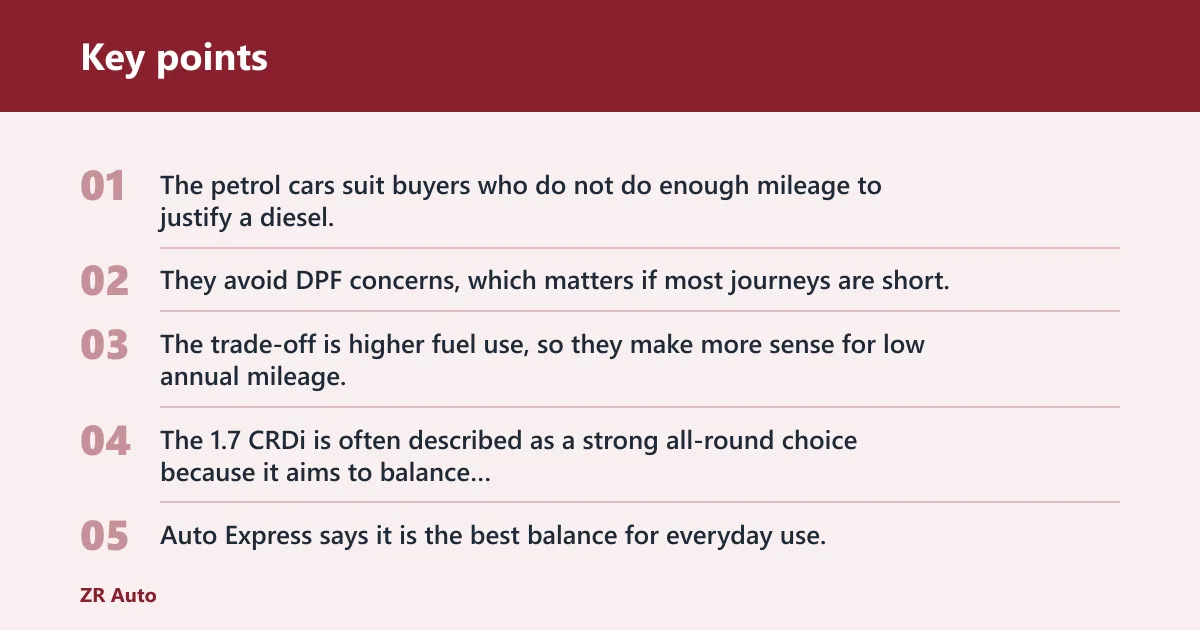
The petrol cars suit buyers who do not do enough mileage to justify a diesel. They avoid DPF concerns, which matters if most journeys are short. The trade-off is higher fuel use, so they make more sense for low annual mileage, suburban use, or drivers who value simpler ownership over outright economy.
1.7 CRDi and 2.0 CRDi diesels
The 1.7 CRDi is often described as a strong all-round choice because it aims to balance economy and performance. Auto Express says it is the best balance for everyday use. The 2.0 CRDi is the better choice if you want stronger towing ability, 4WD, or the 181bhp KX-4 version.
All diesel Sportages have a DPF. That matters. A diesel that spends its life on five-minute journeys is the wrong car, even if the price looks tempting. The 1.7 CRDi also has a reported power-loss issue, which can sometimes trace back to a fuel filter or coolant-related fix path.
Front-wheel drive, four-wheel drive, and automatic options
Front-wheel drive is the sensible choice for lighter-duty use and lower running costs. Four-wheel drive is standard on 2.0-litre Mk3 versions, so those cars naturally fit buyers who want winter confidence or towing ability. The automatic is an option on 2.0-litre versions and suits drivers who want easier towing or heavier daily use.
Trim 1, 2, 3, and KX-4 explained
Trim 1 is the entry point. Trim 2 adds reversing sensors, a glass roof, and part-leather trim, which makes it the useful middle ground. Trim 3 adds full leather, heated seats front and rear, xenon headlights, dual-zone climate control, and 18-inch alloy wheels. KX-4 sits at the top and adds self-parking, plus the 181bhp 2.0 CRDi engine.
KX is the naming cue for 4WD models. That helps when you are sorting listings, because the badge often tells you more than the advert summary does. If you need traction, this is the version family to focus on.
What should you check before buying a used Sportage?
Check history first, then condition. Service records matter because they show whether the car has had the right oil changes, brake work, and diesel maintenance at sensible intervals. On diesels, short-trip use is a major risk factor, and the DPF should be treated as a buying issue rather than a background detail. Recall checks matter too.
Service history and dealer history
A complete history is worth more than a shiny valeting job. Look for consistent servicing from a dealer or a recognised specialist, plus evidence that any scheduled work happened on time. A thick file is useful only if it is specific and readable. Missing invoices are a warning sign, not a minor gap.
Diesel emissions and DPF use pattern
If the car has mainly seen short urban use, assume the DPF may be under stress. Ask how often the car has been used on longer journeys, and watch for signs of repeated forced regeneration or warning lights. A diesel that smells of unfinished regeneration or has recent emissions repairs needs a lower offer or a pass.
Say your shortlist has a 1.7 CRDi with 78,000 miles and an oil service every year, but the previous owner used it for a three-mile commute. That is the kind of history that can turn a cheap car into an expensive one, because the DPF and related systems may not have had enough proper running time.
Reported power-loss clues on 1.7 CRDi cars
For the 1.7 CRDi, ask about any intermittent power loss, hesitation, or limp-mode episodes. Those symptoms can point to a fuel filter issue or a coolant-related fix path. If the seller cannot explain the repair history clearly, budget for diagnosis before you commit.
Tyres, brakes, suspension, and evidence of towing use
Uneven tyre wear can hint at poor alignment or heavy loading. Brake wear matters more on higher-mileage cars with large wheels, because replacement costs rise fast. On 4WD and tow cars, inspect the rear suspension, towbar installation, and underbody for signs of hard work or poor fitment.
A common first-timer mistake is to buy the highest-spec car on offer and ignore the consumables. A KX-4 with cheap mismatched tyres and tired brakes can cost more in the first year than a cleaner Trim 2 car with better history.
Simple inspection checklist
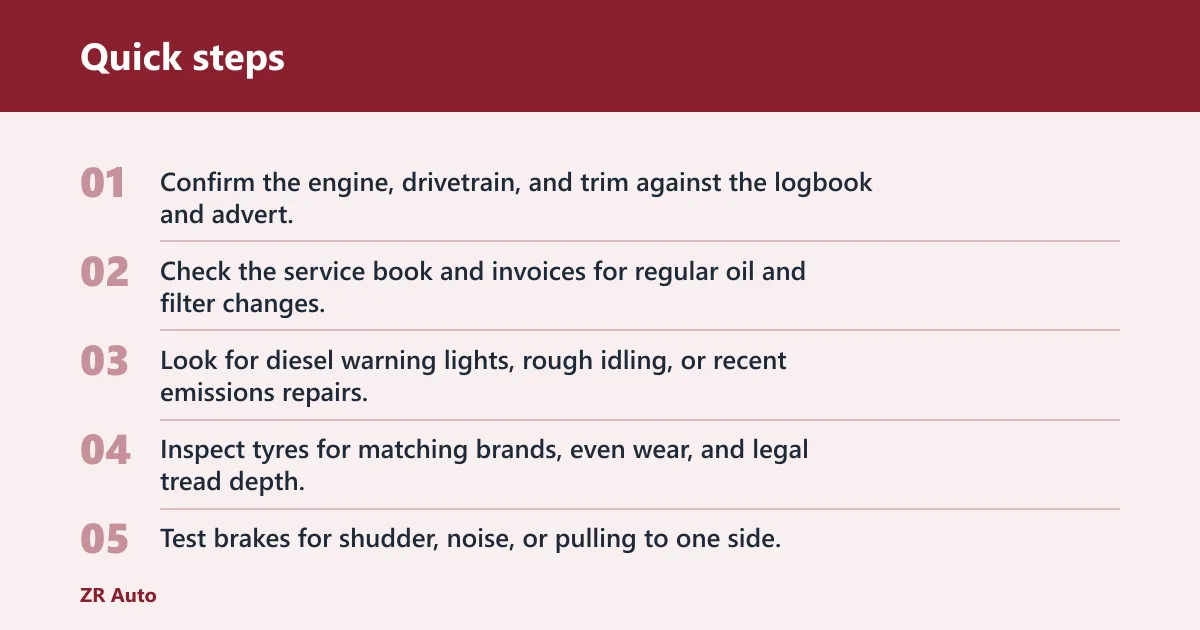
- Confirm the engine, drivetrain, and trim against the logbook and advert.
- Check the service book and invoices for regular oil and filter changes.
- Look for diesel warning lights, rough idling, or recent emissions repairs.
- Inspect tyres for matching brands, even wear, and legal tread depth.
- Test brakes for shudder, noise, or pulling to one side.
- Check the rear suspension and towbar area for load-related wear.
- Ask whether recall work has been completed and confirmed.
Sportage Mk4: should you stretch to the newer car?
The Mk4, sold from 2016 to 2021, is the next-generation alternative and a strong used buy if your budget reaches it. It generally feels newer, and it belongs to Kia’s seven-year warranty era, which supports the used case when service history is intact. If you want less age-related risk, the Mk4 often justifies the jump.
Why the Mk4 is a strong used buy
The Mk4 usually brings fresher cabin design, later safety tech, and a more modern used-market feel. That matters because the oldest Mk3s are now far enough down the age curve that wear items matter more than brochure equipment. If the price gap is manageable, the Mk4 is the cleaner ownership bet.
Seven-year warranty era benefits
Cars from the seven-year warranty period often have better continuity in servicing and a clearer paper trail. That does not guarantee fault-free ownership, but it makes the history check easier. You still need to inspect condition carefully, especially on diesel cars used for local runs.
How Mk4 pricing changes the shortlist
The Mk4 usually pulls buyers away from the very oldest Mk3s with patchy records. That does not make the Mk3 bad. It means the lowest-priced Mk3s should only be considered when the history is excellent and the price leaves room for repair reserve. If not, a better Mk4 may be the smarter spend.
How much does a used Kia Sportage cost?
Used Sportage pricing varies sharply by generation, engine, and trim. Mk3 cars start from about £3,500, but that entry price often buys age, miles, or both. Mk4 cars sit higher because they are newer and usually better equipped. Drivetrain and trim can change asking prices more than many buyers expect.
Mk3 starting prices and value bands
At the cheap end, expect older Mk3 petrols or high-mileage diesels with basic trim. Mid-market cars usually bring the 1.7 CRDi, better trim, and a more convincing history file. The best value is often not the cheapest car. It is the one that needs the fewest immediate fixes.
Mk4 price positioning
The Mk4 tends to sit above similar Mk3s because buyers are paying for age and a more recent shape. That price gap can be worth it if you want a lower-risk used buy. It is less appealing if you are chasing maximum equipment per pound and can live with older cabin design.
How mileage, drivetrain, and trim affect asking prices
Diesels with 4WD often cost more to buy and maintain. Top trims such as 3 and KX-4 add equipment but also push up asking prices and, often, running costs. A low-mileage mid-trim car with full history can be the best balance if you are not set on 4WD or a premium feature set.
What is a Kia Sportage comparable to?
The Sportage competes directly with the Ford Kuga, Hyundai ix35, Toyota RAV4, Honda CR-V, Nissan Qashqai, Mazda CX-5, Skoda Yeti, and Volkswagen Tiguan. Compare them on the same terms: space, fuel use, towing need, winter traction, and ownership risk. That keeps the decision practical instead of badge-led.
Ford Kuga and Mazda CX-5
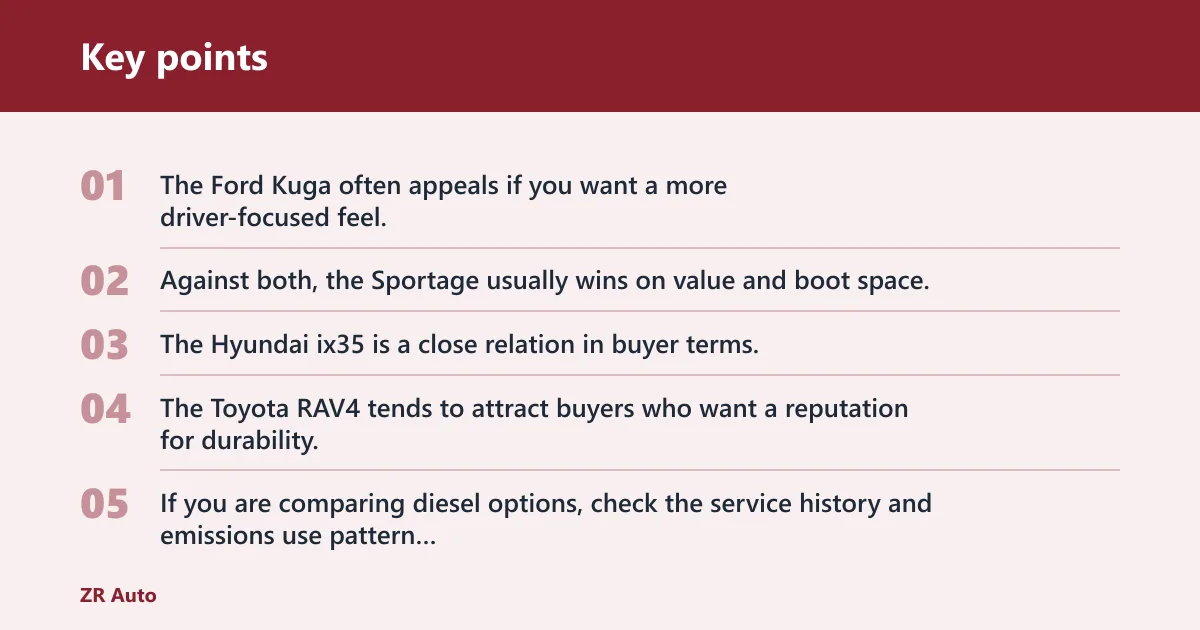
The Ford Kuga often appeals if you want a more driver-focused feel, while the Mazda CX-5 is a strong option for buyers who value refinement and road manners. Against both, the Sportage usually wins on value and boot space, but the exact winner depends on mileage pattern and trim.
Hyundai ix35 and Toyota RAV4
The Hyundai ix35 is a close relation in buyer terms, so it suits the same value-led shortlist logic. The Toyota RAV4 tends to attract buyers who want a reputation for durability, often at a higher asking price. If you are comparing diesel options, check the service history and emissions use pattern on all three.
Honda CR-V, Nissan Qashqai, Skoda Yeti, and Volkswagen Tiguan
The Honda CR-V is the usual choice for space and easy family use. The Nissan Qashqai is the default mainstream rival, though many cars are not as roomy as the Sportage. The Skoda Yeti suits buyers who want something smaller and more practical-feeling, while the Volkswagen Tiguan often sits higher on price for similar age and mileage.
Interior space and practicality
The Sportage is a sensible family SUV because it gives you useful boot space and a cabin that works for daily life. The Mk3 boot holds 564 litres with the rear seats up, and 1,353 litres with the rear seats folded. That is enough for school bags, pushchairs, and holiday loads without turning the car into a compromise.
Rear-seat comfort is part of the appeal too, especially if you are comparing it with the Qashqai or Yeti. Higher trims add comfort equipment, but the core practicality comes from the shape and space, not the badge on the tailgate.
Running costs and ownership considerations
Running costs depend on engine choice, not just the purchase price. Diesel cars can save fuel on long trips, but all diesel Sportages have a DPF, so they are a poor match for frequent short runs. Petrol cars avoid that issue, though they usually cost more to fuel. Budget for tyres and brakes as part of the buy decision.
When comparing total cost over three years, a cheaper high-mileage diesel can become more expensive than a cleaner petrol if it needs DPF work, brakes, or suspension parts early on. The best value is the car with the fewest near-term repairs, not the one with the lowest sticker price.
Frequently asked questions
How good is a used Kia Sportage?
A used Sportage can be a very sensible family SUV, but only when the engine and use pattern match. The car is roomy, practical, and often well equipped, yet diesel DPF risk and general age-related wear matter. A clean history is more important than a flashy trim level.
Do Kia Sportage hold their value?
Sportages usually hold value reasonably well for a mainstream SUV, especially the better-specified and better-kept cars. Diesel 4WD versions and newer Mk4 models often command stronger prices. That said, condition, mileage, and history still matter more than the badge alone, so buy on evidence rather than the asking price.
What is the best Kia Sportage engine to buy used?
The 1.7 CRDi is the best all-round engine for most used buyers because it balances economy and performance. Choose the 2.0 CRDi if you need stronger towing ability or 4WD. Pick a petrol if your mileage is low and you want to avoid DPF-related concerns entirely.
What should I check before buying a used Kia Sportage?
Check the service history, dealer history, tyres, brakes, and suspension first. On diesels, ask how the car has been used, because short trips can create DPF trouble. Also ask whether any recall work has been completed, and road-test for power loss, limp mode, or warning lights.
Is there a recall on the Kia Sportage?
Recall status can vary by year, engine, and market, so check the specific car’s VIN and paperwork rather than assuming it is clear. You should also ask the seller for evidence of completed recall work. A recall check is a normal part of the buying process, not an optional extra.
Which Kia Sportage trim is best for towing or family use?
For towing or winter use, look for a 2.0 CRDi KX-prefix 4WD model, and the automatic can make life easier if you tow regularly. For family use without towing, Trim 2 or 3 is the sweet spot because you get useful equipment without paying for the most expensive trim or running gear.