Why Won’t My Dodge Charger Start with the Key Fob Nearby?
A Dodge Charger with push-button start usually refuses to crank when the fob is detected but the car cannot complete start authorization, most often because the fob battery, vehicle battery, security system, or starter circuit has failed. Ignoring the wrong branch wastes money on parts that are fine and can leave you stranded with a car that still will not start. This guide walks the decision path from fob checks to voltage, security faults, and mechanical no-crank causes.
What you’ll need
- Multimeter or battery tester
- Spare key fob battery
- Owner’s manual
- Jumper wires or a jump pack
- Basic hand tools for battery terminal checks
Charger no-start path
Separate the symptom before you guess
Start with the difference between a fob-recognition fault and a true no-crank fault. If the dash says the key is not detected, the car is failing to recognize the fob signal. If the fob is nearby but the starter only clicks, or the engine does not turn at all, the problem has likely moved away from recognition and toward voltage, starter, or security authorization.
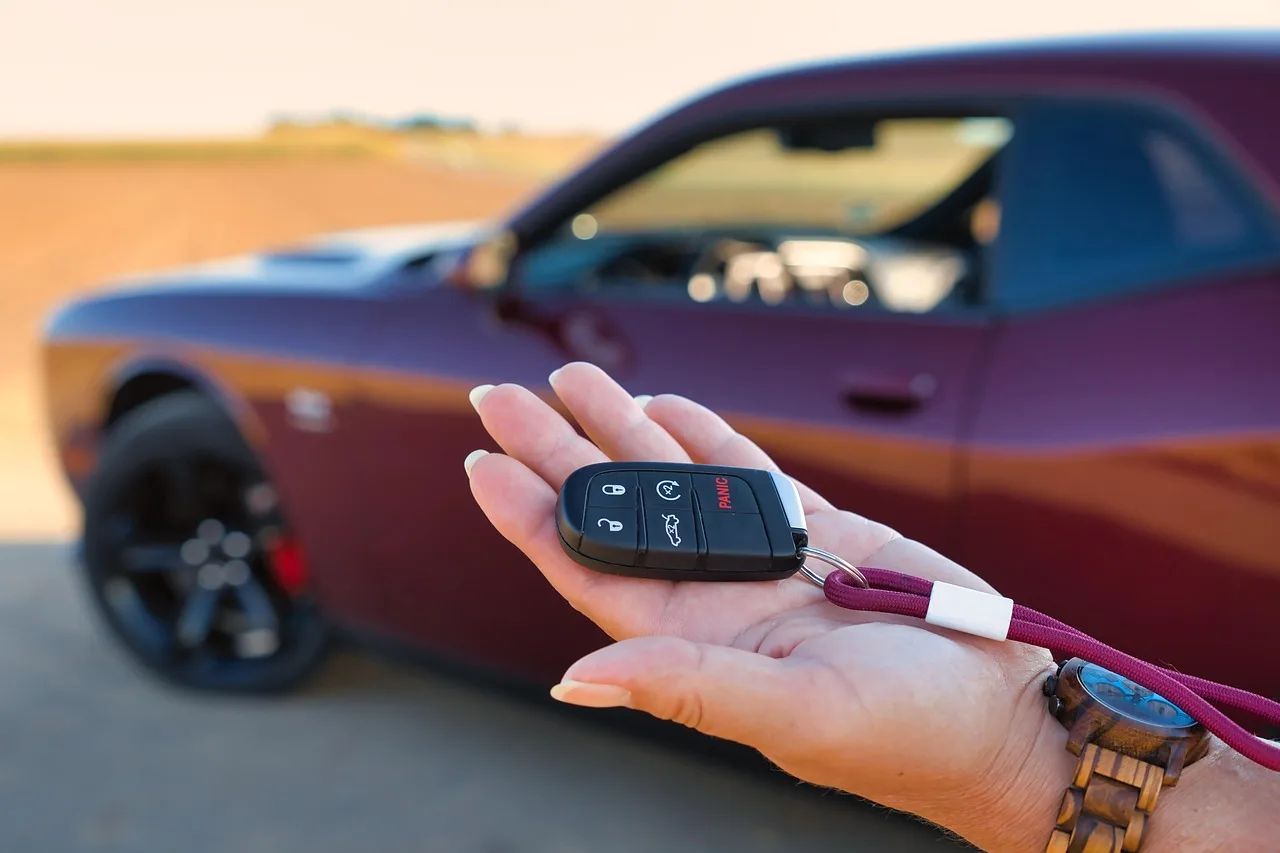
Dodge says the keyless-entry fob emits a constant signal when it is near the vehicle, but that does not prove the car can use it. A weak vehicle battery can block recognition even when the fob is in the cabin, and a weak fob battery can shrink the usable range enough to create the same complaint.
What a nearby fob does and does not prove
A nearby fob only tells you the vehicle should be able to see a radio-frequency signal. It does not rule out a dead coin-cell battery in the remote, low vehicle voltage, or a security lockout. That is why the correct first move is voltage, then fob battery, then crank behavior.
Say your Charger opens normally, but the start button does nothing and the message says no key is detected. That points first to recognition, not to a bad starter. Say the dash lights come on, the message clears, and you get one click with no engine turn. That points away from the fob and toward starter or battery output.
Why won’t my Charger start even though the key fob is nearby?
A nearby fob can still fail to start a Charger if the vehicle battery is weak, the fob battery is low, or the security system is blocking authorization. The quickest check is battery voltage, because a dead or weak car battery can mimic a fob failure and can also make dash lights fade. If voltage is good, move to the fob battery and then the starter circuit.
- Measure the vehicle battery at the posts with the car off. Healthy voltage is generally around 12-13 volts.
- Check the fob battery next. Replace the coin-cell if the range is poor or the car only responds when the fob is held close to the start button.
- Press the brake and start button while watching the dash. Note whether you get no response, a click, or a slow crank.
- If the battery reads above 14 or below 11, stop chasing the fob and inspect the charging or battery system first.
Charger battery replacement cost is cited at $255, but cost should come after diagnosis. A jump start can get the car running temporarily, which is useful if the battery is simply discharged. It is not proof that the starter is bad.
Why does the dash go dim?
Dim or fading dash lights usually point to low system voltage, not a lost fob signal. A weak battery can drop voltage under load, so the cluster dims when you press the brake or push the start button. If a jump start makes the dash wake up and the car starts normally, that strongly points to battery or alternator trouble rather than a fob fault.
A bad alternator can cause the same symptoms you see with a dead battery, because it recharges the battery and feeds electrical loads while the engine runs. The cited average alternator replacement cost is $894, so it is worth confirming the charging system before you replace parts. If the car starts after a jump but then dies again after driving, the alternator moves higher on the list.
When a jump start changes the diagnosis
If the Charger starts with a jump only, the battery or alternator deserves priority. If it starts, then stalls after a short drive, the charging system is suspect. If it starts and keeps running but refuses again after sitting overnight, battery reserve or parasitic draw is more likely than a starter failure.
Can security features block starting?
Yes. Security features can block starting on certain Chargers, but they are not the first guess for every no-start. Enhanced Security Mode uses a 4-digit code and limits output to less than 3 horsepower on 2021 Chargers and Challengers. Key Programming Lockdown is intended to stop thieves from programming new keys, and it can affect key programming or dealer diagnosis after module work on the listed model years.
Enhanced Security Mode and module work
If a 2021 Charger has Enhanced Security Mode active, the car may start but limit output to less than 3 horsepower. That is different from a no-crank complaint. If the car will not start after a security update or module replacement, dealer-level diagnosis may be needed because the problem can be in coding, authorization, or a module handoff rather than in a worn part.
Intrusion module notes for 2022 models
The intrusion module, offered for the 2022 model year, senses glass breakage, interior movement, and vehicle inclination. It sounds the alarm when those changes are detected. That feature affects theft response, not ordinary battery health, so do not treat an alarm event as proof that the starter or fuel system has failed.
Troubleshooting steps
- Check battery voltage at the posts. Use a multimeter on DC volts and read the battery with the engine off.
- If voltage is low, jump-start the car with jumper wires and another battery.
- Replace the fob coin-cell if the car responds only when the fob is pressed close to the start button.
- Listen for crank or click. A click with no crank points toward starter circuit trouble or low battery output.
- If the car starts, let it idle and recheck charging voltage. A reading above 14 or below 11 suggests a battery or charging fault.
- If the issue returns after a drive, stop guessing and move the diagnosis toward alternator or starter testing.
Suppose the Charger starts only when the fob is held against the start button. That is a strong hint that the fob battery is weak, even if the doors open from across the driveway. Suppose the car cranks slowly after an overnight sit and the dash dims before it fires. That points more toward battery condition than toward fuel delivery.
Common mistakes
Do not treat a nearby fob as proof that the remote battery is fine. Do not replace a starter before checking battery voltage. Do not assume a dead battery is only a battery problem, because alternator failure can be the reason it went flat in the first place. Do not blur no-crank with no-detected-fob; they lead to different next steps.
A Charger starter motor typically lasts between 100,000 and 150,000 miles. A failing starter often shows up as a click or a hard no-crank, and starter replacement is estimated at an average of $314 to $481. Those numbers matter only after the battery and fob checks are done.
Charger no-start decision table
Use this symptom-to-cause chart to avoid random part swaps. Follow the first check, then move to the next action that matches the result.
| Symptom | Fastest likely cause | First check | Next action |
|---|---|---|---|
| Fob nearby but no start | Weak vehicle battery or weak fob battery | Battery voltage, then fob battery | Recharge, jump-start, or replace the coin-cell and retry |
| No key detected | Fob battery low or recognition issue | Hold the fob near the start button | Replace the fob battery; if unchanged, check vehicle voltage |
| Clicking, no crank | Starter circuit or weak battery | Voltage at the battery posts | Jump-start; if it still clicks, stop here and tow it |
| Slow crank | Weak battery | Voltage before and during crank | Charge or replace the battery if it stays near the low end |
| Dash lights fade | Low system voltage | Battery voltage | Check alternator output after starting |
| Starts with jump only | Dead battery or charging fault | Battery age and alternator output | Test the alternator; replace the battery if it will not hold charge |
| Starts after fob battery replacement | Old coin-cell battery | Confirm the new battery is seated correctly | Keep the new cell and recheck remote range |
| Won’t start after security update or module work | Programming or authorization issue | Check whether a module was replaced or reflash was done | Dealer diagnosis may be needed for programming or security relearn |
| Crank present but no firing | Fuel-system or ignition fault | Confirm the engine actually cranks | Stop here and tow it for fuel or ignition diagnosis |
That last row is the stop-here branch. If the engine cranks normally but will not fire, the problem has moved beyond the fob and battery checks. At that point, starter replacement will not solve it, and the fuel system needs proper diagnosis.
What models of Dodge Charger are affected by key fob security updates?
The same source says Enhanced Security Mode will be available for the 2021 Charger and Challenger. Key Programming Lockdown was reportedly rolled out for 2020 and 2021 models first, then later expanded to some 2015 through 2019 model years. The intrusion module is described as being offered for the 2022 model year. Those features do not apply to every Charger in the same way, so match the complaint to the model year and the installed equipment.
How to handle a security-related no-start
If a security update or module change was just performed, check whether the vehicle accepts a spare fob and whether the start behavior changed after the work. If the issue began right after a programming event, the next step is module diagnosis, not parts guessing. If the car has never had that work, return to voltage and fob checks first.
Frequently asked questions
Why won’t my Dodge Charger start even though the key fob is nearby?
A nearby fob can still fail to authorize a start if the vehicle battery is weak, the fob battery is low, or the security system is blocking the request. Check battery voltage first, because roughly 12 to 13 volts is healthy and readings above 14 or below 11 suggest a battery problem.
Can a weak key fob battery stop a Charger from starting?
Yes. A low coin-cell battery can reduce range enough that the Charger does not see the fob reliably. Replace the fob battery first if the car starts only when the remote is held close to the button or if the message says the key is not detected.
Does a dead car battery cause a Charger to not recognize the key fob?
Yes. A dead battery can prevent the Charger from receiving enough power for starting and can also make the fob appear to be the problem. If the dash dims, the starter clicks, or a jump start helps, the vehicle battery and charging system move ahead of the fob.
What should I check first if my Charger says the key fob is not detected?
Check the vehicle battery voltage first, then the fob battery. If the car battery is near 12 to 13 volts, try the spare fob or replace the coin-cell. If the voltage is below 11, fix the power problem before spending time on the remote.
Can theft protection features prevent a Charger from starting?
Yes, on certain models and situations. Enhanced Security Mode uses a 4-digit code and limits output to less than 3 horsepower on 2021 Chargers and Challengers, and Key Programming Lockdown can affect key programming after module work. If the timing matches a security update, dealer diagnosis is the next step.
How do I tell if the problem is the fob, battery, starter, or alternator?
Use symptom order. No key detected points first to the fob battery, dim dash lights point to low vehicle voltage, clicking with no crank points toward the starter or battery output, and starts only with a jump point toward battery or alternator trouble. Do not guess past the first failed check.
Will my Charger start if the key fob battery is low?
It may start, but range can drop and recognition can become unreliable. Some drivers notice that the car only responds when the fob is placed right next to the start button. If that happens, replace the coin-cell before looking deeper.