Why Is My Dodge Charger Shifting Hard or Hesitating?
Hard shifting or hesitation in a Dodge Charger usually points to low or wrong transmission fluid, a failing solenoid or valve body, a sensor or wiring fault, or an engine problem affecting torque; scan codes first if the symptom is intermittent or the Check Engine light is on. Start with fluid level and ATF condition, then move to the valve body. Ignoring it can turn a fixable control issue into clutch damage, overheating, or a costly rebuild. This guide shows a symptom-to-cause path for hydraulic, electronic, engine, and driveline checks so you can narrow the fault before approving transmission work.
What the symptom pattern means
Hard shift, hesitation, delayed engagement, gear hunting, flare on acceleration, and jerk on downshift are not the same complaint. The clue is where the problem shows up: at takeoff, during a gear change, on light throttle, or only when the transmission is cold or hot.
Hard shift versus delayed engagement
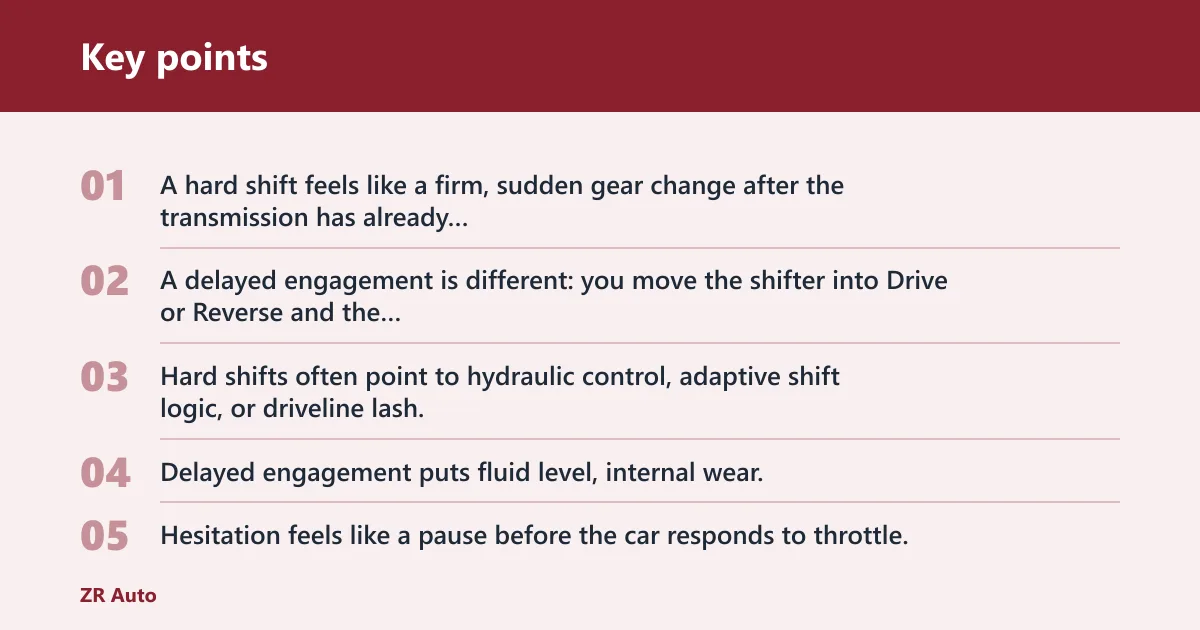
A hard shift feels like a firm, sudden gear change after the transmission has already engaged. A delayed engagement is different: you move the shifter into Drive or Reverse and the car pauses before it starts moving. Hard shifts often point to hydraulic control, adaptive shift logic, or driveline lash. Delayed engagement puts fluid level, internal wear, or pressure control higher on the list.
Hesitation versus flare on acceleration
Hesitation feels like a pause before the car responds to throttle. The engine may rev a little later than expected, or the car may surge after a delay. A flare means engine speed rises faster than road speed during a shift, which may point to clutch slip, low pressure, or a torque-converter issue. They can overlap, but they do not have the same likely cause.
Gear hunting and downshift shock
Gear hunting is repeated upshift-downshift behavior at steady throttle, often on hills or in traffic. Downshift shock is the abrupt lurch you feel when the transmission drops a gear. Hunting often involves calibration, throttle input, or speed/load signal problems. Downshift shock can come from adaptation issues, solenoid control, driveline slack, or worn mounts.
Shift symptom matrix
This matrix helps separate the pattern before you replace major parts. Use it with a scan tool and a basic fluid check. If the symptom is new, intermittent, or paired with warning lights, read codes before pulling the transmission apart.
| Symptom pattern | Most likely causes | First checks | Safe to keep driving? |
|---|---|---|---|
| Hard 1-2 shift | ATF level or condition, valve body or solenoid pack fault, TCM calibration/adaptation, worn mounts or driveline lash | Check ATF specification, scan for transmission codes, look for TCM updates, inspect mounts and driveline slack | Usually short-term yes if no slip, no warning light, and no worsening; avoid hard acceleration |
| Delayed drive or reverse engagement | Low fluid, internal pressure loss, valve body issue, torque converter or pump wear | Verify fluid level correctly, check for leaks, scan codes, note whether delay is cold only or always present | Use caution; if delay exceeds a few seconds or gets longer, stop driving |
| Gear hunting at steady throttle | Throttle input signal issue, TCM logic or calibration, engine misfire, load or speed sensor fault | Scan engine and transmission codes, inspect live throttle data, check for misfire counters | Usually yes for a short trip if no flashing CEL and no severe slip, but diagnosis should be prompt |
| Flare on acceleration | Clutch slip, low or degraded ATF, solenoid or valve body control problem, engine misfire that mimics slip | Check for flare in a single gear or multiple gears, scan for codes, inspect fluid condition, confirm engine health | Not ideal. If flare is repeated or rising, limit driving and schedule diagnosis |
| Jerk on downshift | Adaptive shift behavior, driveline lash, worn mounts, differential or axle play, throttle input mismatch | Inspect mounts and driveline, scan for calibration issues, review whether the jerk happens during decel only | Often yes if isolated, but stop if clunks, vibration, or metal-on-metal noises appear |
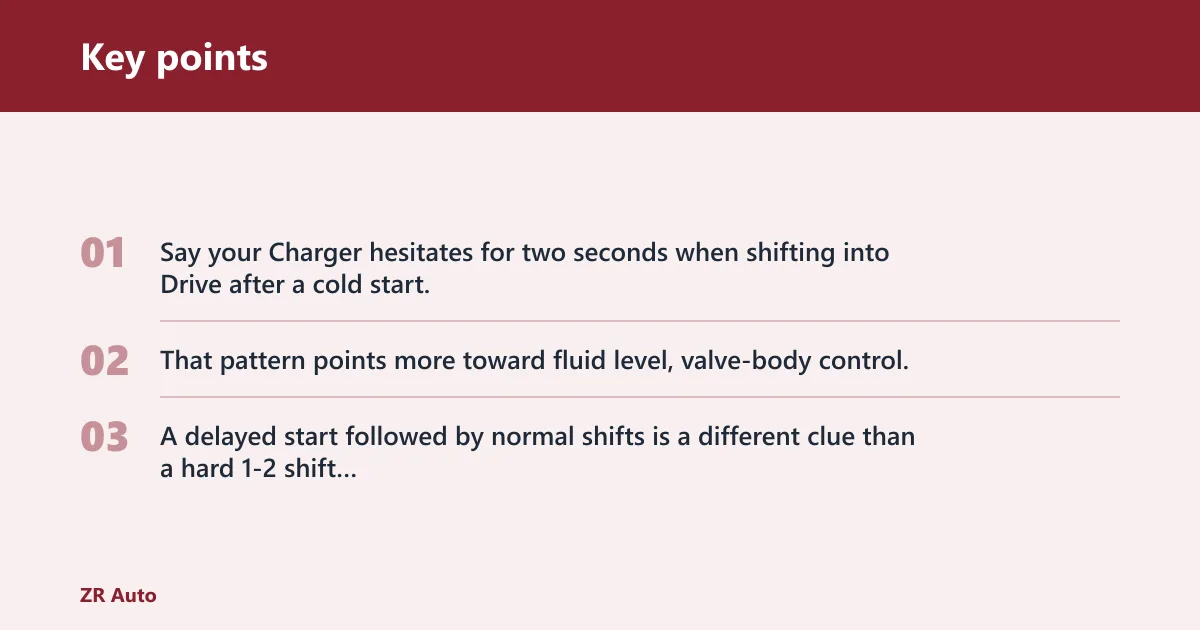
Say your Charger hesitates for two seconds when shifting into Drive after a cold start, then acts normal for the rest of the trip. That pattern points more toward fluid level, valve-body control, or a pressure-control issue than a pure engine problem. A delayed start followed by normal shifts is a different clue than a hard 1-2 shift under throttle.
Is my Charger’s hard shifting a transmission problem?
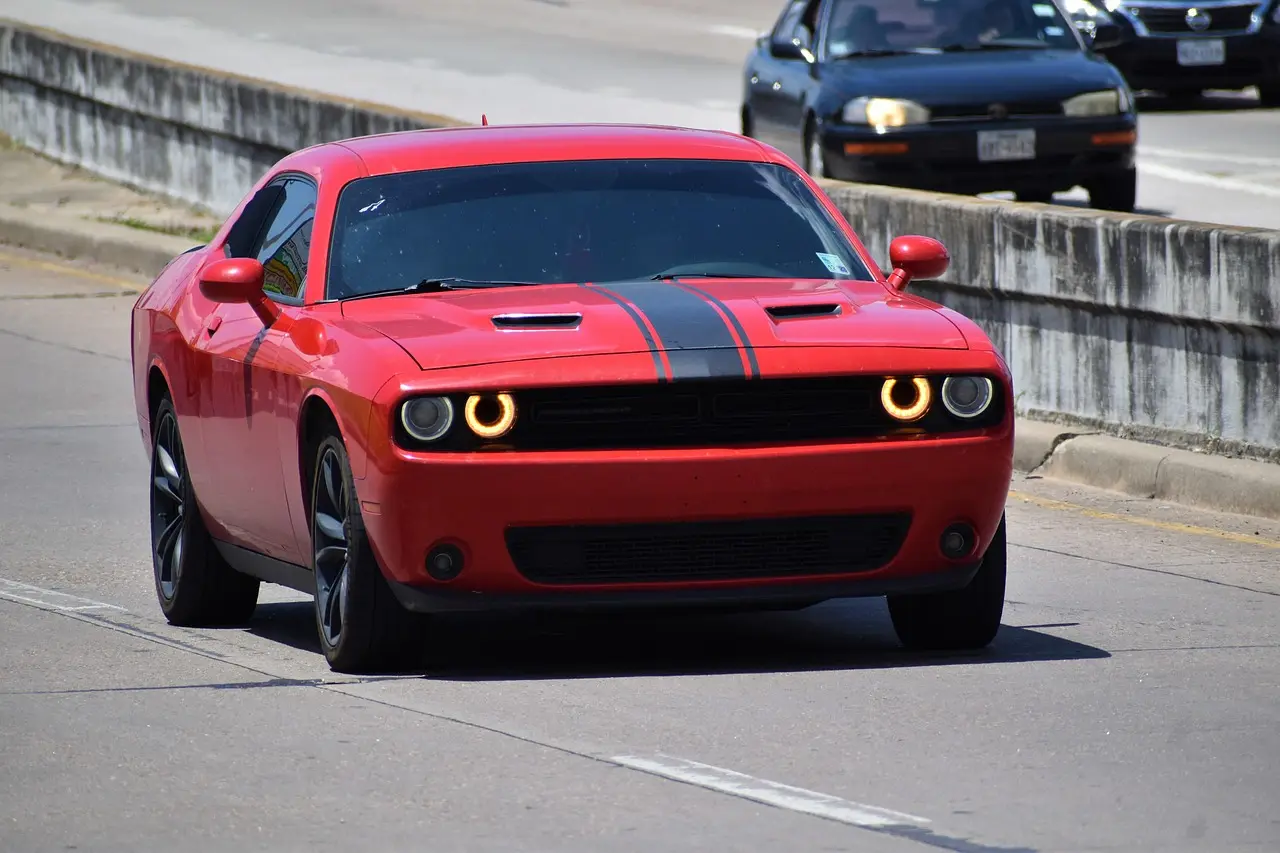
Often, yes, but not always. Start with fluid level and ATF condition, then move to the valve body, solenoid pack, and TCM calibration. Later Charger models with the TorqueFlite 8-speed automatic have adaptive shift behavior, so a rough shift can come from learning, software, or control faults as well as mechanical wear.
Fluid level and ATF condition
Transmission fluid level matters, and the correct ATF specification matters too. Low fluid can cause delayed engagement, harsh shifts, flare, and overheating. Dark, burnt-smelling fluid or fluid with debris suggests heat degradation or internal wear. A correct level with the wrong fluid type can still upset shift quality, so do not treat “filled” as the same thing as “correct.”
For Charger applications, the transmission family varies by model year and engine. Many later V6 and V8 Chargers use the TorqueFlite 8-speed automatic with eight forward gears, while other model-year and powertrain combinations use different automatics, including the 62TE in some Chrysler-family applications. Shift behavior can change with calibration, even when the hardware is healthy.
Valve body and solenoid pack faults
The valve body and solenoid pack control hydraulic pressure and gear changes. When they start failing, the car may shift hard one day and behave normally the next. That inconsistency is a clue. A sticking solenoid, worn valve bore, or pressure-control fault can produce delayed shifts, abrupt gear changes, or a flare that shows up only on certain shifts.
TorqueFlite adaptation and calibration
The transmission control module stores shift logic and adapts to wear and driving patterns. After battery loss, repairs, or software updates, a relearn may be needed. If the calibration is out of date or the adaptive values are off, the Charger can feel rough without having a major mechanical failure. A scan tool is the quickest way to see whether the TCM has codes, software updates, or relearn needs.
Can engine or throttle faults mimic transmission trouble?
Yes. A throttle input problem or engine misfire can feel like a transmission slip, flare, or hesitation because the transmission is reacting to bad torque information. If the engine is not making steady power, the transmission may shift late, hunt for gears, or feel jerky even when the transmission itself is not the main fault.
Throttle position and accelerator input signals
The throttle position sensor and accelerator pedal input tell the control modules how much power the driver wants. If that signal is noisy, delayed, or out of range, the Charger may hesitate before downshifting or may upshift at the wrong time. That can feel like a transmission issue, but the root cause is often sensor data or wiring.
Engine misfire, spark, coil, and fuel issues
Misfires from spark plugs, coil packs, injector problems, or fuel delivery faults can mimic a transmission flare. The engine speed rises unevenly, the car may shake under load, and the shift may feel wrong because torque drops during the gear change. A flashing Check Engine light can make a misfire a higher-priority concern. Do not keep driving hard with a flashing light.
A common first-timer mistake is replacing transmission parts after a rough 2-3 shift when the real issue is a weak coil on one bank. The symptom can look like a slip because the engine stumbles right as the transmission changes gear. A scan tool and misfire data can separate those two problems quickly.
How a check engine light changes the diagnosis
If the Check Engine light is on, engine faults move up the list. If both engine and transmission codes are stored, do not assume the transmission is the only problem. The powertrain modules often cross-report when torque delivery is unstable. Read both sets of codes and freeze frame data before buying parts.
Can low voltage cause shifting issues?
Yes. Low battery voltage or charging problems can cause erratic shifting, module resets, or relearn problems. The TCM and related modules need stable voltage to run shift logic correctly. If voltage drops during crank or while driving, the Charger may shift oddly, hesitate, or lose adaptive memory after a reset.
Battery voltage and charging checks
Check battery condition, terminal tightness, and charging output. A weak battery or alternator problem can create module communication faults that look like transmission trouble. This is especially important if the symptoms started after a jump-start, battery replacement, or a dead battery event. Low system voltage can also disturb the relearn process after repairs.
Module resets and relearn problems
If the TCM loses learned values, shift quality can change for a while. That does not mean the transmission is broken, but it does mean the system needs proper diagnosis. Do not keep clearing codes without checking why they returned. Repeated resets can hide the pattern and make diagnosis harder.
Picture a Charger that shifts hard only after a battery swap, with no fluid leak and no warning light. That points you toward voltage, adaptation, or a calibration issue before you pay for internal transmission work. The right first step is still a scan, not a parts pile.
What codes should you scan for?
Scan both the engine and transmission modules. The code list matters more than the code number alone because freeze frame data and live data show when the fault happened. Use an OBD-II scan tool that can read transmission codes, not just generic engine faults.
- Check for transmission codes and engine codes together.
- Record freeze frame data before clearing anything.
- Look at live throttle input, gear commanded versus gear actual, and misfire counts.
- Note battery voltage with key on, during crank, and while running.
- Inspect whether the problem appears hot, cold, on the first shift, or only under load.
Codes and data that matter most
For hard shift or hesitation complaints, pay attention to shift-solenoid, pressure-control, gear-ratio, torque-converter clutch, throttle, misfire, and voltage-related codes. Freeze frame data can show whether the fault happened during a cold start, a highway downshift, or a stoplight launch. That context often separates a transmission fault from an engine or voltage problem.
Why is my Dodge Charger shifting hard or hesitating?
Because the symptom can come from several systems, and the exact pattern matters. A hard shift usually points toward fluid, pressure control, adaptation, or driveline lash. Hesitation more often points toward throttle input, engine torque delivery, voltage, or delayed transmission engagement. Start with a scan and fluid check, then follow the symptom pattern.
Frequently asked questions
Can low transmission fluid cause hard shifting in a Dodge Charger?
Low transmission fluid can cause hard shifts, delayed engagement, flare, and overheating because the hydraulics may not build or hold pressure correctly. Check the fluid level at the correct temperature and verify the ATF specification, not just the quantity. If the fluid is dark or smells burnt, inspect for deeper wear.
Is my Charger’s hard shifting a transmission problem or an engine problem?
It can be either one. If the car flares, hesitates, or bucks while the engine stumbles, misfire or throttle input is a strong suspect. If the problem is a harsh 1-2 shift, delayed engagement, or repeated gear-specific issue, the transmission, valve body, or adaptation logic moves higher on the list.
Can a bad battery or weak voltage cause shifting hesitation in a Dodge Charger?
Yes. Weak voltage can disturb module behavior, trigger communication faults, and upset shift adaptation after a reset or battery replacement. If the symptom began after a dead battery, jump-start, or alternator issue, check charging output and module codes before replacing transmission parts. Voltage problems can imitate a control fault.
Why does my Charger jerk between gears when accelerating?
A jerk between gears can come from normal but aggressive shift mapping, a valve body or solenoid issue, or driveline lash from mounts, differential, or axle wear. If the jerk happens only on one shift and repeats under the same throttle, scan for codes and check adaptation data. If it is accompanied by clunks, inspect the driveline.
What codes should I scan for if my Dodge Charger shifts hard?
Scan both engine and transmission codes, then check freeze frame and live data. Transmission solenoid, pressure, gear-ratio, and torque-converter codes matter, but so do misfire, throttle, and voltage codes. A scan that only reads engine faults can miss the main clue, especially on later Charger automatics with adaptive control.
When should I stop driving if my Charger is shifting hard?
Stop driving if the transmission slips, the delay into Drive or Reverse gets longer, the Check Engine light flashes, the car goes into limp mode, or the problem worsens quickly. If the hard shift is mild and the car still drives normally otherwise, short, gentle trips may be possible while you arrange diagnosis.