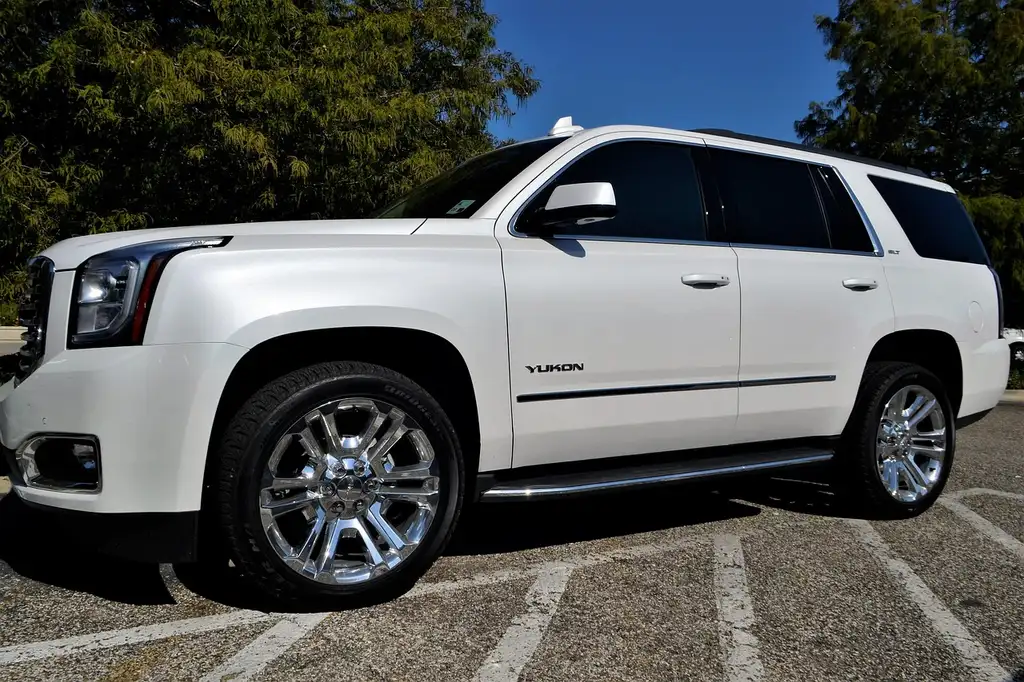
Why Are Lincoln Navigators So Cheap Used?
Lincoln Navigators are cheap used because luxury-SUV depreciation is steep and repair exposure is real. Late-model trucks with full records are the safest buys, while older ones can need a $3,000-$8,000 repair cushion for air suspension, transmission work, or other deferred fixes. Ignore that, and a bargain can turn into a transmission, suspension, or air-suspension bill fast. This guide explains which model years are riskiest, which features raise ownership costs, and how to judge a low price.
Why used Navigators cost less
Used Lincoln Navigators lose value quickly because they sit in a segment with weak resale and high ownership costs. Consumer Reports lists the Navigator as a luxury alternative to mainstream SUVs, and luxury full-size SUVs usually fall faster in price than lower-cost rivals. Age, mileage, trim, and service history then widen the spread between similar listings.
Why the sticker falls so hard
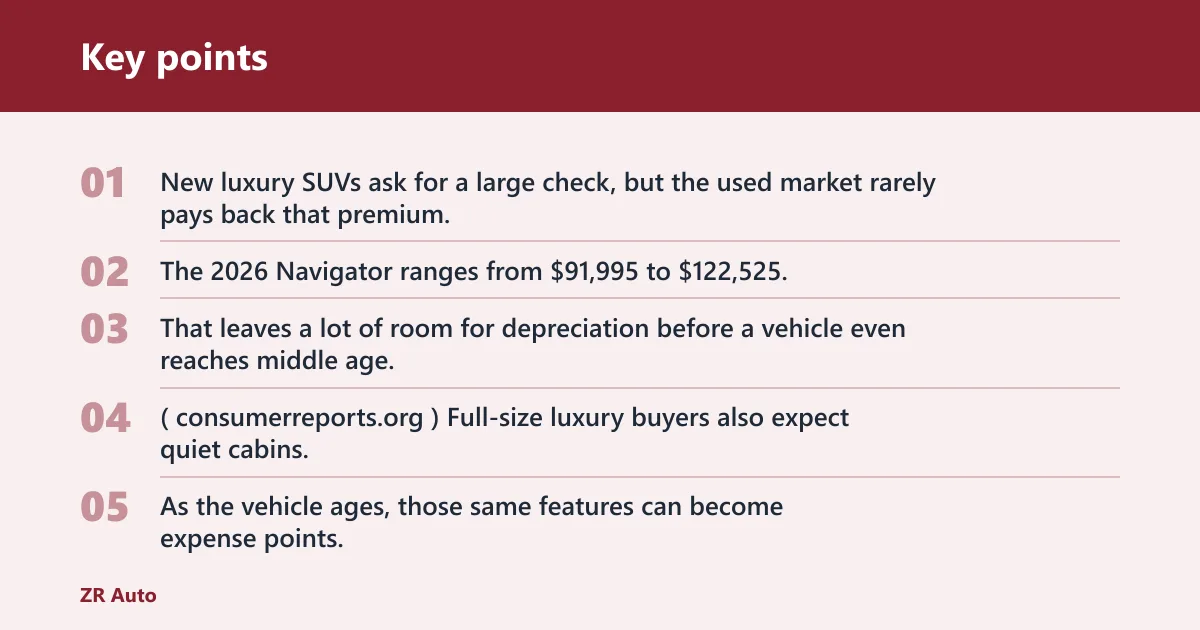
New luxury SUVs ask for a large check, but the used market rarely pays back that premium. The 2026 Navigator ranges from $91,995 to $122,525, and the 2025 model starts at $94,890 and goes to $122,420. That leaves a lot of room for depreciation before a vehicle even reaches middle age. (Consumerreports)
Full-size luxury buyers also expect quiet cabins, advanced electronics, and strong performance. As the vehicle ages, those same features can become expense points. Used shoppers price in the risk of air suspension work, drivetrain repairs, and expensive trim or tech fixes, so the discount can be deeper than with a mainstream SUV.
How age and mileage change the deal
Two Navigators with the same year can land in very different price bands. Higher mileage, missing service records, worn tires, and suspension wear push the price down. A clean, low-mileage example with recent maintenance can cost much more than a neglected one, even if both look similar in photos.
Say your search turns up a 2019 Navigator with 110,000 miles and no records. The asking price may look low for the segment, but the market is reacting to the likelihood of deferred maintenance. A similar truck with documented service, newer tires, and no warning lights can justify a higher number.
Why low price does not always mean a bargain
The cheapest listing is often the one with the most repair risk. That is especially true when a seller knows the truck needs suspension work, has transmission complaints, or shows electrical issues. A low asking price can still be fair, but only if the discount matches the inspection findings.
📊 2026 Lincoln Navigator pricing ranges from $91,995 to $122,525. Source: Consumerreports.
Navigator depreciation vs rivals
The Navigator’s price drop is part segment story and part brand-story. It shares a close family relationship with the Ford Expedition, which helps explain the platform layout and size, but Lincoln markets the Navigator as a more premium truck. Cadillac Escalade pricing behavior shows the other side of the same market: some luxury SUVs hold value a bit better, yet all of them still depreciate faster than mainstream SUVs.
Ford Expedition relationship and shared platform
The Navigator and Expedition share size, layout, and a lot of hardware, but they do not depreciate the same way. The Lincoln badge, higher original sticker, and luxury feature load make the Navigator lose more dollars in absolute terms. Buyers shopping used often compare them on paper, then choose the cheaper-maintenance option if the Lincoln’s price advantage is not large enough.
Cadillac Escalade comparison
The Escalade usually sits in the same purchase conversation because it competes for the same luxury-SUV buyer. Segment image matters here. When buyers expect high repair bills and steep running costs, they negotiate harder on used luxury SUVs. That pressure hits the Navigator, especially on older or higher-mileage listings.
Which Navigator years are safer bets?
The safer used Navigator choices are usually later fourth-generation trucks with clean history and documented maintenance. MotorTrend says the 2025 Navigator replaced the earlier model, so the fourth-generation span appears to run from about 2018 to 2024. The early years drew more concern, while later updates are generally the better target for buyers who want lower risk.
Fourth-generation Navigator: 2018 to 2024
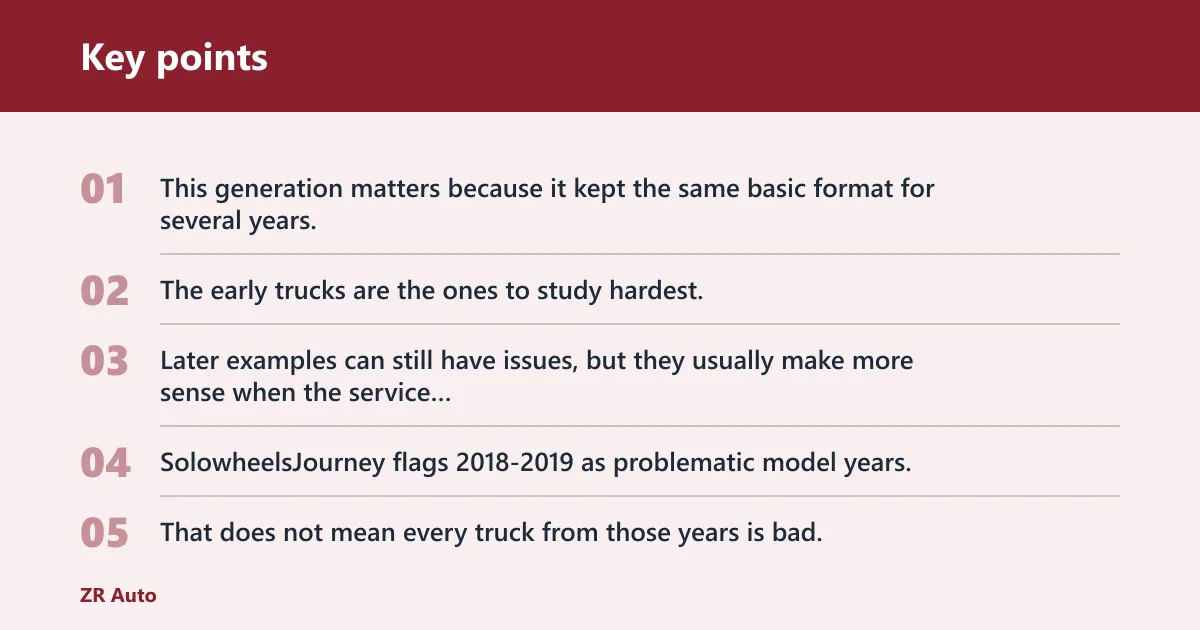
This generation matters because it kept the same basic format for several years, so buyers see a wide spread in condition and price. The early trucks are the ones to study hardest. Later examples can still have issues, but they usually make more sense when the service file is complete and the price reflects the miles.
Problem years versus better years
SolowheelsJourney flags 2018-2019 as problematic model years, and it also lists 1998-2002 and 2006 as years to avoid. That does not mean every truck from those years is bad. It means the used market should treat them as higher-risk purchases, especially when the price looks unusually low.
Better buys are usually the trucks with fewer complaint patterns, cleaner records, and fewer known early-cycle issues. A late fourth-generation Navigator with proof of suspension service, no warning lights, and clean shift behavior is more attractive than a much older luxury SUV that looks cheap only because it needs work.
What changed after the early fourth-gen models
The 2025 Navigator uses a twin-turbocharged 3.5-liter V-6 with 440 hp and 510 lb-ft, and MotorTrend rates it at 15/22 mpg city/highway. That powertrain delivers strong performance, but the fuel-economy number is a reminder that ownership costs stay high even when the purchase price looks friendly. Carryover hardware also means service exposure does not disappear just because the truck is newer. (Motortrend)
Navigator reliability risks that cut prices
Used prices fall harder when the market expects more than normal wear. Reliability concerns, owner complaint patterns, and known failure points all push sellers to discount. The Navigator is not automatically unreliable, but some years and components carry enough risk that shoppers price them accordingly.
Owner complaint patterns to watch
Complaint patterns often center on suspension faults, drivability complaints, and electronics that are expensive to diagnose. When buyers see repeated notes about the same system, they assume a larger chance of future expense. That assumption affects resale, especially on older luxury SUVs with few remaining warranty protections.
Generation-specific electrical and drivetrain issues
The 10-speed automatic transmission is part of the ownership picture because shift quality complaints can turn into drivability concerns. A rough or hesitant transmission does not only affect comfort; it can also signal future repair cost. On a used Navigator, that risk matters because luxury labor and parts can quickly erase the discount.
How reliability reputation moves the market
Predicted reliability matters even before a truck leaves the lot. If buyers expect more repair risk, sellers must ask less money. That is why some listings look cheap compared with mileage and trim. The market is pricing the possibility of repair, not simply the age of the SUV.
Cheap Navigator triage table
This table helps separate a low price that makes sense from one that needs a hard pass. It ranks common listing types by the main driver behind the discount, the first item to inspect, and the ownership-risk level a shopper should expect.
| Model-year range | Likely discount driver | Top inspection item | Ownership-risk level |
|---|---|---|---|
| 1998-2002 | Age, mileage, and outdated powertrain design | Service records and signs of major deferred maintenance | High |
| 2006 | Known-year reputation and higher repair fear | Transmission behavior and suspension condition | High |
| 2018-2019 | Problem-year discount and early fourth-gen complaints | Air suspension, electronics, and scan-tool codes | Moderate to high |
| 2020-2021 | Mileage, trim, and remaining warranty distance | Shift quality and maintenance history | Moderate |
| 2022-2024 | Standard depreciation with fewer age-related issues | Suspension wear and full service documentation | Low to moderate |
What should you inspect on a cheap Navigator?
A cheap Navigator needs a harder inspection than a typical used SUV because the price can hide expensive problems. Start with the suspension, then check the powertrain, then verify records and scan data. If more than one system shows trouble, the discount is probably not deep enough.
Air suspension checks
Air suspension is a common pain point on some years and trims, and repair bills can exceed $2,000. It also affects ride quality, so a bad system is both a comfort problem and a budget problem. Look for uneven ride height, compressor noise, slow leveling, and sag after parking.
Picture a 2018 Navigator that sits slightly low at one corner after an overnight park. That is not cosmetic trivia. It can point to a leaking air spring, a weak compressor, or a related fault that becomes expensive fast once diagnosis begins.
Twin-turbo 3.5-liter V-6 checks
The current engine family is strong, but performance hardware is still hardware. Check for cold-start noises, coolant leaks, rough idle, and any sign of poor maintenance.
10-speed automatic transmission checks
Test for hesitant upshifts, hard downshifts, flare between gears, and hesitation at low speed. A clean transmission should feel predictable in town and on the highway. If it does not, the repair risk can be large enough to cancel out the lower asking price.
Service history and scan-tool clues
Records matter because they show whether the truck has been maintained on time. A pre-purchase inspection should include a scan for stored codes, even if the dash is clear. Pending faults, repeated battery-related codes, and missed fluid service are all warning signs that should change your offer.
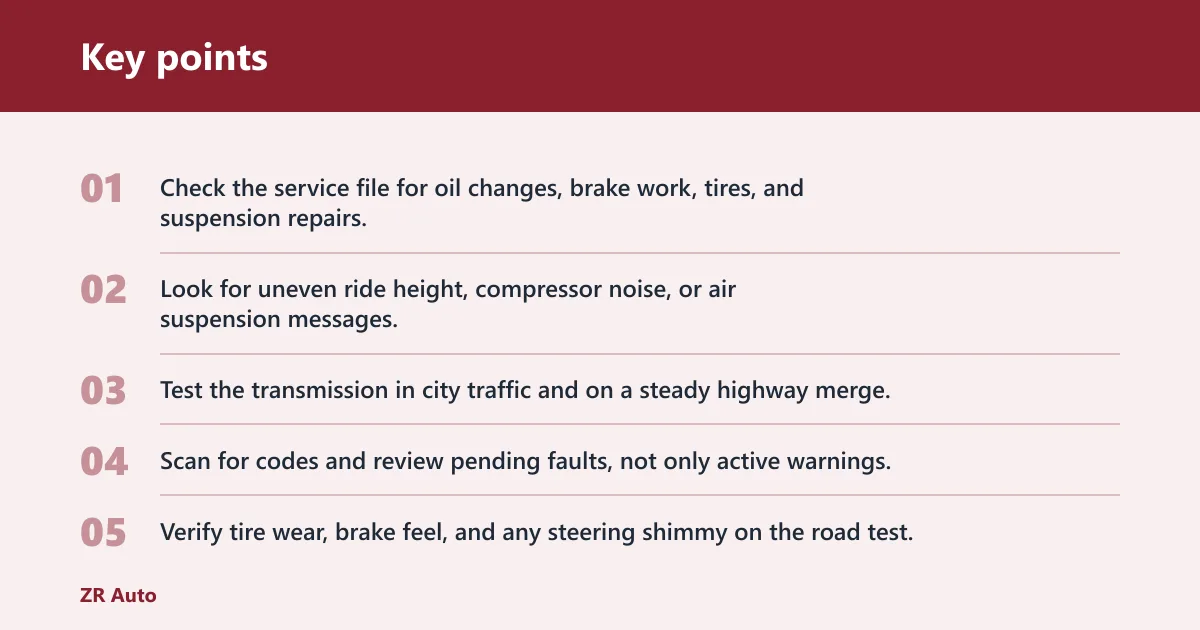
- Check the service file for oil changes, brake work, tires, and suspension repairs.
- Look for uneven ride height, compressor noise, or air suspension messages.
- Test the transmission in city traffic and on a steady highway merge.
- Scan for codes and review pending faults, not only active warnings.
- Verify tire wear, brake feel, and any steering shimmy on the road test.
Is a used Navigator expensive to maintain?
Yes. A used Navigator is expensive to maintain compared with a mainstream SUV, and the bill can rise fast when suspension or drivetrain work enters the picture. SolowheelsJourney estimates average annual repair cost at $1,089, which is well above what many shoppers expect from an ordinary family SUV. That is before major repairs or tire sets.
Annual maintenance cost versus the national average
The yearly burden is not only routine oil changes. Luxury tires, larger brakes, more complex electronics, and air suspension parts all add pressure to the budget. The national-average comparison matters because the Navigator sits on the wrong side of that gap for buyers who want low running costs.
Repair items that can erase the price gap
One suspension repair can swallow the savings from a cheap purchase price. A transmission issue can do the same. If a used listing is priced far below the market, the seller may already know the next owner is likely to face one of those bills soon.
Budgeting for tires, brakes, and suspension work
Shoppers should plan for more than fuel and insurance. Large SUV tires are not cheap, and worn brakes or suspension parts can push the first year of ownership far above the purchase discount. A low buy-in only works if the repair reserve stays intact.
Frequently asked questions
Why are used lincoln navigators so cheap?
Used Navigators are cheap because full-size luxury SUVs depreciate fast, and the market prices in repair risk. The discount gets larger when the listing has high mileage, weak records, or known problem-year exposure. That low number usually reflects age, condition, and expected ownership cost.
Are lincoln navigators reliable?
They can be fine when maintained, but reliability is uneven by year and condition. Some model years carry more complaint history than others, and neglected trucks can become expensive quickly. A clean service record and a careful inspection matter more here than they do on many mainstream SUVs.
What years of Lincoln Navigator should I avoid
The most caution is usually aimed at 1998-2002, 2006, and 2018-2019. Those years have stronger warning signals in the used market, which means the price discount should be larger before you even consider them. If records are thin or the test drive is rough, move on.
How much does it cost to fix a Lincoln Navigator?
It depends on the fault, but suspension and drivetrain repairs can get expensive fast. Air suspension repairs can exceed $2,000, and a transmission issue can be even more serious. That is why a cheap listing needs a repair cushion, not just a lower purchase price.
Is a used Lincoln Navigator expensive to maintain?
Yes. SolowheelsJourney estimates average annual repair cost at $1,089, and that does not include every surprise repair a used luxury SUV can need. Tires, brakes, electronics, and suspension parts can push the real yearly spend higher, especially on older or poorly maintained examples.
Are lincoln navigators worth the money?
They can be, but only when the price matches the condition. A late-model Navigator with strong records and clean inspection results can be a smart value. A very cheap one with warning lights, rough shifts, or sagging suspension is often a budget trap, not a bargain.